

How to Become an Esthetician: A Full Guide to School, License, and Cost
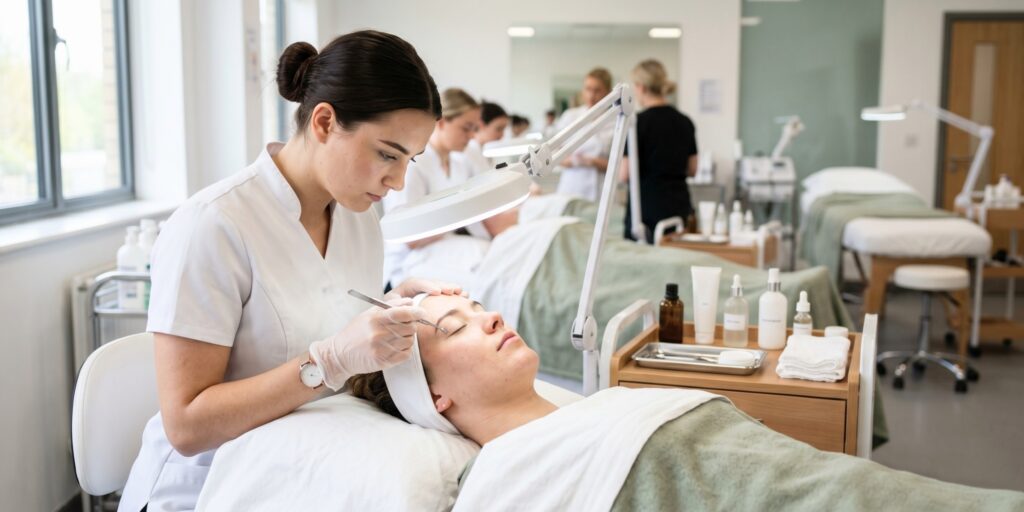
Choosing a career in skin health is a significant commitment. I believe that finding a path that matches your interest in skincare with a sustainable job market is essential. Moving from being someone who loves beauty products to becoming a professional skin expert requires a firm grasp of biology and chemistry.
The industry is growing, and there are many opportunities for those who know what they are doing. This guide walks you through the education for an esthetician, the standard requirements for an esthetician license, and the typical esthetician school cost.
Key Takeaways
- Career Speed: You can often complete your training in 4 to 12 months, making it much faster than a standard four-year degree.
- Market Growth: The Bureau of Labor Statistics expects the field to grow by 7% through 2034.
- Earnings: The average yearly pay is roughly $45,374, though specialized Master Estheticians can earn more than $66,900.
- Modern Rules: By 2026, the Modernization of Cosmetics Regulation Act (MoCRA) has raised expectations for safety and accountability across the beauty industry.
The Role of a Modern Esthetician
In 2026, the beauty world is moving toward "Metabolic Beauty," a concept highlighted by Mintel analysts. This approach focuses on how internal wellness impacts the skin. As a licensed professional, your work revolves around protecting the lipid barrier, which is the skin's natural defense against moisture loss and bacteria.
Your training involves using professional-grade peels and high-tech equipment to help with skin repair. Understanding these chemical processes is what makes you a professional. Clients are looking for "Bio-intelligent actives," which are ingredients that adapt to the skin's needs. Learning about skin biotechnology will give you a significant advantage in the job market.
The Academic Path to Success
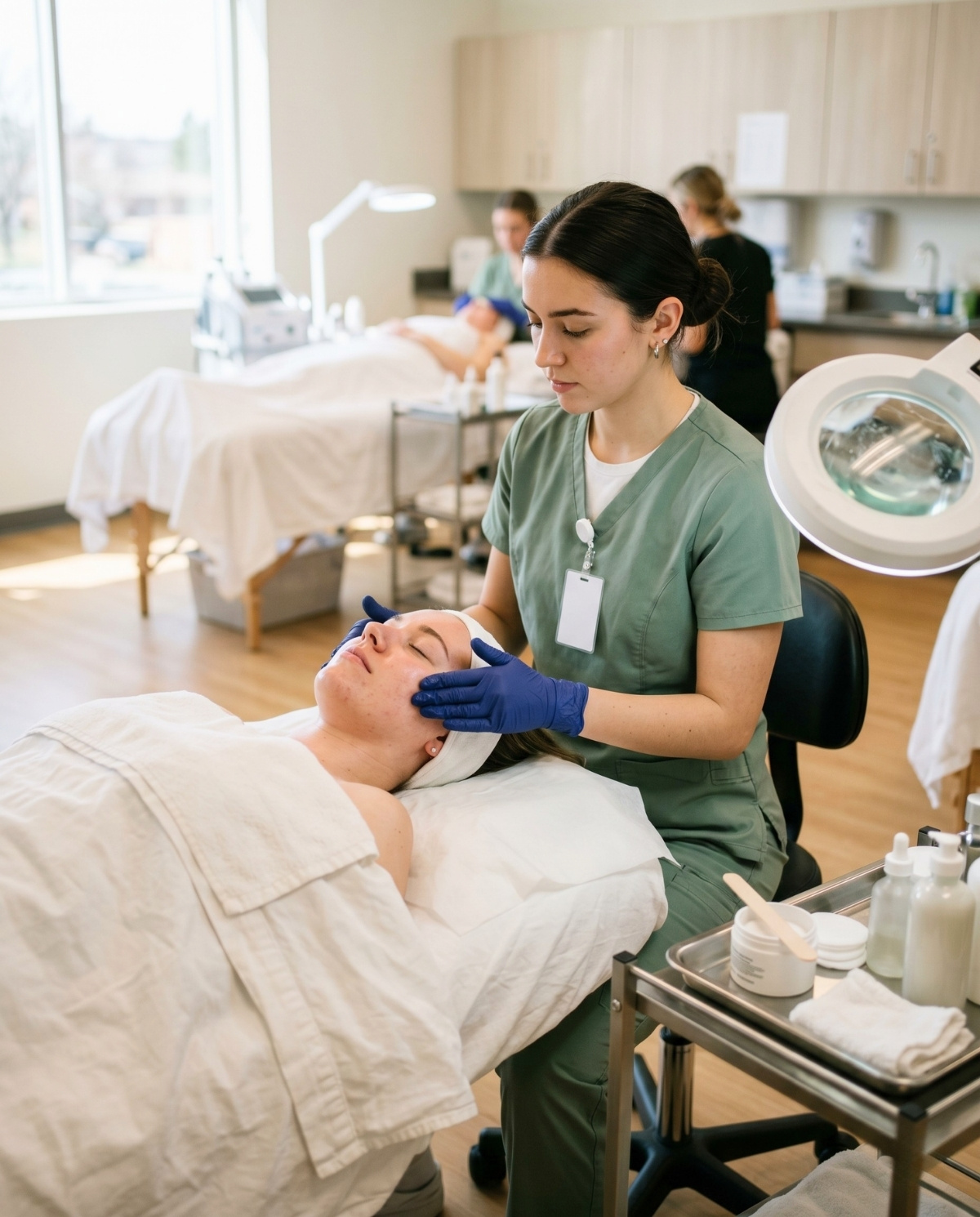
You need to meet a few basic criteria before you can start. Most states require you to be at least 16 or 17 years old. A high school diploma is also standard. Many people ask, "can you be an esthetician with a ged?" and the answer is yes, as state boards almost always accept it.
The steps for how to become an esthetician after high school are quite clear:
- Look for reputable schools with esthetician programs.
- Finish your required training for an esthetician.
- Successfully pass the state licensing exams.
- Submit your application for a license.
Learning In-Person vs. Online
When you look for the quickest way to become an esthetician, you might find options for an online esthetician course. I want to be realistic about this. While you can study things like anatomy or product chemistry through online classes for an esthetician, you cannot learn how to perform a safe chemical peel through a computer screen.
Most states require you to complete several hundred hours of hands-on work in a student clinic. If a program says you can finish esthetician school online without any in-person training, they are likely not accredited. Choosing a non-accredited school will stop you from getting a license for an esthetician, which makes the faster route a waste of time.
How Long Does Esthetician School Take?
If you want to know how many years of school for an esthetician are necessary, the time is usually measured in months. While the Bureau of Labor Statistics explains that you must finish a state-approved program, each state board sets its own hour requirements.
Most states require between 600 and 1,000 hours of training. This is how that usually breaks down:
- Full-time: Many students finish in 4 to 6 months.
- Part-time: These schedules often take 9 to 12 months.
- State Differences: Florida requires about 260 hours for a facial specialty, while Georgia and Alabama require 1,000 hours for a full license.
This timeline allows you to start your career quickly. You spend less time in a classroom and more time in a clinic, which builds the confidence you need to be ready for a salon job after graduation.
Investing in Your Future: Costs and Aid
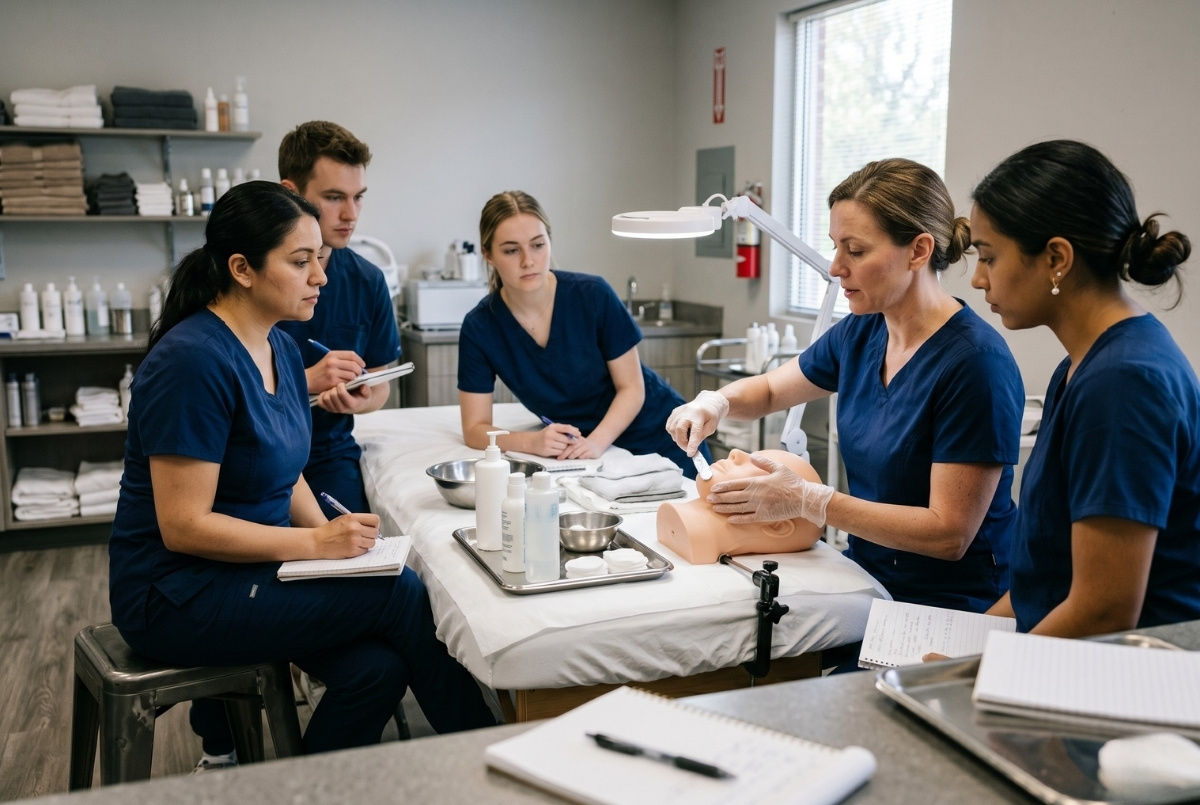
The esthetician school cost is an investment in your career. Tuition can range from $3,000 at a community college with an esthetician program to over $15,000 at private beauty institutes. Some schools provide financial aid that can cover your fees.
Managing the cost is possible through several options:
- FAFSA for esthetician school: You can apply for federal aid if your school is part of the Title IV program.
- Grants: Certain schools offer grants for esthetician school that you do not have to pay back.
- Military Benefits: The VA pays for esthetician school at many qualifying locations for veterans or their families.
When you calculate the cost to become an esthetician, remember to include the "kit fees." These kits contain the professional tools and products you will use during your training and your first job.
Securing Your Esthetician License
Finishing your esthetician program is the first major step. After that, you must gain official recognition from the state board. Most states require a written test, and many still require a practical exam.
The two-part system generally looks like this:
- Theory Exam: This written test covers skin biology, safety protocols, and state laws.
- Practical Exam: This is a hands-on demonstration where you show your skills on a model or mannequin to prove your techniques are safe.
States like California have simplified their process recently, but Georgia still uses rigorous testing to ensure every licensed esthetician is ready for the field. The cost to get an esthetician license usually ranges from $100 to $250 for application and testing fees.
Opportunities After Graduation
The question of what you can do with an esthetician license has many exciting answers. You could work in:
- Medical Spas: Collaborating with doctors on advanced skin treatments.
- Resorts: Working in luxury settings around the world.
- Self-Employment: Building your own business and specializing in niche services.
Data from ZipRecruiter in early 2026 shows that the average salary for an esthetician is around $45,374. Specializing in advanced treatments can increase your income. For example, a Master Esthetician often earns over $66,900 annually. Your esthetician yearly salary will likely grow as you gain experience and build a client list.

Starting Your Professional Journey
Choosing the right place to learn is vital for your success. At Perimeter Beauty and Barber Institute, I believe in providing a path that leads to a real professional legacy. Our school has been in business for over 20 years, and our team has a combined 80 years of experience helping students enter the Georgia beauty industry.
We focus on creating graduates who are "Salon Ready" from the moment they finish. This means you build practical skills in skin treatments, product knowledge, client care, and professional techniques that prepare you for the workplace. Students also train with professional product lines like CHI as part of their education. Our goal is to make sure you feel completely prepared when you start your first job.
Our history is built on the success of students who turned their interests into a career. Your future in skin health is waiting, and we are here to help you through every step. You can find out more about how to get started in Enrollment. We also have a contact form at the end of this article if you have more questions about our community.
FAQ: Common Questions
Is it hard to get a job as an esthetician?
The demand for skin health experts remains high. Employers look for graduates who understand safety rules and have strong hands-on skills. Choosing a reputable school makes your job search much easier.
Can you be an esthetician without going to school?
No. Every state requires you to complete a specific number of educational hours at an approved school before you can take the licensing exam.
Do you need a degree to be an esthetician?
You do not need a four-year college degree. You need a high school diploma or a GED and the completion of a state-approved esthetician course.