

Medical Nail Technician Pathway: From Nail School to Advanced Certification
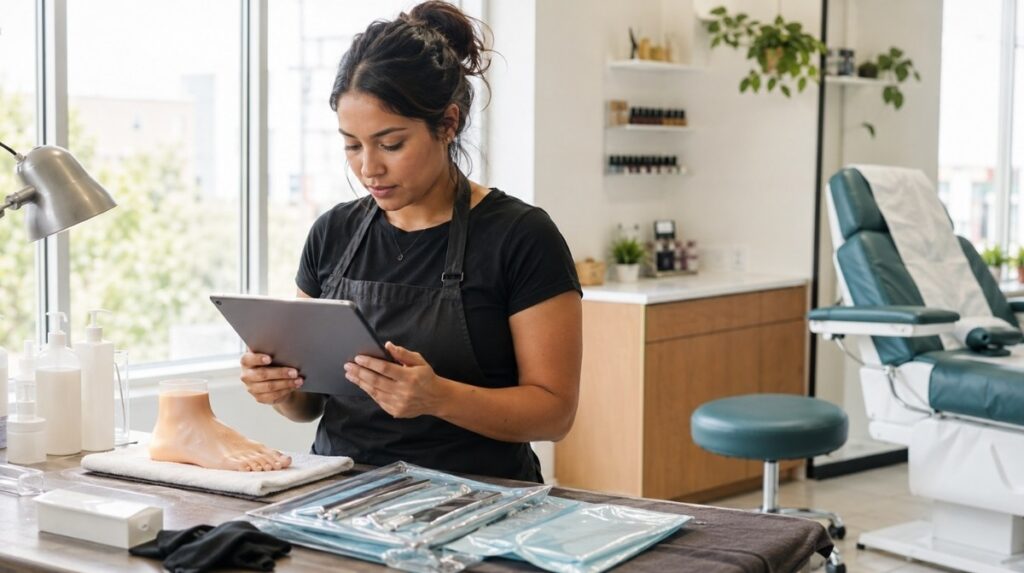
A nail career does not have to remain centered on crowded appointment books, fast service times, and constant pressure to move from one client to the next. Some professionals eventually become interested in a more deliberate type of nail care built around careful consultations, strong infection-control habits, and clear safety boundaries.
That interest is growing alongside broader changes in client needs. The United States has a large older-adult population, while chronic conditions affect people across every age group. The Centers for Disease Control and Prevention estimates that 40.1 million people of all ages in the United States had diabetes in 2023. Some older adults and people living with diabetes, reduced sensation, circulation concerns, or limited mobility may need nail and foot services performed with additional caution.
Understanding what is a medical nail technician can help you decide whether this safety-focused specialty fits your future. Advanced education may strengthen your professional judgment, help you communicate with healthcare providers, and support a carefully defined service model, but it does not turn a beauty professional into a medical practitioner.
Core Facts to Understand First
- Additional Safety Education: A Medical Nail Technician, often shortened to MNT, is generally a licensed nail technician or cosmetologist who has completed private advanced education in areas such as infection prevention, chronic-condition awareness, client screening, documentation, and referral.
- No Separate Medical Authority: An MNT certificate is not a government-issued healthcare license. It does not authorize medical diagnosis, wound treatment, surgery, prescribing, or any service prohibited under the technician’s original state license.
- A Possible Professional Specialty: The education may help a technician build trust, develop referral relationships, and create a more safety-conscious client experience. It does not guarantee referrals, higher prices, employment in a medical office, or a particular salary.
- Your State License Remains the Legal Limit: State law continues to determine which tools, products, procedures, and services you may use, even when you hold an advanced private certificate.
Where Medical Nail Care Fits Within Beauty Services
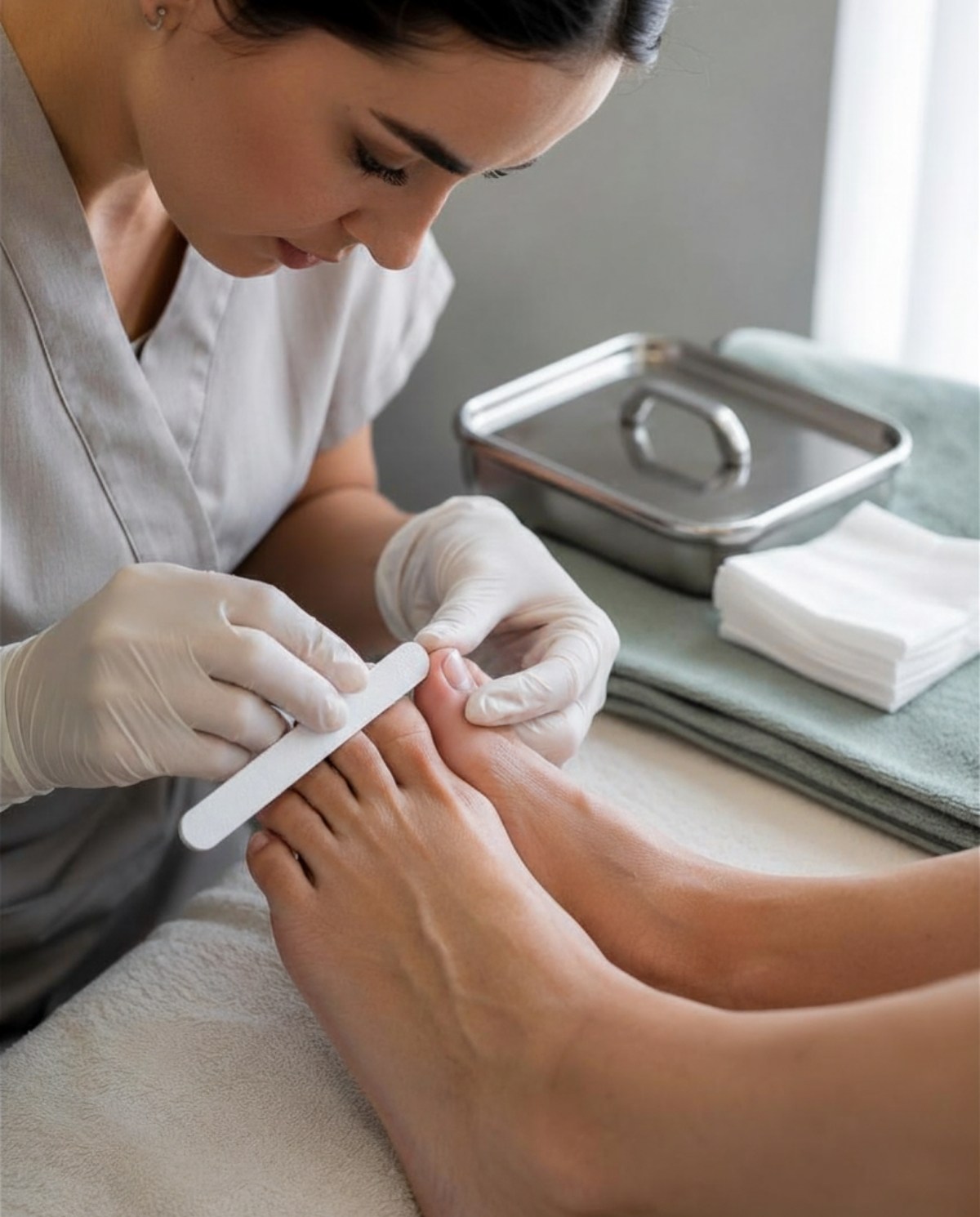
A medical nail technician is not simply a nail artist working in a different location. The specialty places greater attention on visible risk factors, service documentation, sanitation procedures, client communication, and knowing when a cosmetic appointment should not continue.
The title is commonly used for a licensed beauty professional who has pursued additional private training related to older clients, people with diabetes, and individuals managing chronic medical conditions. The word “medical” describes the safety-oriented education and possible collaboration with healthcare offices. It does not make the certificate holder a doctor, podiatrist, nurse, or medical assistant.
The work may involve several important professional principles:
- Aseptic and Infection-Control Practices: The Centers for Disease Control and Prevention defines asepsis as preventing contact with microorganisms. In nail services, this may include effective hand hygiene, preparing the work area carefully, using disposable items when appropriate, and cleaning and disinfecting reusable implements according to state requirements and product labels. Asepsis is different from sterilization, which is a validated process intended to render an item free of viable microorganisms.
- Dry or Waterless Service Methods: Some specialized providers remove the footbath from the service and use waterless techniques instead. This can reduce risks connected specifically with shared footbaths, but it does not eliminate every possible route of cross-contamination. Hands, tools, products, towels, surfaces, and reusable equipment must still be handled correctly. Balance Health describes waterless care as a common feature of medical-pedicure services. The National Institute of Diabetes and Digestive and Kidney Diseases also advises people with diabetes not to soak their feet because soaking can make the skin too dry.
- Conservative Cosmetic Maintenance: An MNT may provide careful cosmetic services that remain within the technician’s state scope of practice. A nail that is merely thick or discolored does not automatically establish a medical condition. However, severe pain, suspected infection, drainage, skin penetration, active inflammation, rapid changes, or abnormalities involving a client with diabetes, poor circulation, or reduced sensation may call for medical evaluation instead of a salon service.
- Screening Without Diagnosing: Advanced education can help a technician notice when an appointment may need to be changed, delayed, declined, or referred. Open sores, unexplained swelling, unusual warmth, active bleeding, blisters, drainage, redness, and suspected infection are examples of visible concerns. The technician may record what is observed but must not label the condition as neuropathy, vascular disease, fungus, cellulitis, or another medical diagnosis.
- More Cautious Product Decisions: Product selection becomes especially important when serving people with diabetes. NIDDK warns these individuals not to use liquid corn and callus removers because the products may damage the skin and contribute to infection. Every product must also be permitted by state law, appropriate for the visible condition of the skin, and used exactly as its manufacturer directs.
Working with clients who have complicated health histories can feel intimidating at first. The safest way to understand the role is to focus on its boundaries. An MNT does not treat infection, prescribe medication, manage ulcers, remove living tissue, perform surgery, or replace care from a podiatrist.
The technician’s job is to perform legally permitted cosmetic care while reducing preventable risks and recognizing when a client belongs in a healthcare setting. Referral is not a failure to complete the service. In many situations, it is the most professional decision available.
Demand for broader foot-care services is substantial. According to Mordor Intelligence, the worldwide podiatry-services market is estimated at $4.87 billion in 2026, while routine foot care represented 46.87% of the market in 2025. These are commercial estimates for the larger podiatry sector, not employment or income statistics for MNTs. They should only be viewed as general evidence of the role routine foot maintenance plays within the broader foot-care market.
Some podiatrists and other foot-care providers may employ safety-trained nail technicians or refer suitable clients to them. Whether this is possible depends on state law, the medical practice’s policies, liability requirements, the technician’s experience, and the exact work being performed. Completing an advanced certificate does not guarantee a position inside a clinic or an ongoing supply of referrals.
From State Licensure to an MNT Credential
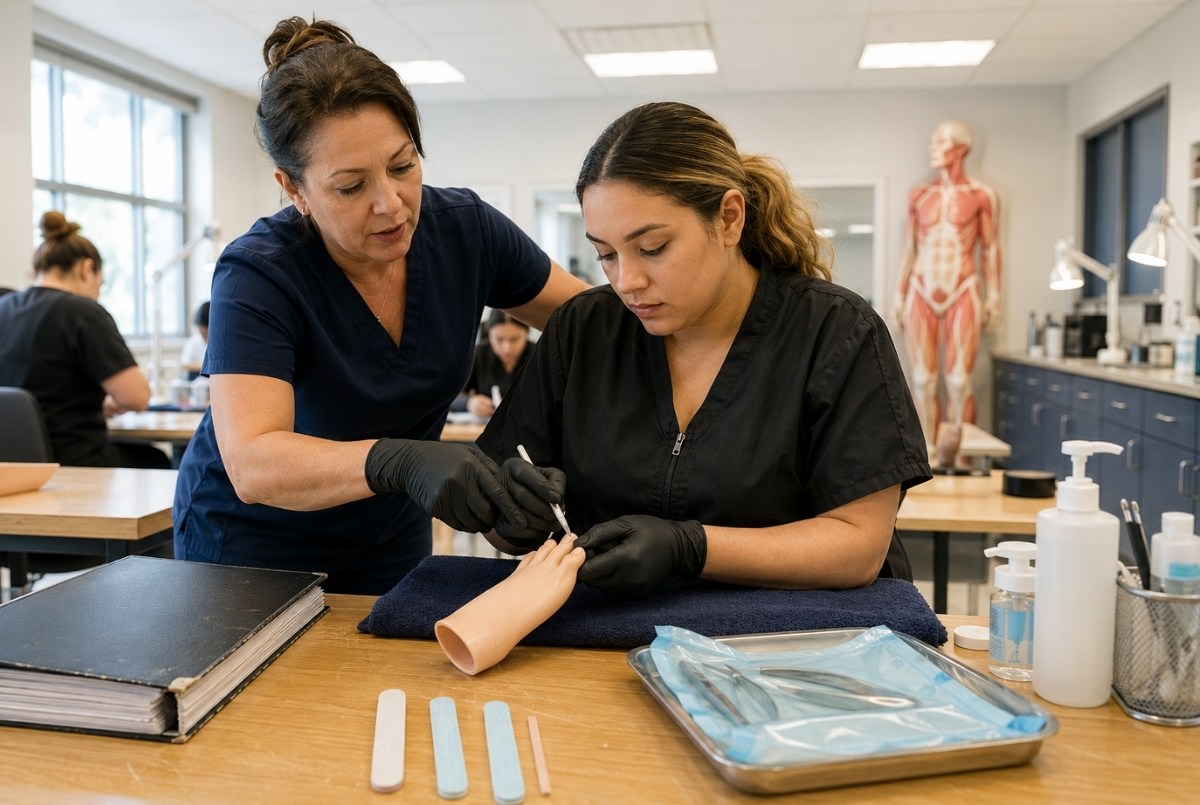
The advanced certificate comes after the professional foundation. A future MNT generally begins by obtaining the nail technician, manicurist, or cosmetology license required in the state where services will be performed.
The approved route is not identical everywhere. Many states use a school-based program, while some also recognize apprenticeships or other supervised training options. Therefore, it is more accurate to say that you must complete a state-authorized licensing path rather than assume every applicant must attend a traditional school.
Georgia provides a useful example. Under the Georgia State Board of Cosmetology and Barbers’ nail-care curriculum rule, a school-based nail program must contain at least 525 hours, including 140 hours of Level 1 theory and 385 hours of Level 2 service application. Georgia also permits a separate nail technician apprenticeship route requiring at least eight months and 1,050 hours.
At Perimeter Beauty & Barber Institute, the Nail Technician program contains 600 total hours. The school’s catalog correctly explains that Georgia requires 525 hours and that Perimeter added 75 hours for further practice and instruction.
Requirements elsewhere may be different. For comparison, the Arkansas Department of Health requires a 600-hour manicure curriculum. This difference is one reason students must check the rules of the state where they plan to become licensed rather than relying on requirements from another jurisdiction.
Foundational training develops practical knowledge in areas such as nail structure, anatomy, chemistry, infection control, client consultation, manicuring, pedicuring, product safety, and state law. Completing this initial training and receiving a state license allows you to enter the regulated nail profession. It does not automatically award the Medical Nail Technician title.
MNT certification is privately issued and is not governed by one national curriculum. Training providers may set different prerequisites, exams, course lengths, terminology, and internship standards.
One published pathway is available through Nailcare Academy. Its complete MNT sequence includes:
- Advanced Nail Technician, or ANT, education
- Wellness Nail Technician, or WNT, education
- A Medical Nail Technician internship-preparation program
- A documented 40-hour internship with an eligible foot-care medical provider
Within this particular system, the ANT course comes before WNT education, and both are prerequisites for the MNT internship program. Completing only the ANT course and an unrelated internship would not satisfy the provider’s published MNT sequence.
Other organizations may use different credential names or educational models. Before enrolling, review the complete curriculum, instructor experience, assessments, refund rules, license prerequisites, hands-on expectations, internship procedures, and graduate requirements. You should also compare the techniques being taught with the legal scope of practice in your state.
Which Parts Can Be Studied Remotely?
Online learning can make advanced theory more accessible to professionals who are already working. Topics such as anatomy, chronic-condition awareness, infection prevention, recordkeeping, professional communication, and referral decisions can often be introduced through structured online lessons.
Nailcare Academy provides its ANT and WNT coursework online. However, its complete medical nail technician online path is not entirely remote. The published process also requires completion of its MNT internship-preparation program and a separate 40-hour internship with a foot-care medical provider.
This requirement belongs to Nailcare Academy’s credentialing system and should not be presented as a nationwide law. Because no government agency regulates one universal MNT certificate, another provider may use different practical assessments or internship expectations.
Before purchasing an online course, confirm:
- Which lessons are completed online
- Whether applicants must already hold a current professional license
- How examinations and practical competency are assessed
- Whether an internship is required
- Who qualifies to supervise the internship
- Whether the provider helps students locate an eligible placement
- Which documents are required before the final certificate is issued
Supervised exposure in a medical office may help a student understand professional communication, office procedures, referral documentation, and what clients experience after being sent to a foot-care provider. It does not authorize the intern to diagnose fungal infection, neuropathy, vascular disease, ulcers, or any other medical condition.
Legal Boundaries and When to Refer
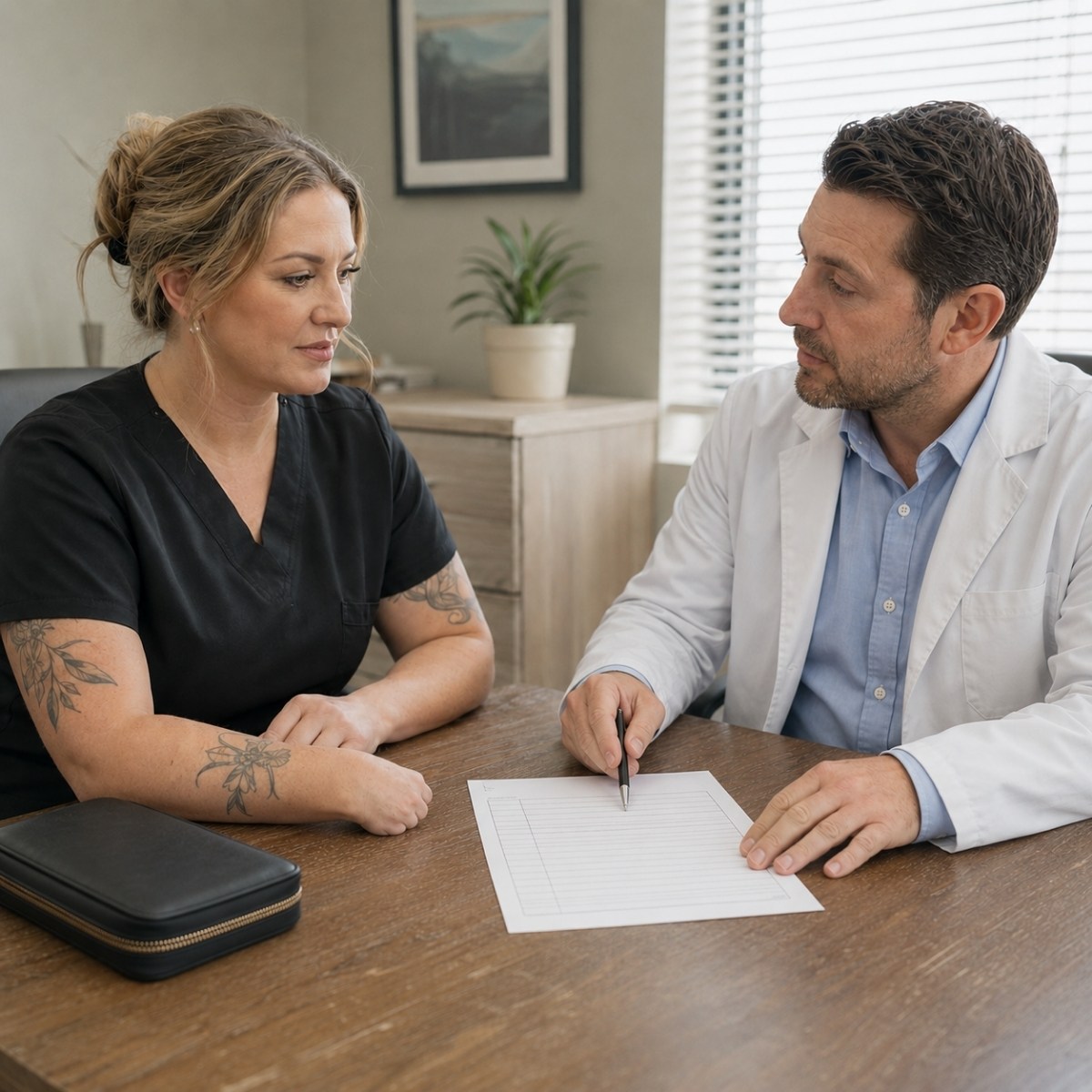
An advanced certificate adds education, not legal authority. Your original professional license continues to define what you may perform, where you may perform it, and which tools or products you may use.
An industry scope-of-practice explanation from Nailcare Academy states that ANT, WNT, and MNT credentials do not enlarge the scope granted by a state license. Working inside a podiatry office does not automatically permit a nail technician to perform procedures that would be prohibited in a salon.
Georgia makes this boundary particularly clear. Under Georgia’s facility requirements, cosmetology services may only be performed on intact, healthy scalp, skin, and nails. The rules also prohibit razor-type callus shavers intended to cut skin growths such as corns and calluses.
Therefore, an advanced certificate does not permit a Georgia nail technician to:
- Provide a service on an open wound or ulcer
- Treat an infected or inflamed nail condition
- Cut or remove living tissue
- Use a prohibited razor-type callus shaver
- Diagnose fungus, neuropathy, vascular disease, or another condition
- Perform medical or podiatric treatment
Advanced training is most valuable when it improves your decision-making before and during an appointment. The technician needs to know when cosmetic care may proceed conservatively, when a service should be adjusted, and when the appointment should stop.
Visible situations that may justify postponing or refusing a cosmetic service and recommending medical evaluation include:
- Open cuts, sores, ulcers, or unexplained bleeding
- Drainage, pus, odor, or another sign of possible infection
- Unusual redness, warmth, swelling, or inflammation
- A blister or damaged area that may be vulnerable to further injury
- Severe pain or a sudden change in the foot or nail
- An ingrown nail that has entered or broken the surrounding skin
- Thick, yellowed, curved, or severely distorted nails in a person with diabetes, reduced sensation, or circulation concerns
- A client who cannot safely see, feel, or reach the feet
Not every minor blister or temporary area of redness automatically requires emergency medical treatment. The appropriate response depends on what is visible, the client’s health history, the severity of the concern, and whether infection or tissue damage may be present. A nail technician should not determine the medical diagnosis or promise that the problem is harmless.
NIDDK specifically advises people with diabetes to have a foot doctor trim their nails when they cannot see, feel, or reach their feet, when the nails are thick or yellowed, or when the nails curve and grow into the skin. This guidance applies to people with diabetes and should not be misrepresented as a diagnosis rule for every salon client.
A private certificate also does not remove professional liability. Technicians should follow state sanitation rules, use clear client-intake procedures, keep appropriate service records, comply with employer or facility policies, and verify that their professional insurance is suitable for the services and work setting involved.
What the Numbers Say About Work and Earnings
Medical Nail Technician is not published as a separate federal occupation, so there is no authoritative nationwide wage figure specifically for MNT-certified professionals. The closest broad federal comparison is the manicurist and pedicurist occupation.
The U.S. Bureau of Labor Statistics reports that manicurists and pedicurists earned a median wage of $16.66 per hour in May 2024. Employment is projected to increase 7% from 2024 through 2034, with approximately 24,800 openings expected each year on average.
These figures cover the broader profession rather than specialists with an MNT certificate. The federal wage estimates also exclude self-employed workers, even though BLS reports that self-employed workers represented 28% of the occupation in 2024.
Actual financial results may depend on:
- Regional demand and local competition
- The technician’s state scope of practice
- Whether the person is an employee, renter, mobile provider, or business owner
- Appointment duration and the number of clients served
- Service prices and cancellation policies
- Client retention and professional referral relationships
- Rent, supplies, equipment, insurance, licensing, and payment fees
- Marketing, bookkeeping, taxes, and unpaid administrative time
- The technician’s experience and professional reputation
Advanced education may help a technician design a slower, more consultative service experience rather than compete only through low prices and quick appointments. In some local markets, a differentiated service model may support different pricing. However, no national MNT dataset proves that certificate holders consistently charge significantly more than other nail professionals.
Higher gross service revenue also does not equal higher personal income. Independent professionals must subtract expenses such as rent, products, continuing education, taxes, insurance, equipment, advertising, software, and unpaid time.
The practical advantage of specialization is the ability to build a clearly defined business around caution, communication, consistency, and trust. It is an opportunity, not an earnings guarantee. Newly licensed professionals can also review practical guidance on finding a first nail technician job without previous salon experience before deciding when advanced specialization makes sense.
Build Your Nail Foundation at Perimeter
A future specialty begins with proper entry-level training and state licensure. Perimeter Beauty & Barber Institute offers a 600-hour Nail Technician program in Dunwoody, Georgia. Its curriculum builds on Georgia’s 525-hour school requirement and adds further instructional time for nail art, design, and developing techniques.
Students receive foundational education in areas that support later professional growth, including sanitation, infection control, anatomy, nail structure, chemistry, client consultation, manicuring, pedicuring, artificial nail services, and salon-business preparation.
Perimeter does not list Medical Nail Technician certification as part of its Nail Technician program. Graduates who become properly licensed and later want to pursue medical-adjacent cosmetic nail care would need to research a separate advanced certificate provider and confirm that its training remains compatible with Georgia law.
No private MNT course replaces a Georgia nail technician license, changes the state scope of practice, or authorizes medical treatment. Its purpose is to build additional knowledge after the legal professional foundation has been established.
Visit Perimeter’s Enrollment page to review admission information, learn about the enrollment process, or request a campus tour. The admissions team can provide current information about program schedules, application steps, and available start dates.
Questions Future MNTs Commonly Ask
Does an MNT certificate make someone a healthcare professional?
No. An MNT is generally a state-licensed nail technician or cosmetologist who has completed additional private education. The credential does not create a medical license or make the holder a doctor, podiatrist, nurse, or other regulated healthcare practitioner. The technician cannot diagnose disease, prescribe treatment, provide wound care, or perform services outside the underlying beauty license.
Can an MNT submit cosmetic nail services to health insurance?
A nail technician generally does not independently bill health insurance for private cosmetic MNT appointments. Most clients pay for those services themselves. However, it is also inaccurate to claim that insurance never covers foot or nail care.
According to Medicare, routine services such as trimming nails or removing corns and calluses are usually not covered. Medicare may cover medically necessary treatment for a foot injury or disease and may cover routine foot care in very limited circumstances when its eligibility, provider, and medical-necessity requirements are satisfied. Clients should confirm coverage with the medical practice and insurance plan rather than assume an MNT service is reimbursable.
How is an Advanced Nail Technician different from a Medical Nail Technician?
The meaning depends on the private company issuing the certificate. In Nailcare Academy’s system, the Advanced Nail Technician course focuses on advanced safety and professional salon practices. ANT education is followed by the Wellness Nail Technician course. The student then completes the MNT internship-preparation program and a documented 40-hour internship with an eligible foot-care medical provider before earning the provider’s MNT designation.
Another education company may organize its certificates differently, so applicants must examine the actual curriculum instead of assuming every ANT or MNT credential has identical requirements.
May an MNT work on fungus, ingrown nails, or diabetic foot complications?
An MNT may notice visible concerns, decline unsafe cosmetic care, document observations, and recommend that the client contact a healthcare provider. The certificate does not permit the technician to diagnose or medically treat fungus, infected ingrown nails, diabetic wounds, neuropathy, vascular disease, or other health conditions.
Whether any cosmetic service may proceed depends on the visible condition and state law. In Georgia, cosmetology services are restricted to intact, healthy skin and nails.
Will an MNT certificate let me work in another state?
Not by itself. The private certificate may remain evidence of completed education, but it does not transfer or replace the underlying state nail or cosmetology license. Before practicing in another state, you must satisfy that state’s endorsement, reciprocity, examination, education, and application requirements.
The Cosmetology Licensure Compact is designed to create a multistate option for eligible cosmetologists in participating states, but the official website states that the Compact is not yet active and multistate licenses are not currently available.
The Compact’s published eligibility language applies to qualifying cosmetology license holders. It should not be assumed that a separate nail technician, manicurist, or other specialty license is automatically included. Professionals holding those license types must confirm their options with the destination state’s licensing board.