


Opening a Barbershop Without a Barber License – What Owners Need to Know

What to Know Before Opening Your Shop
- Separate Business Ownership From Service Authorization: Many states permit investors to own barbershops without a personal barber credential. Establishment licensing, qualified practitioners, and any required professional management still need to be in place.
- Check the Numbers Before Taking a Space: Previously occupied salons and barbershops can offer useful infrastructure, but its condition determines whether it saves money. Secure construction quotes and assess operating costs before accepting lease obligations.
- Verify Your State’s Operating Rules: Georgia requires salon/shop owners to complete an approved health, safety, and sanitation course. Arkansas requires registered-barber supervision and management of barbershops.
- Make Worker Status Match Daily Operations: Independent chair renters should control their own businesses. Mandatory shifts, owner-controlled service prices, and instructions about service methods can raise employee-classification concerns.
- Measure What Booking Software Delivers: Scheduling tools, reminders, advance payments, and cancellation policies can support appointment management. Use your shop’s actual results to assess their value.
Stepping into the commercial beauty and grooming market is a major milestone, but rushing to sign a lease without a clear blueprint can cause financial setbacks. A common misconception among new entrepreneurs is thinking they need to be a licensed stylist or barber simply to own the business. States such as New York and Georgia distinguish shop licensing from the credentials needed to perform regulated services, although professional management requirements vary. If you are considering obtaining your own credential while setting up the company, exploring how to become a barber provides a useful overview of the educational journey.
Owning the Business Without Working Behind the Chair
Lacking technical haircutting experience does not automatically prevent you from entering the grooming industry as an owner. Running the commercial side involves responsibilities distinct from performing client services. Begin by checking how your state regulates the premises, practitioners, and any designated professional manager.
Know What Each License Allows
A compliant setup starts with recognizing the different purposes of an establishment license and an individual practitioner license.
The establishment credential permits the shop to operate subject to applicable state requirements. A practitioner credential authorizes its holder to carry out the services covered by that license.
When researching how to set up a barbering business, prospective entrepreneurs sometimes confuse these approvals. The New York State Division of Licensing Services explains that a Barber Shop Owner’s license does not authorize its holder to practice barbering. The department also specifically states that an apprentice barber may not own a barbershop or rent space in one.
For an investor who does not provide services, daily responsibilities may include accounting, brand development, marketing, and business administration. That role still carries obligations to maintain the establishment’s license, satisfy facility standards, and arrange any professional supervision required by law.
Without the appropriate service credential, do not perform regulated work such as haircuts, line-ups, or shaving. Authorization depends on the services you carry out, rather than whether you own the building, purchase equipment, or handle a tool. Understanding the permitted scope of each credential helps protect both customers and the business.
For more context on the qualifications your future practitioners will need, our guide on how to get a barber license covers training standards, required hours, and state examinations.
Compare Georgia’s Rules With Arkansas’s Requirements
Looking at specific states illustrates why ownership and professional management must be evaluated separately:
- Georgia: The establishment application rule allows a person or persons to apply to operate a salon/shop without stating that every owner must hold a practitioner credential. Under Georgia Board Rule 240-12-.01, the salon/shop owner must complete an approved health, safety, and sanitation course. The business name must contain “Salon” or “Shop,” and the establishment must receive its license before conducting business.
- Arkansas: Arkansas Code §17-20-301, published by the State Board of Barber Examiners, requires a barbershop to operate under the personal supervision and management of a registered barber. It also prohibits employing or allowing an unlicensed person to serve as a barber manager. Investors therefore need to distinguish their commercial ownership role from the licensed management required to operate the shop.
Before accepting a lease, ask the relevant board whether a designated licensed manager is necessary, which credential qualifies, and what supervision arrangements it accepts. Neither a “master barber” title nor a particular on-site staffing arrangement should be assumed to apply nationwide.
Evaluate the Property and Financial Plan Together
A commercial lease creates recurring obligations before your shop develops a dependable customer base. Compare potential properties, estimate the work required, and determine whether expected income can support the total operating expense.
Assessing construction feasibility alongside revenue expectations gives you a stronger basis for choosing a location and negotiating its lease.
Account for Every Launch Expense
Preparing a storefront may require mechanical, electrical, and plumbing modifications. Styling chairs, waiting-area furniture, and paint are visible expenses, but water-heating capacity, drainage, electrical upgrades, and code compliance can also affect the budget.
Plumbing work becomes more expensive when contractors must open concrete floors or install new supply and drain lines. Obtain written estimates based on the proposed layout rather than applying a universal cost percentage.
For an initial reference, Menubly’s barbershop startup-cost guide places a full build-out at $15,000 to $50,000 or more, with barber chairs and station equipment budgeted separately. These are estimates from a commercial guide, not a verified nationwide benchmark. Local quotes should determine your actual construction allowance.
A second-generation salon or barbershop may help preserve startup funds. Menubly suggests that existing plumbing and electrical infrastructure could save $10,000 to $20,000, but usable systems and a compatible layout are essential to realizing those savings.
Former pet-grooming premises may also deserve consideration. However, installed sinks and drains do not establish that the property meets requirements for human grooming services. Have qualified professionals assess its suitability before including potential savings in your forecast.
List construction separately from lease deposits, licensing, equipment, initial inventory, signage, insurance, and launch marketing. Prepare a cash-flow forecast and reserves for the early operating period, when bills arrive before customer volume becomes consistent.
Translate Monthly Overhead Into a Revenue Target
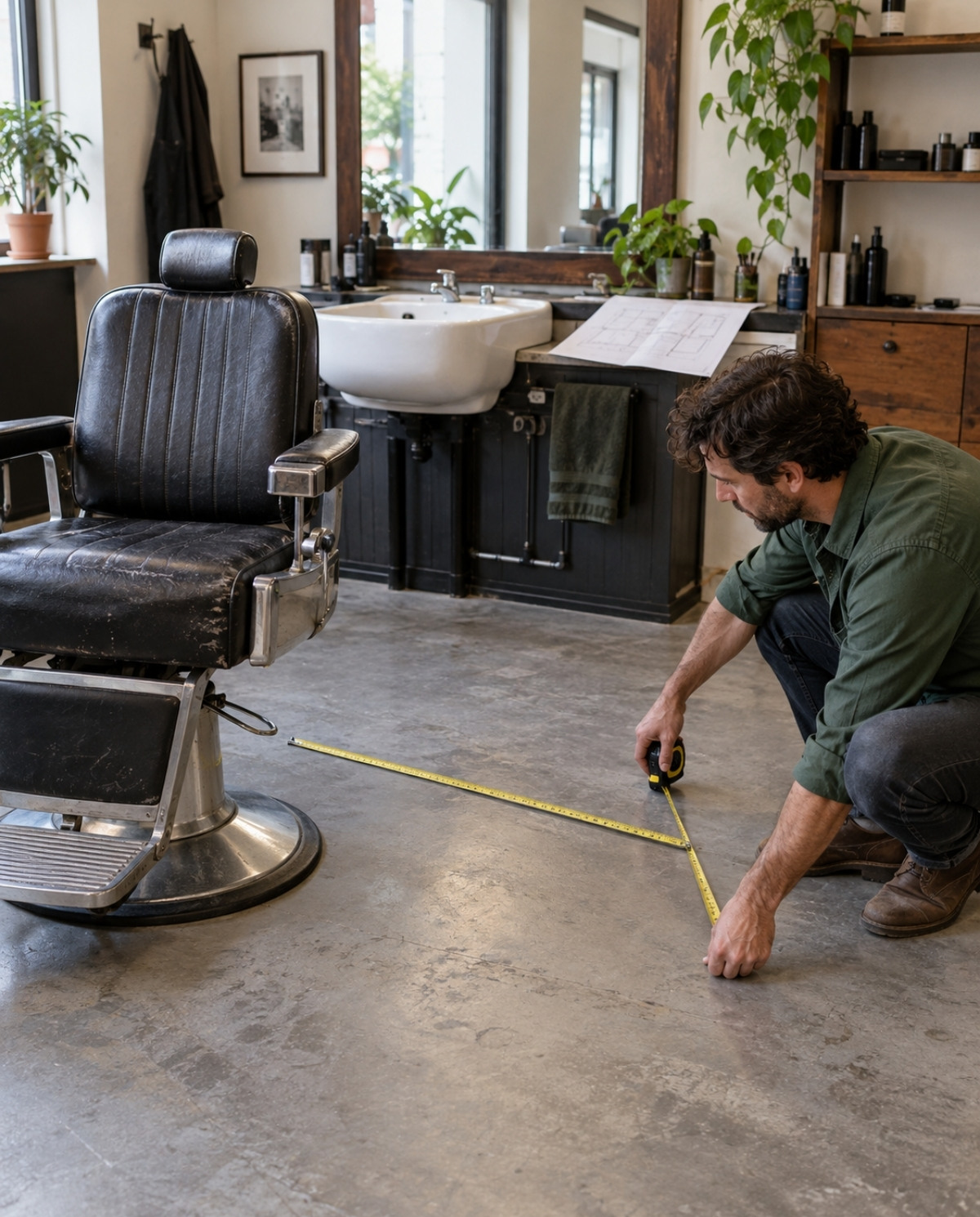
A property can be affordable to renovate yet too costly to operate. Calculate the level of activity needed to support recurring expenses before making a commitment.
The U.S. Small Business Administration’s break-even calculator expresses the calculation in terms of fixed costs and the amount each sale contributes toward them:
Monthly services needed to break even = fixed monthly expenses ÷ contribution from each service
For an employee-based shop, calculate that contribution by subtracting service-related variable expenses from the average service price. Depending on the compensation arrangement, these expenses may include commissions, disposable supplies, and card-processing fees.
Suppose monthly fixed expenses total $6,000 and each completed service contributes $20. The shop would need 300 services per month to reach break-even. Operating for 25 days would mean averaging 12 completed services daily. This is a hypothetical calculation, not an industry average or a prediction for your location.
Test whether that target fits your staffed stations, appointment lengths, opening hours, and expected local demand. Include owner compensation and financing payments in the broader cash-flow plan. Tips collected for employees should not be treated as shop service revenue.
For a chair-rental model, compare operating expenses with rent from realistically occupied stations. Model a vacancy or a renter’s departure so you understand the effect on cash flow. Weekly rents support forecasting only when chairs remain occupied and payments are collected.
Inspect the Premises and Address Lease Risks
When visiting properties, evaluate practical operating requirements alongside visibility and curb appeal:
- Water and Power Capacity: Ask qualified contractors to assess supply lines, drainage, water heating, and the electrical capacity needed for your equipment. Existing connections may still require repairs or upgrades.
- Permitted Use and Facility Approval: Confirm zoning, occupancy, accessibility, fire, and board requirements. A previous salon tenant does not guarantee approval for your proposed operation.
- Customer Access: Review parking availability, entrance accessibility, and how clients will reach the premises during busy periods.
- Conditions for Required Approvals: Seek lease provisions covering approval deadlines and termination rights if necessary permits or licenses cannot be obtained. Specify what happens to deposits and prepaid rent rather than assuming they will be returned.
- Construction and Ongoing Charges: Establish responsibility for code upgrades, landlord improvement contributions, rent commencement, common-area charges, maintenance, and restrictions on chair rental or subleasing.
For Georgia properties, the Georgia Board’s facility rules address separation from other spaces, equipment condition, sanitation, hot and cold running water, restroom access, and required displays.
Reviewing these requirements during property selection can reveal work that would otherwise become an unexpected expense after signing.
Select a Staffing Model That Fits Your Business
The relationship between your shop and its practitioners affects income, management responsibilities, and tax obligations. Independent renters operate their own businesses and pay for workspace. Employees work for the shop under its direction and receive wages, commissions, or a combination.
Compare the financial and administrative demands of both models before deciding which arrangement suits your plans.
Understand the Owner’s Role in Chair Rental
Independent renters typically pay a weekly or monthly amount for a chair or designated workspace. Signs of an independent operation include choosing service prices, managing appointments, purchasing products, and assuming business expenses.
The IRS tax guide for the cosmetology and barber industry discusses these characteristics. The publication dates from February 2011, so its examples provide background on worker relationships while current filing instructions and reporting requirements should be verified separately.
Chair rental can reduce payroll administration and help owners forecast rental receipts. It does not justify directing renters as though they were employees by controlling their shifts, service methods, or customer prices. Appropriate premises rules and facility sanitation responsibilities still need to be addressed.
Use a written agreement to define the workspace, rent, included utilities or supplies, access arrangements, insurance responsibilities, and termination conditions. Daily operations should reflect the independent relationship described in that agreement.
Recognize the Obligations of Employing Barbers
An employee-based shop can set service prices, assign schedules, establish lawful workplace policies, collect client payments, and compensate staff through hourly pay, commissions, or a combined arrangement.
This structure supports a coordinated customer experience, but it also brings payroll, employment-tax, recordkeeping, and wage-compliance responsibilities. Larger service receipts do not necessarily produce larger profits after labor and operating expenses.
Commission compensation alone does not eliminate minimum-wage or overtime requirements. The U.S. Department of Labor’s guidance on commissioned retail and service employees explains the conditions required for the federal retail-service overtime exemption.
Maintain accurate records of working hours and assess the complete compensation arrangement before relying on an exemption. Applicable state wage rules must also be considered.
Keep Classification Consistent With the Working Relationship

Employees and independent renters can operate within the same shop, but each arrangement needs to function according to its actual status. Problems arise when a business describes someone as independent while exercising employer-like control.
The IRS worker-classification guidance evaluates behavioral control, financial control, and the nature of the relationship. Classification depends on the overall circumstances rather than any single factor.
Mandatory shifts, owner-set service prices, and directions about how a renter performs services can weigh toward employee status. A “1099 contractor” label or rental contract cannot settle the issue when daily operations show a different relationship.
Misclassification may result in employment-tax liabilities and obligations under wage, unemployment, and workers’ compensation laws. Renting a chair also does not automatically require the shop to issue the renter a contractor-payment tax form. Reporting depends on the actual payments and arrangement.
Create Systems That Help Practitioners Work Effectively
An owner without a haircutting background can contribute by resolving operational problems, maintaining the property, and supporting customer acquisition. Any licensed professional supervision required by the state should be arranged separately and reliably.
Clear responsibilities and dependable facilities help practitioners focus on serving clients.
Focus Your Management Efforts on Business Operations
For owners who do not cut hair, several practical responsibilities deserve attention:
- Define Who Provides Supplies: Keep business-provided towels, neck strips, sanitation products, and other supplies available in an employee shop. For chair rentals, document which items the owner supplies and which each renter purchases.
- Resolve Facility Problems: Maintain equipment and building systems, coordinate cleaning, and respond promptly to repair needs.
- Develop Local Visibility: Support customer acquisition through accurate business listings, community engagement, and appropriate marketing. Coordinate shared promotions with renters according to their agreements.
- Arrange Required Professional Management: Confirm the coverage your state requires and plan for the designated professional’s absence or departure.
Match these systems to the staffing arrangement. Centralized booking and inventory may suit employees, while independent renters may manage their own appointments, customers, and products.
Pair Appointment Software With Enforceable Policies
Scheduling and payment platforms can organize appointments, transactions, and business records. Upmetrics’ barber-business trends article discusses online booking, cashless payments, automated reminders, and management software. These trends do not establish a guaranteed improvement in occupancy or profit.
Choose features that suit the shop’s structure. Employee operations may benefit from integrated scheduling and commission reporting, while rental locations should assess how shared systems preserve each practitioner’s independent arrangements.
Cancellation protection requires clear procedures as well as software. Square’s cancellation and prepayment documentation distinguishes full advance payment from holding a card for no-show protection. Cancellation fees are charged when the business chooses to enforce its policy.
Explain cancellation windows and charges clearly, check how clients receive those terms, and understand the platform’s handling of refunds and declined cards. A card held for no-show protection is not a paid deposit, and neither arrangement guarantees recovery for every missed appointment.
Monitor completed services, no-shows, late cancellations, booked hours, and revenue per available practitioner hour. Your own data will show whether the chosen system is improving operations.
Combine Industry Familiarity With Commercial Preparation

Running a viable grooming business requires regulatory knowledge, financial planning, and dependable support for the people delivering services.
Practitioners need technical competence, while owners also need to understand contracts, budgeting, customer acquisition, and operating responsibilities. Industry education can offer useful perspective, but it cannot replace a financial plan for the specific location or confirmation of establishment requirements.
The Fortune Business Insights salon-services report identifies rising interest in grooming as a contributor to demand. Broader market trends can inform your service ideas, but local competition, customer needs, and realistic prices should guide the business plan.
If you are considering training for yourself or researching education for future staff, our overview of barber school costs and requirements can help you prepare questions. Ask schools about their schedules, sanitation instruction, licensing preparation, client communication, and any business coursework included in the program.
Common Questions From Prospective Owners
Must a non-cutting owner hire someone with a master barber title?
The required credential depends on the state. A master barber title is not a nationwide condition for shop management. Arkansas requires personal supervision and management by a registered barber. Ask your board which professional credential is necessary and what supervision arrangements it accepts.
What determines the time needed to launch?
Lease negotiations, construction, permits, establishment licensing, and staffing can make opening a shop a process lasting several months. The condition of the property also matters: minor alterations to an existing shop may involve a different schedule from extensive work in an unfinished storefront. Develop your timeline around the approvals and construction steps your location actually requires.
Can an owner study barbering while continuing to manage the company?
Owning a business does not prevent you from pursuing professional training. Ask the school whether its attendance options fit your responsibilities and how required hours are completed. Arrange adequate shop management while you attend classes. Enrollment by itself does not authorize you to provide regulated services in your shop.
Which insurance policies should I consider for the shop?
Common options include general liability, commercial property, and professional liability coverage. General liability generally addresses covered third-party injury and property-damage claims, while professional liability addresses covered claims connected with services. The actual protection depends on policy terms, conditions, and exclusions.
Wexford Insurance’s barbershop licensing and insurance overview offers an introduction to coverage discussions. Review your lease as well, because it may impose specific insurance requirements.
Workers’ compensation obligations depend on state law and employee count. The Georgia State Board of Workers’ Compensation states that most employers with three or more full-time, part-time, or seasonal employees must carry coverage. Corporate officers and LLC members are included in the count even when they exempt themselves from coverage.
Take Your Next Step With a Clear Plan
Opening a shop requires startup funds, a workable operating model, and a clear understanding of regulatory obligations. Before accepting a commercial lease, confirm the licensing requirements, assess the break-even target, and establish how your team will work.
To explore education and career preparation at Perimeter Beauty & Barber Institute, visit our Enrollment page and connect with an admissions representative about available programs and attendance options.
Use the contact form below to ask questions and discuss the training path that fits your goals.