

Can You Open a Salon Without a Cosmetology License? What You Can and Cannot Do

The global beauty salon market is growing fast, with Custom Market Insights projecting the global salon market at 249 billion dollars in 2026. For a business-minded founder, investor, or stylist with bigger plans, that number can make salon ownership feel like an exciting opportunity. You may be thinking about building a polished space, serving your local community, growing a trusted beauty brand, and creating a business with strong revenue potential.
Then the legal side shows up. You start asking the practical questions: Can you own the salon if you are not licensed? Can you hire licensed professionals instead? Do you need a cosmetology license just to manage payroll, marketing, leases, and operations? Let’s walk through the rules clearly so you can understand where ownership is allowed, where the legal line begins, and why training can still give salon owners a serious advantage.
Quick Legal Takeaways for Future Salon Owners
- Salon ownership is often allowed: In many states, a person may own the business entity, lease, or salon property without holding a personal cosmetology license.
- Hands-on work is different: Unlicensed owners may handle business operations, but they cannot perform regulated beauty services. In California, unlicensed activity and employing unlicensed individuals can lead to administrative fines of up to $1,000.
- The location usually needs its own approval: Most salons need a salon, shop, establishment, or similar facility license from the state board or licensing agency. This is separate from an individual beauty license and may also be separate from a city or county business license.
- Education still protects the business: A personal license can help an owner understand service quality, sanitation, staff performance, product use, and technical decisions instead of depending completely on hired managers.
Can an Unlicensed Person Own a Salon?

Yes, in many cases, you can own a beauty business without holding a personal cosmetology license. State rules usually separate business ownership from professional practice. If your role is to invest money, sign the lease, manage payroll, build the brand, run marketing, purchase supplies, or supervise the business side, you generally do not need to attend beauty school just to own the company.
But there is a hard legal boundary: scope of practice. Scope of practice means the services your license legally allows you to perform. If you do not hold the right individual license, you cannot jump in and provide cosmetology services yourself. That means you cannot wash a client’s hair, cut hair, apply color, perform nail services, offer skin care treatments, or help with regulated service work during a busy day. If you want to understand which beauty-related jobs may be available without a license, read our guide on how to build a career safely around cosmetology without a license.
The official California Board of Barbering and Cosmetology Act and Regulations state that working as an unlicensed individual can carry a $1,000 administrative fine. An establishment license holder may also face a $1,000 fine for employing unlicensed persons. The main legal problem is not passive ownership. The risk begins when an unlicensed owner starts performing services, allowing unlicensed service work, or stepping into regulated areas that the state expects licensed professionals to handle.
That is why the unlicensed-owner model depends heavily on licensed staff. If a stylist calls out, you cannot legally replace them behind the chair unless you hold the proper license yourself. That can mean canceled appointments, frustrated clients, lost income, and pressure on the rest of the team.
Business License vs. Salon Establishment License
Before opening your doors, it is important to separate personal credentials from location approval. An individual license allows a person to perform specific beauty services. A salon, shop, establishment, or similar facility license allows the physical location to operate as a regulated beauty business.
What a Salon Establishment License Usually Covers
A salon establishment license is the state-level approval for the place where services are provided. The exact name depends on the state, but the purpose is similar: the licensing agency wants to know that the business location, ownership paperwork, sanitation setup, equipment, posting requirements, and facility conditions meet the rules before the public is served.
Depending on the state, the application may ask for owner information, business-structure details, a lease or bill of sale, floor or facility information, required equipment, restroom access, plumbing, hot and cold water, ventilation, license posting, required public notices, and inspection readiness.
A city or county business license is not always the same thing as a salon license. For example, the Georgia State Board of Cosmetology and Barbers explains that a salon/shop license is not the same as a business license, and that owners must obtain a business license from the city or county where the establishment is located.
Why State Rules Can Change the Business Model
Cosmetology regulations vary a lot from state to state. A business idea that works smoothly in one state may require extra paperwork, different facility rules, or a different ownership setup somewhere else. Before signing a lease or building out a space, you should check the current cosmetology rules and regulations for the state where you plan to operate. Our guide to cosmetology license requirements by state can help you compare hours, exam rules, and transfer requirements before you make a long-term plan.
If you want to rent private suites to independent beauty professionals, Texas is a good example of how specific the rules can become. The Texas Department of Licensing and Regulation explains that an establishment renting space to mini-establishments is considered a gallery establishment. Texas also says establishments that lease space must include an Independent Contractor List with application materials and are responsible for maintaining all common areas. In other words, salon-suite ownership is not just collecting rent. The structure itself can trigger special licensing responsibilities.
Texas also requires certain public-safety postings. Under Texas Occupations Code Sec. 1603.356, licensed schools and establishments must display a human-trafficking information sign in English, Spanish, Vietnamese, and any other language required by commission rule. The TDLR human trafficking notice also explains that the sign must be placed where the public can clearly see it.
Georgia shows how detailed ownership paperwork can be. The Georgia State Board of Cosmetology and Barbers salon/shop application requires items such as a lease or bill of sale, a notarized application and affidavit, secure and verifiable identification documents, and a separate owner affidavit for each owner. Georgia also states that the establishment name must include the word “salon” or “shop” and must not mislead the public about how the establishment operates.
Arkansas is another example of how salon rules connect directly to health and safety standards. The Arkansas Department of Health Rules for Cosmetology and Body Art require cosmetology establishments and mobile salons to hold a current establishment license before operating. The rules also address facility basics such as continuous hot and cold running water, sewage disposal, toilet facilities, plumbing, garbage control, cleanliness, ventilation, and general repair.
Checking these requirements early can save you from signing a commercial lease on a space that is expensive or impossible to bring into compliance.
What Happens When a Salon Ignores Licensing Rules?
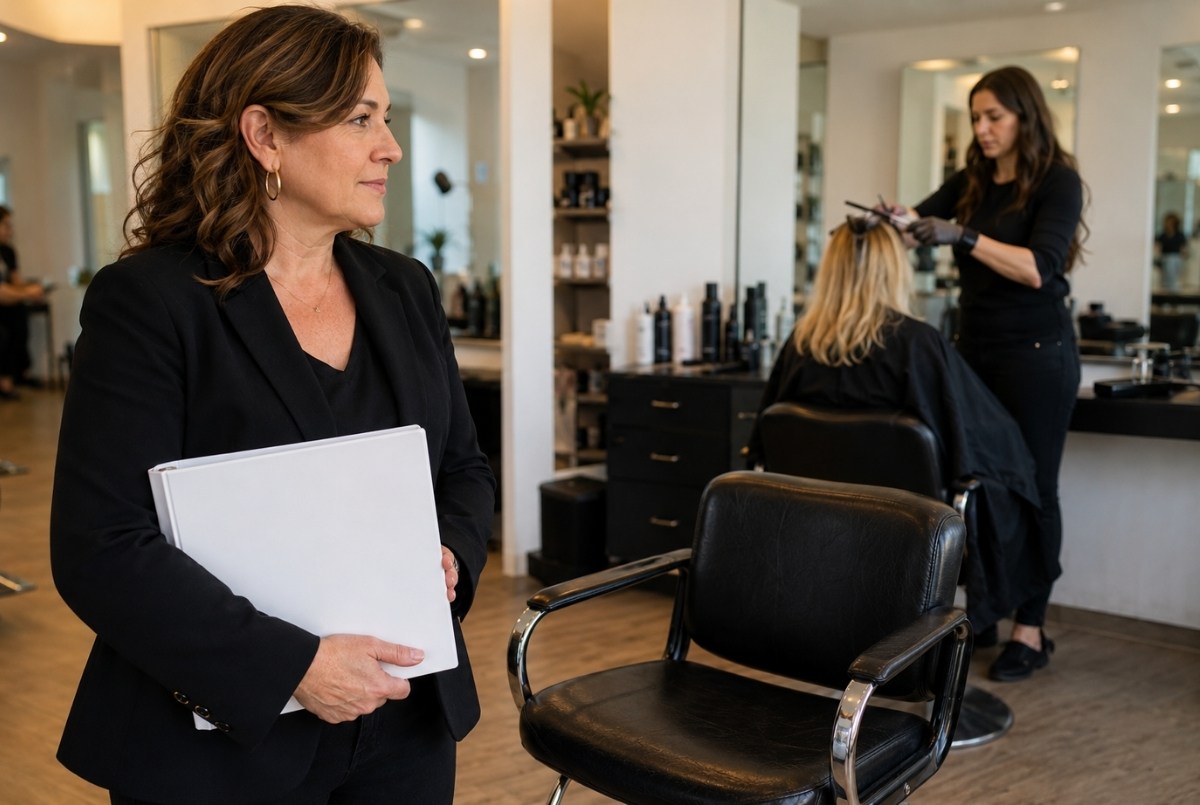
Shortcuts can be tempting, especially when you are trying to open quickly or keep payroll low. But allowing unlicensed people to perform regulated services can create real financial and legal exposure. State boards conduct inspections, and complaints may come from clients, workers, competitors, or other members of the public.
The consequences can hurt a new salon quickly. Fines for cosmetology violations can involve anything from sanitation issues to unlicensed practice. The California Board of Barbering and Cosmetology enforcement page lists complaint categories such as unlicensed practice, unsanitary conditions, gross negligence, incompetence, and misrepresentation of services.
Unlicensed service work also creates public-safety concerns. Beauty services are not only about appearance. Hair color, chemical texture services, waxing, nail services, skin care treatments, disinfection, and product handling all involve sanitation and health standards. California’s rules define skin care services as including facials, exfoliating, cleansing, and beautifying the skin, as long as they do not cause ablation or destruction of live tissue. When someone works outside the allowed scope, the risk is not just a paperwork issue. It can become a liability issue for the worker, the owner, and the business.
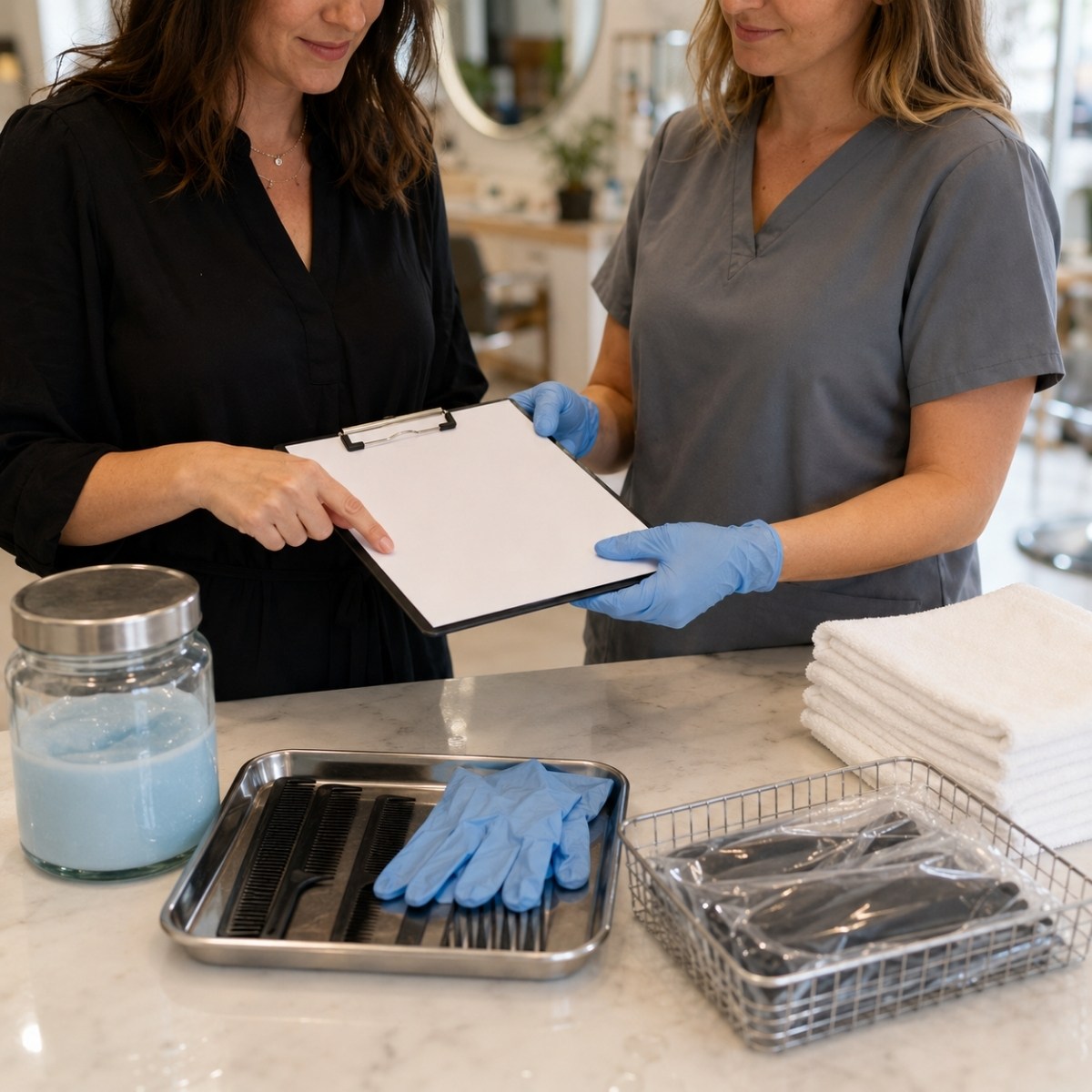
If a client, employee, or competitor wants to report someone practicing cosmetology without a license, the usual path is to file a complaint through the state board or licensing agency. For owners, the safer approach is prevention: verify every worker’s license, keep license records on file, post required documents, follow sanitation rules, confirm insurance coverage, and review your state inspection checklist before opening.
Why a Cosmetology License Can Make You a Stronger Owner
Even when your state allows unlicensed ownership, getting licensed can still be a smart business move. A salon owner does not need to personally perform every service, but understanding the craft helps you manage the business with better judgment.
Better Control Over Daily Salon Performance
According to data discussed by SalonIQ, strong salon growth is tied to areas such as client retention, visit frequency, operational efficiency, and data-led decision making. That means a salon owner needs to understand more than appointment volume. You need to know why clients come back, why they stop booking, which services support healthy margins, and how your team turns one appointment into a long-term client relationship.
Technical education makes those decisions easier. A licensed owner can better evaluate consultations, color choices, timing, sanitation habits, retail conversations, rebooking patterns, product waste, and service quality. Without that knowledge, you may struggle to spot weak performance until it affects reviews, revenue, or client trust.
Training also builds credibility with your team. When you understand product chemistry, service timing, client safety, and technique, your staff knows you are not managing from the outside. You can speak their language, ask better questions, plan inventory more accurately, and make smarter decisions when something goes wrong.
More Flexibility When the Business Gets Busy
Beauty school does take time, but education rules are not frozen forever. Some states continue to review training-hour requirements and apprenticeship rules. That does not mean every state is changing, and it does not mean a proposed bill is final law, but it does show why owners should check current state-board requirements before choosing a pathway.
For example, the North Carolina General Assembly introduced Senate Bill 808, which proposed reducing cosmetology school hours from 1,500 to 1,200 and changing apprentice-licensure rules. Because proposals can change before becoming law, the safest move is always to confirm current requirements directly with the state board where you plan to study or open your salon.
A cosmetology pathway gives you more than a credential. It gives you the foundation to understand services, lead a team, prepare for inspections, evaluate staff performance, and plan your next business steps with more confidence. If you are thinking ahead, our guide on what to do after you have finished cosmetology school can help you understand licensing, jobs, and career planning after graduation.
Start Building Your Beauty Career With More Confidence
Salon ownership is not only about having capital. It also takes industry knowledge, legal awareness, and the ability to lead beauty professionals in a regulated environment. The right education can help you connect business ambition with real technical understanding, from sanitation and product knowledge to service flow and client care.
If you are ready to learn more about getting started, visit Enrollment to explore your next step with Perimeter Beauty and Barber Institute. You can also leave your details in the contact form below, and the team will follow up with more information.
FAQ: Salon Ownership and Licensing Questions
Can a licensed esthetician own a full-service hair salon?
Yes, in many states, an esthetician can own the business. However, their personal license usually only allows them to perform services within the esthetics scope of practice, such as skin care-related services. If the salon offers hair services, nail services, barbering, or other regulated work, the owner must hire properly licensed professionals for those services.
What insurance should an unlicensed salon owner consider?
An unlicensed salon owner will usually need commercial general liability insurance, property coverage for equipment and buildout, and professional liability coverage related to client-service risks. You should also ask an insurance professional how the policy treats employees, booth renters, independent contractors, and claims involving unlicensed or out-of-scope services. Keeping proof of every worker’s active license is also important.
Can I sell professional hair color or chemical products without a license?
It depends on the product, supplier, and state rules. Some professional-only brands limit sales to licensed professionals or approved salon accounts. General retail hair color and cosmetic products may be sold when they are legally sourced, properly labeled, and allowed by applicable law. The FDA explains that most hair dyes are regulated as cosmetics, and cosmetic products generally do not need FDA premarket approval, although color additives and labeling rules still matter.
The important distinction is this: selling a product is not the same as applying a regulated chemical service to a client. Even if a product can be sold at retail, an unlicensed person still cannot apply hair color, chemical texture services, lash or brow dye, skin treatments, or other regulated beauty services on a client.