

How to Apply for an Esthetician License: Passing Your State Boards and Transferring States
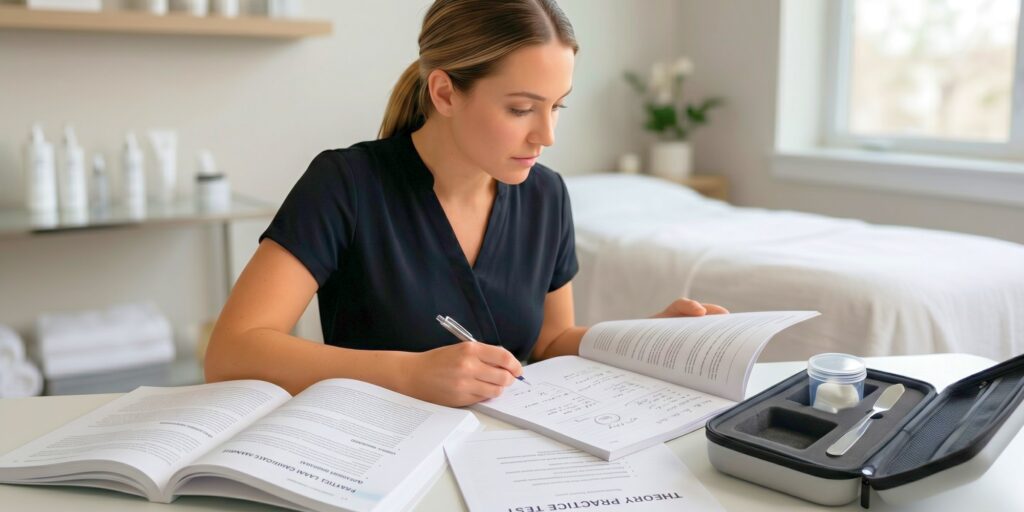
Starting a career in skincare is an exciting journey. I know firsthand that finding clear information about local regulations can be quite overwhelming. Every area has its own set of rules regarding how much training you need, the specific tests you must pass, and what tasks you are legally allowed to perform. I want to help you understand the entire process so you can focus on building your skills instead of stressing over paperwork. Here is my complete breakdown to help you navigate schooling, prepare for the state board exams, and earn the right to practice professionally.
Key Takeaways
- Training Length Varies: Required education ranges from a low of 220 hours in Florida for a Facial Specialist registration up to 1,000 hours in Alabama and Georgia.
- Online Learning Has Limits: A few schools let you study theory digitally, but earning your credential still requires in-person practice and passing state-approved exams.
- Exams Focus on Safety: The standard written test includes 110 items, with 100 scored, and the NIC is updating blood exposure procedures for practical testing starting March 2026.
- Transferring is Complex: You can often transfer credentials through endorsement, but the Cosmetology Licensure Compact is currently not active and is mainly designed for cosmetologists anyway.
What Does It Take to Become a Licensed Professional?
Required Training Hours and Local Differences
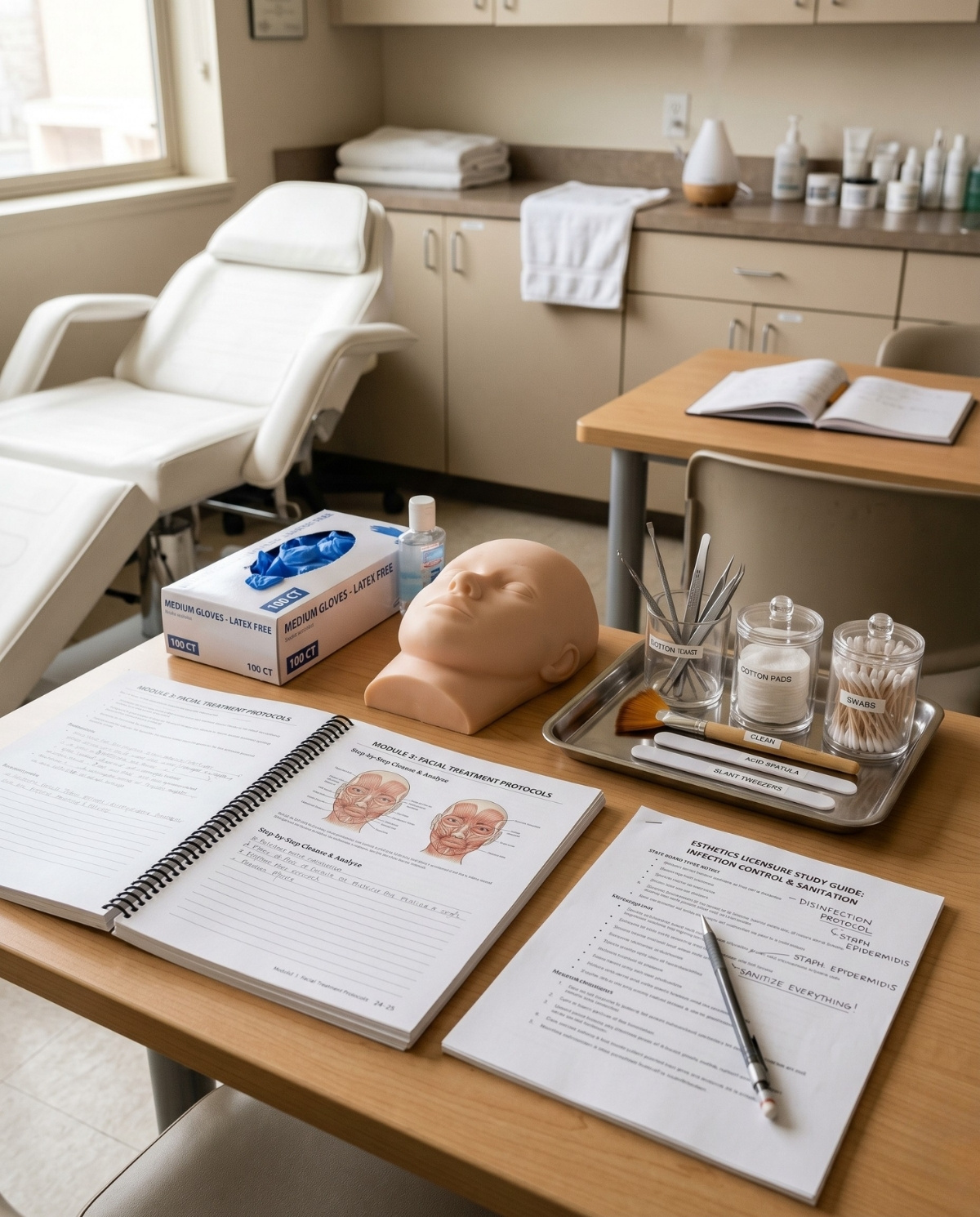
I always tell my readers that you cannot legally perform professional skin care without official schooling. When you compare the esthetician requirements by state, the training time is the biggest variable. The required hours reflect how each local board views training standards and the scope of practice. Some areas require fewer hours for basic services, while others demand long programs.
Here is a quick look at current esthetician hours by state:
- Florida: 220 hours for a Facial Specialist registration.
- New York: 600 hours plus both the written and practical examinations.
- Arizona: 600 hours to qualify for testing.
- Texas: 750 hours.
- Alabama: 1,000 hours.
- Georgia: 1,000 hours.
Online Schooling and the Cost of Education
Many students balancing a job ask me if they can get an esthetician license online. A fully remote path simply does not exist. According to some distance learning standards, a few programs might offer theory classes digitally. Hands-on practical training is still mandatory to graduate and qualify for your exams.
As for the financial side, people often wonder how much it costs to get an esthetician license. Tuition generally falls between $4,000 and $12,000. I suggest looking at our comprehensive guide on how to become an esthetician and handle the costs to understand this better. I view tuition as the core foundation of my career because your investment dictates your clinical experience before graduation.
Preparing for the State Board Exams
Surviving the Written Theory Exam
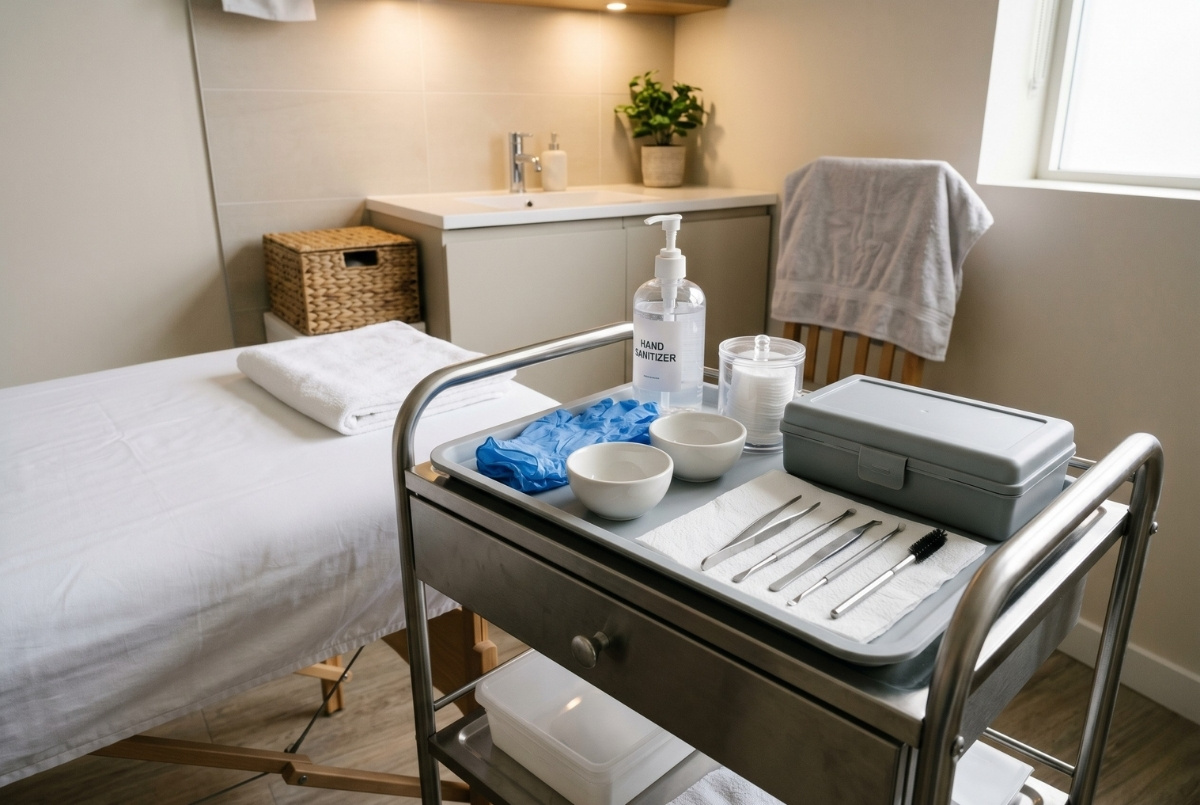
Your esthetician written exam will test you heavily on infection control, science, and sanitation. You will tackle subjects like microbiology, product chemistry, and state laws. If you are wondering how many questions are on the esthetician state board exam, the NIC theory format currently features 110 items, with 100 counting toward your score. Using a solid esthetician written exam practice test is the smartest way to prepare for these specific questions.
The Hands-On Practical Exam
The practical exam for esthetics causes the most anxiety for students. Examiners are not judging how relaxing your service is. They score you on strict sanitation, organization, and how you handle contamination risks. Reading up on what esthetician school is like day-to-day helps you understand the muscle memory needed to pass this section.
Also, keep in mind the upcoming NIC exam updates. Blood exposure procedures will be revised starting in March 2026. Infection control is going to remain the central focus of your practical exam.
Handling Applications and Background Checks
How to Apply After Passing Your Exams
Getting a passing score for the esthetics exam does not automatically give you your credentials. You still need to submit your application and fees. For instance, New York requires you to apply through its online licensing system, while Florida handles registrations through the DBPR portal.
Navigating Criminal History Evaluation
I also hear from readers worried about their past, asking if you can get an esthetician license with a felony. Many boards review criminal records on an individual basis. Texas looks at convictions individually and even offers a criminal history evaluation process so you know where you stand before applying. Honesty is always the best policy when dealing with your local board.
Moving States and Building Your Career
Transferring Your License to Another State
If you plan to relocate, you have to understand how to transfer an esthetician license from state to state. Most areas offer licensure by endorsement, which means they review your existing training and work history. New York allows endorsement for out-of-state professionals. Similarly, Virginia and its licensing requirement summary show pathways for endorsement based on your experience.
I see a lot of misinformation about the Cosmetology Licensure Compact. It has reached the legislative threshold, but it is not active yet. It is also built for cosmetologists, so estheticians cannot use it as a shortcut right now.
Renewing Credentials and Going Solo
Keeping your status active requires paying attention to renewal cycles. Florida mandates renewal every other year. If you get married, states have specific update protocols, like California’s formal name change process.
Earning this legal status gives you the freedom to shape your career. The Bureau of Labor Statistics highlights that many skincare specialists go on to become self-employed.
Ready to Master Your Craft?
You now know how to navigate the local regulations and testing processes. The next important decision is finding a reliable educational partner.
At Perimeter Beauty & Barber Institute, we focus heavily on preparing you for a thriving, independent career. I highly encourage you to find out more details about our admissions process over at Enrollment. We want to ensure you have all the information you need to make the best choice for your future.
Please fill out the contact form below to connect with us. We are happy to discuss your goals, explain the required hours, and help you get started on this amazing career path.
Frequently Asked Questions
Do you need a license to be an esthetician?
In the United States, you generally need the appropriate state credential to legally perform professional skincare services. The exact credential title varies by location. For example, Florida uses a Facial Specialist registration rather than a standard esthetician title.
How many questions are on the esthetician state board exam?
If your state uses the NIC theory format, the current exam contains 110 items, with 100 scored. State-specific testing formats can vary, so I always recommend confirming your current candidate bulletin.
How do I look up where to get my esthetician license testing done?
Your state board or testing vendor will provide the scheduling path. New York handles application and exam scheduling through its online licensing system, while Georgia directs examination candidates to PSI.
How do I find specific esthetician license requirements by state?
Go straight to the official regulator. Earning an esthetics license in NY means checking the New York Department of State, while transferring credentials into Virginia means reviewing the Virginia Board for Barbers and Cosmetology.