

What Is Taught in Cosmetology School? A Look Inside the Curriculum
What You Should Know Before Starting
- Hair Is Only One Part: Cosmetology training reaches beyond cutting and styling into hair coloring, chemical services, basic skin care, nail care, makeup, hair removal, and other beauty techniques included in the program.
- Safety Has a Scientific Side: Students study topics such as anatomy, chemistry, infection control, product safety, and practical salon calculations. Scientific Concepts account for 35% of the NIC Cosmetology Theory Examination.
- Professional Skills Matter Too: Training can also introduce client retention, salon-business concepts, professional conduct, salesmanship, and other skills useful when working with clients or building a career.
- Licensing Rules Depend on the State: Georgia and Arkansas both require 1,500 hours of cosmetology education, although their curriculum structures, examinations, and licensing procedures are not identical.
Starting a beauty career can be exciting while still leaving you with plenty of questions. You may already imagine creating polished cuts, dramatic color transformations, or special-event looks, but it is harder to picture what your actual school days will involve. If you are still deciding whether cosmetology is right for your future, understanding the training can make that decision much easier. Cosmetology school brings together creative work, technical practice, science, sanitation, client care, and professional development rather than focusing on one type of beauty service.
What Cosmetology Training Actually Covers
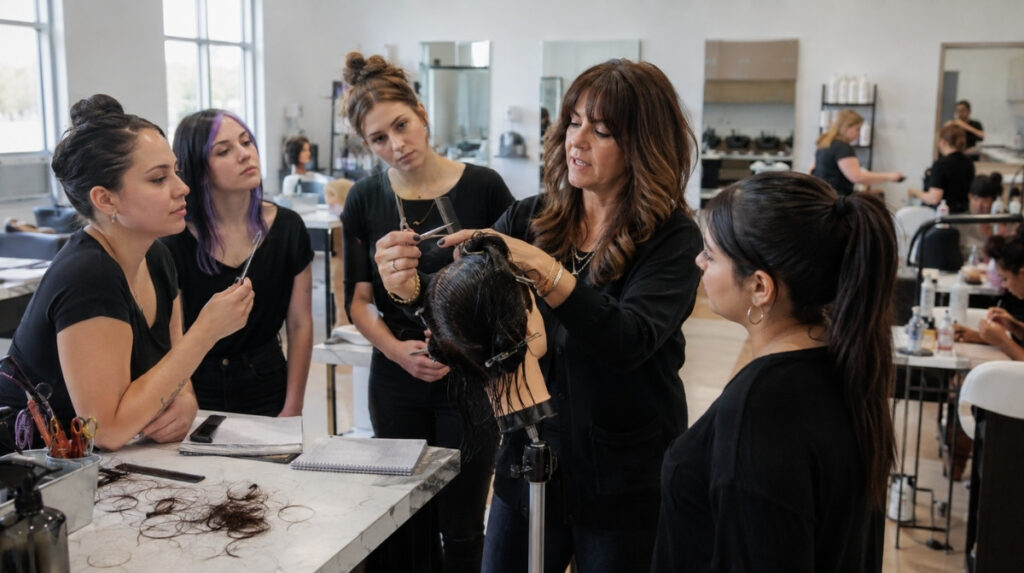
If you have been asking what you learn from cosmetology school, expect much more than basic trims and blowouts. Cosmetology education combines classroom theory with practical application so students learn both how a service is performed and the principles that make it work safely.
Perimeter Beauty & Barber Institute's published Master Cosmetologist curriculum totals 1,500 hours. The curriculum includes subjects such as haircutting, hairstyling, chemical waving, chemical relaxing, hair coloring and lightening, hair and scalp care, skin care, nail care, sanitation, chemistry, anatomy, professional practices, salesmanship, reception work, and other areas required for cosmetology training.
Hair design still represents a substantial part of the profession. Students work on cutting and styling while learning how characteristics such as density, texture, growth pattern, facial shape, elevation, and design choices influence the final result. The NIC Cosmetology Theory Examination includes haircutting and shaping, wet styling, thermal styling, natural hair styling, design principles, and procedures for different hair types and textures.
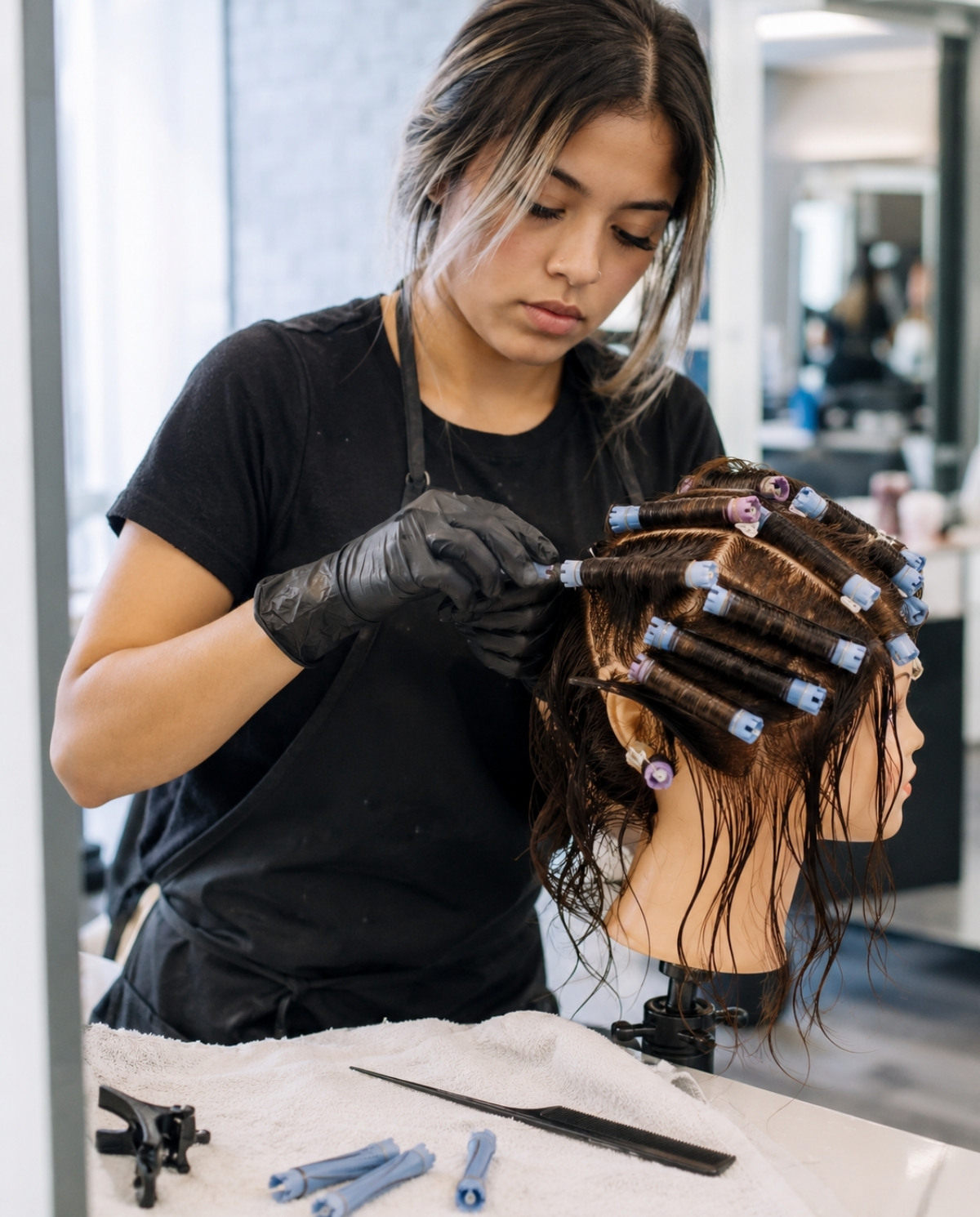
Chemical services add another layer of technical knowledge. Permanent waving and chemical relaxing change the hair through chemical processes, while color services require an understanding of formulation, lightening, application, tonal relationships, and correction. The NIC theory outline includes subjects such as foiling, balayage, color formulation, color correction, permanent waving, and chemical relaxing.
Why Cosmetologists Need Math and Science
Math in cosmetology is usually practical rather than abstract. Product directions may require specific mixing ratios, chemical services depend on careful timing, and haircutting uses concepts such as angles, elevation, over-direction, and proportion. Once you begin working professionally, basic calculations can also help with service pricing, product costs, sales, inventory, and other business decisions.
Science is equally important because beauty services involve the hair, scalp, skin, nails, tools, equipment, and chemical products. According to the National Interstate Council of State Boards of Cosmetology, Scientific Concepts make up 35% of the NIC Cosmetology Theory Examination. This part of the exam covers infection control and safety, anatomy and physiology, hair, scalp, skin and nail conditions, basic chemistry, chemical interactions and reactions, and the pH scale.
These subjects directly affect client safety. A cosmetologist needs to recognize situations that could make a service inappropriate, understand how contamination can spread, follow disinfection and blood-exposure procedures, and use chemical products according to professional and manufacturer guidelines. School cannot recreate every situation you may eventually encounter, but it teaches the safety principles needed to respond responsibly.
Beauty Skills You Learn Outside the Styling Chair
Students who are interested in makeup, nails, or skin services often wonder whether cosmetology school allows them to explore those areas too. The answer depends on the school and state, but cosmetology programs commonly include several beauty disciplines beyond hairstyling.
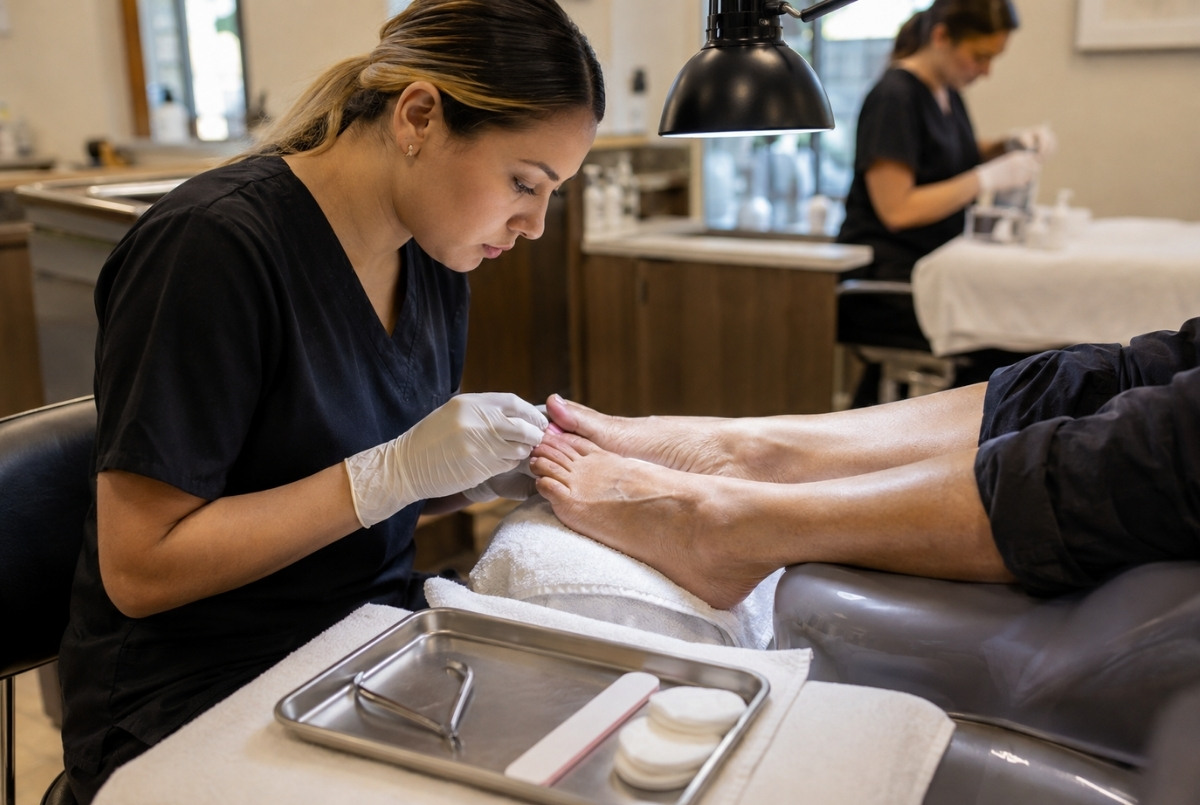
At Perimeter Beauty & Barber Institute, the Master Cosmetologist curriculum includes skin-care and nail-care training alongside hair services. Its published curriculum includes facial treatments, makeup, manicuring, pedicuring, nail sculpting, and hair-removal techniques such as waxing, tweezing, and threading.
That variety lets students practice different types of services before deciding where they may want to concentrate professionally. Exposure to multiple areas can also help you understand how beauty services relate to one another and how client consultation, sanitation, product selection, and professional judgment apply across different treatments.
These services must always stay within the professional's legal scope of practice. A cosmetology license does not give identical permissions in every state, so graduates need to follow the laws and board regulations wherever they plan to work.
Where Skin Care Fits Into Cosmetology
Cosmetology students do more than simply apply makeup or facial products. Skin-related training also introduces the structure and condition of the skin, sanitation practices, contraindications, client evaluation, and safe service procedures.
The NIC Cosmetology Theory Examination assigns 10% of its content to Skin Care and Services. Topics include skin evaluation, contraindications, infection control, basic facial services, hair removal, makeup application, and the safe use of equipment associated with those services.
Perimeter's curriculum similarly includes facial treatments, makeup, and hair removal as part of its Master Cosmetologist training. This provides students with a foundation in skin-related services while still keeping cosmetology distinct from more specialized esthetics education.
That distinction matters. Advanced esthetic procedures, medical-aesthetic services, and certain device-based treatments can fall outside a cosmetologist's ordinary scope and may require additional education, a different license, another credential, or medical supervision depending on the state.
Preparing for Clients, Careers, and Salon Life
Technical ability is important, but knowing how to interact professionally with clients and function inside a salon matters just as much. Cosmetology students also need to develop habits involving communication, professionalism, client service, recordkeeping, scheduling, and career preparation.
Perimeter's cosmetology materials include areas such as Salon Business, Client Retention, Resume Writing, and Job Seeking Skills. Its published Master Cosmetologist curriculum also includes salesmanship, telephone etiquette, salon deportment, reception and desk duties, and other professional-development subjects.
The U.S. Bureau of Labor Statistics illustrates why those skills can matter later in a career. BLS projects about 84,200 openings for barbers, hairstylists, and cosmetologists each year, on average, from 2024 through 2034. It also reports that 48% of hairdressers, hairstylists, and cosmetologists were self-employed in 2024.
BLS notes that professionals who operate their own barbershop or salon may keep business and inventory records, order supplies, arrange advertising, and hire or supervise workers. Those responsibilities are quite different from simply performing beauty services, which is why business knowledge can become increasingly useful as your career grows.
Combining technical ability with professional preparation can support many career paths that fall under cosmetology, from salon employment to independent work or eventual management, as long as the services remain within your license and state scope of practice.
Learning Fundamentals That Outlast Beauty Trends

Styles change quickly, but the most useful cosmetology skills are built on principles that continue to matter even when trends shift. Instead of memorizing only a few fashionable looks, students learn concepts that can be adapted to different clients, hair characteristics, and service goals.
Texture is one example. The NIC theory blueprint includes hair-care and hair-design procedures for various hair types and textures, along with natural hair styling techniques such as braiding. Students also study hair and scalp conditions so they can identify factors that may affect whether or how a service should be performed.
Chemical services require the same kind of foundation. Permanent waves, relaxers, lighteners, and hair color can alter the hair's structure or condition. Understanding basic chemistry, product interactions, testing procedures, timing, and manufacturer directions helps students approach these services more safely.
Cosmetologists also work around products subject to federal safety requirements. The Modernization of Cosmetics Regulation Act of 2022, or MoCRA, expanded FDA oversight of cosmetics through measures involving serious adverse-event reporting, facility registration, cosmetic product listing, and safety substantiation. Many of these legal duties apply primarily to cosmetic manufacturers, processors, and responsible persons rather than individual salon professionals, but product safety remains relevant to anyone regularly working with cosmetics.
Workplace regulations create another layer of protection. The Occupational Safety and Health Administration warns that certain hair-smoothing products may contain or release formaldehyde during use, including when products are heated. Salons and beauty schools using products that contain or can release formaldehyde may have responsibilities under OSHA's formaldehyde and hazard-communication standards. This is one reason learning how to handle products safely is an important part of professional training.
State requirements then determine how much education students need before pursuing a license. Georgia's current State Board of Cosmetology and Barbers rules require a complete cosmetology school course to include 1,500 hours and last at least nine months. Students complete 250 hours of Level 1 training before providing clinical services on clients.
Arkansas also requires cosmetology students to complete at least 1,500 hours under the Arkansas Department of Health cosmetology rules. Its 2026 Candidate Information Bulletin identifies the NIC Cosmetology Theory Examination as the written examination used for cosmetologists.
Once your required education and licensing steps are complete, knowing what comes after cosmetology school can help you understand the transition from student training to licensing and professional employment.
Frequently Asked Questions
- How long is the cosmetology program at Perimeter? Perimeter's published student catalog lists its 1,500-hour Master Cosmetologist day program at approximately 44 weeks, or 11 months. Other schedules can take longer, so your actual timeline depends on the schedule you choose, attendance, holidays, and completion of the required hours.
- Should I purchase cosmetology tools before enrolling? Check with the school before buying equipment independently. Perimeter's current catalog lists a $650 Master Cosmetologist kit and states that students must have the proper equipment required for their program. Confirm the current kit contents, fees, and enrollment requirements with admissions before purchasing duplicate tools on your own.
- Can I focus on only one type of beauty service after graduation? Yes. Cosmetology school gives you broad training, but your career can eventually center on an area such as color, textured hair, bridal styling, makeup, or another service permitted by your license. More specialized procedures can require additional credentials. In Georgia, for example, a licensed master cosmetologist who wants to qualify as an Assistant Laser Practitioner must meet separate Georgia laser-practitioner licensing requirements, including approved laser or IPL education.
Explore Your Training Options at Perimeter
If you are ready to turn your interest in beauty into structured professional training, the next step is learning how the program fits your schedule and career plans. You can review the admissions process through Perimeter Beauty & Barber Institute's Enrollment page, where prospective students can learn more about program scheduling, enrollment steps, and campus visits.
If you would like to see the school in person or discuss available start dates, submit the contact form to connect with the admissions team. They can help you review the program, choose an appropriate schedule, and arrange a campus tour before you begin your cosmetology training.