

Esthetician Vs Medical Esthetician: Everything You Need To Know About Clinical Skincare
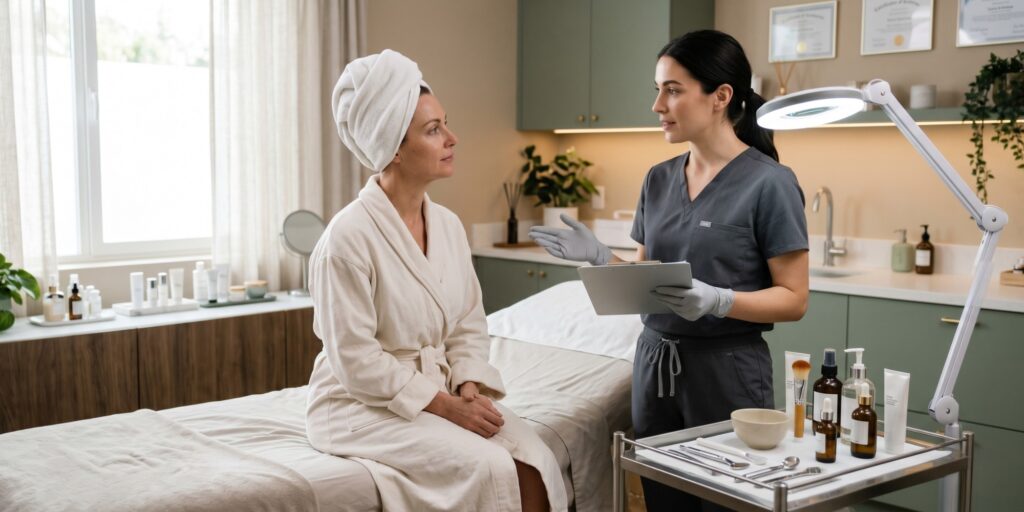
I’ve noticed a pattern lately with professionals in the skincare world. Many of us reach a point where the standard routine of steam, extractions, and basic hydration doesn't feel like enough anymore. There is often a moment where you feel like you have hit a ceiling, both in terms of the results you can provide and the income you can generate. Moving from being a basic esthetician vs master esthetician or looking into the world of medical-level specialties is usually how most people break through that plateau. It is a way to finally get a seat at the table in the clinical skin health industry.
Key Takeaways
- Market Growth: The medical aesthetics sector is projected to grow from $14.93 billion in 2025 to $16.79 billion by 2026, with continued growth projected through 2030, according to Research and Markets.
- Legal Distinction: Master Esthetician is a specific legal tier in states like Virginia, while medical esthetician is typically a job title rather than a separate government-issued license.
- Higher Earnings: Advanced services can create stronger earning potential, but compensation depends on your state, license type, employer, commission structure, and whether you also hold a medical license such as RN, NP, or PA.
- Safety First: A 2025 FDA Safety Communication warned about serious RF microneedling complications, including burns, scarring, fat loss, disfigurement, and nerve damage, reinforcing the need for proper training and clear scope-of-practice compliance.
The Different Levels of Esthetics
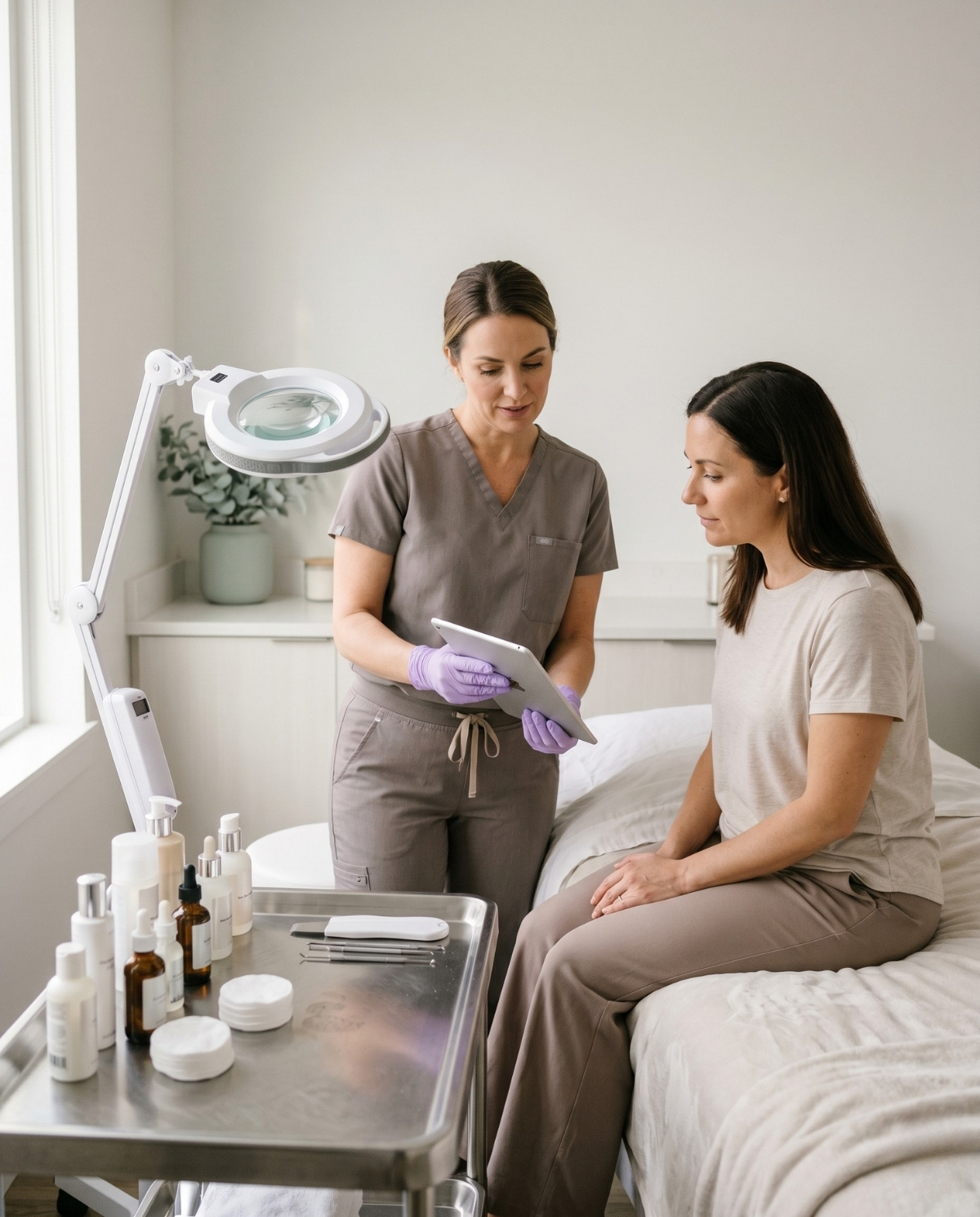
Most initial training programs focus on the lipid barrier, which is the skin’s natural protective shield. This foundation is vital, but if you are just starting out, I find it helpful to look at the entire process of becoming an esthetician, including school costs and requirements, before you decide to specialize.
The industry in 2026 is moving fast toward advanced practice (AP), medspa roles, and clinical esthetics. The most important thing to remember is that while advanced certificates look great, they don't always change what you are legally allowed to do. Before you start offering things like lasers, IPL, RF, microneedling, injectables, or deeper chemical peels, you have to check with your state cosmetology or esthetics board and, when medical procedures are involved, your state medical or nursing board.
To understand what is a master esthetician, we can look at the Virginia model. According to the Virginia Administrative Code, that state requires a 600-hour basic program followed by a 600-hour master program. This means a total of 1,200 hours. In other states, like Georgia, you might see a single 1,000-hour esthetician program that covers the state-required foundation for licensure.
This higher level of education involves a much deeper look at anatomy, chemical exfoliation, and lymphatic drainage. In Virginia, the scope of practice even allows for specific advanced exfoliation like Jessner’s solutions. These services involve controlled injury to the skin, which requires a much better understanding of skin chemistry than a standard facial.
Entering the Medical World
I see a lot of people getting confused about the difference between an esthetician vs medical esthetician. In the vast majority of the U.S., a medical esthetician is just a job title. It usually means you are an esthetician working in a medical setting like a plastic surgery center or a dermatology office with esthetician services.
The Research and Markets data shows that the market is expanding because people are choosing non-surgical treatments more often. They expect the market to hit $26.2 billion by 2030. This growth is why we see so many more jobs for medical esthetician roles opening up in clinics and medspas.
When you work in these clinical environments, you have to follow the protocols of the medical director. However, that doesn't mean your state board rules disappear. Your exact services still depend on your license, state board rules, medical-board delegation rules, and the supervising provider’s protocols. You might support a doctor in treating skin issues related to medical conditions, such as the unwanted hair growth associated with PCOS. While the doctor handles the diagnosis and treatment planning, the esthetician may handle aesthetic support when the service is legal for that role. If you're interested in the money side of things, you can look into the different career paths and salary expectations in today's market.
Nursing and Aesthetics
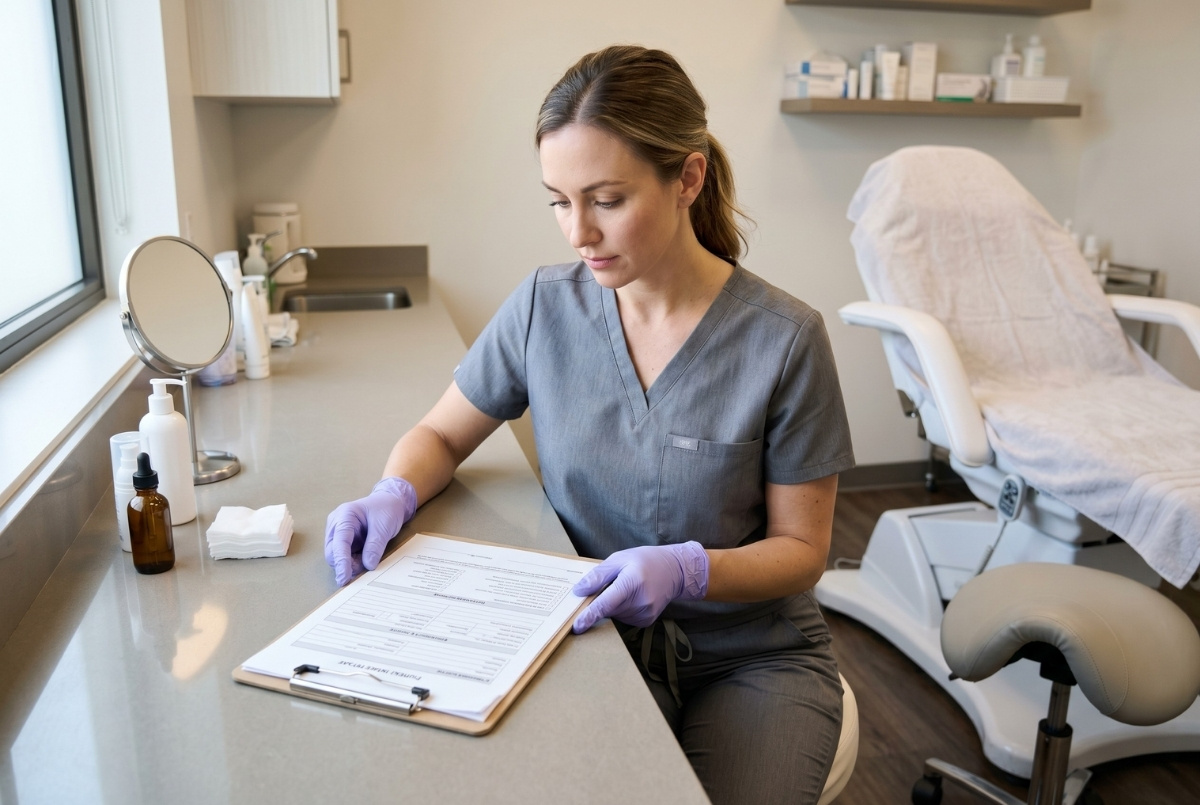
One of the biggest trends I'm seeing this year is medical esthetics for nurses. Many registered nurses are looking for a change from the hospital environment. If you are an esthetician with RN license, you may have an advantage because the nursing license can open doors to medical-aesthetic services that an esthetician license alone does not cover. In many states, neurotoxin injections like Botox and dermal fillers are performed by licensed medical professionals under state nursing, medical, or delegation rules.
This is why an esthetician nurse may have stronger earning potential than a traditional skincare-only role. For comparison, the U.S. Bureau of Labor Statistics noted that skincare specialists had a $19.98 median hourly wage in May 2024. Transitioning from RN to esthetician work allows you to combine medical skills with skincare, but your ability to inject always comes from the medical license, not the esthetics one.
How State Rules Vary
Your path to an advanced career depends entirely on where you live. Every state has a different rulebook:
- Virginia: If you want to know how to become a master esthetician in Virginia, you need the two-tier 1,200-hour total training as per the Virginia Administrative Code.
- Florida: To become a medical esthetician in Florida, you have to navigate the split between beauty and medical-adjacent services. The Florida Department of Health notes that laser hair removal is regulated through electrology and must be supervised by a physician.
- California: There is no official master license here. The California Board of Barbering and Cosmetology is very strict and states that estheticians cannot use lasers for treatment, even if a doctor is watching.
- Pennsylvania: According to the state's licensure snapshot, PA requires 300 hours for a license and does not have a master tier.
Staying compliant is the most important part of growing your business, which is why I suggest checking out this guide on passing state boards and understanding transfer rules.
High-Intensity Services: Botox, Lasers, and Microneedling
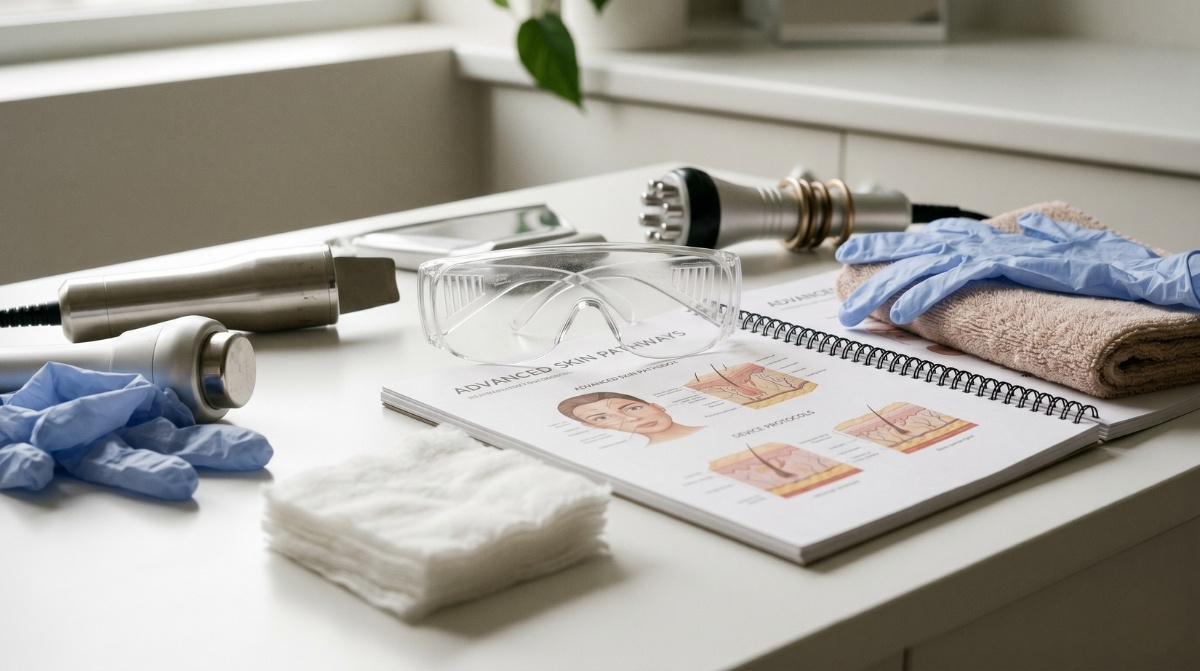
As you move into what is an advanced esthetician role, your menu might change to include more intense tools.
- Injectables: Generally, estheticians cannot do Botox or fillers through an esthetician license alone. These are medical procedures and generally require an appropriate medical license, such as RN, NP, PA, physician, or another credential allowed by state law. However, an esthetician working under a doctor is essential for patient education, treatment support, and post-care.
- Microneedling: The rules on how deep can an esthetician go with microneedling change depending on the state, especially when treatment reaches the dermis or uses radiofrequency energy. Some medical settings may allow properly licensed or delegated personnel to perform these treatments under supervision, while other states may prohibit estheticians from performing microneedling even with a private certificate.
- Lasers: To become a laser esthetician, you have to understand the physics of how light targets pigment, blood vessels, hair follicles, or water in the skin. Always confirm if your state allows estheticians to operate laser devices, requires a separate laser or electrology credential, or limits the service to medical professionals.
The Safety Factor
The 2025 FDA Safety Communication about RF Microneedling is a big deal. It mentioned serious risks including burns, scarring, fat loss, disfigurement, nerve damage, and the possible need for medical or surgical intervention. The FDA also described RF microneedling as a medical procedure, not a cosmetic treatment. This is a reminder of why high-quality training is so important before moving into advanced services. You have to understand device physics, tissue response, sanitation, contraindications, and legal scope to keep your clients safe.
Elite Credentials
If you want to reach the top of the field, you might look at the CIDESCO Diploma. It is one of the best-known international beauty and spa therapy credentials, with standards that have been around since 1957. It can be especially useful if you want a globally recognized qualification instead of relying only on state-level licensing.
I also recommend looking into certifications to get after esthetician school that cover new topics like exosomes or polynucleotides. These are often discussed as next-generation skin-repair treatments, but they should be approached carefully in the U.S. because many involve medical products, injections, or regulatory limits outside a standard esthetician scope. Even if your license doesn't let you perform the injection part of these treatments, knowing the science makes you a better consultant for your clients.
Taking the Next Step
The data makes it clear that the future of skincare is becoming more clinical. The demand for knowledgeable specialists is higher than I have ever seen it. If you want to reach that top tier, you need a foundation that goes beyond the basics.
At Perimeter Beauty & Barber Institute, the focus is on a "Salon Ready" approach. This means you aren't just reading from a book; you are getting hands-on experience, client communication skills, sanitation discipline, and professional habits that help prepare you for real service environments. I believe that having that kind of discipline is what separates a standard practitioner from a true leader in the industry.
If you are ready to see what is possible for your career, I invite you to find out more in Enrollment. You can also use the contact form at the end of this article to talk to the team about how to get started on your journey.
FAQ
What qualifications do you need to be a medical esthetician? Usually, you need your basic license plus advanced training in things like chemical peels, device safety, and clinical sanitation. Remember that medical esthetician is a job title, so your actual scope depends on your state laws, your license, your employer, and whether the service is cosmetic or medical.
How to become medical esthetician without a degree? You don't need a four-year college degree. You need to complete a state-approved esthetics program and then get extra training in medical-office protocols, patient communication, and pre/post-procedure care for clinical settings.
Can an esthetician do microneedling in Michigan or Massachusetts? This is often seen as a medical or medical-adjacent procedure, especially when it reaches the dermis or uses RF energy. Rules vary a lot by state and may involve cosmetology boards, medical boards, nursing boards, and delegation laws. I always recommend checking with the state board directly rather than just trusting a private certificate.