Barbering and Cosmetology: Decoding the License, Training, and Career Differences

If you are standing at a career crossroads that feels more like a legal maze, I totally get it. It’s a common source of stress: that nagging fear that choosing one path – either barbering or cosmetology – will lock you into a single lane forever. You aren’t just picking a school; you are deciding on your daily lifestyle and the legal limits of what you can actually do for your clients.

In 2026, those old-school walls between a traditional barbershop and a high-end salon are basically disappearing. Modern clients don’t choose a pro based on the sign hanging over the door; they choose based on expertise. Whether you want to master the science of hair chemistry or the sharp precision of a straight-razor shave, your first move is understanding which license gives you the most power for your five-year career plan.

Quick Takeaways for Future Pros

  • The Hybrid Edge: In 2026, the highest earners are “Hybrid Specialists” who know how to mix clinical skin health with precision barbering.
  • Freedom to Move: The new Cosmetology Compact now lets professionals in participating states work across state lines without having to retake their exams.
  • The Grooming Boom: Enrollment for male-focused grooming has jumped by 21%, turning traditional “barbering” into a high-end wellness service.
  • The Crossover Shortcut: If you already have one license, you can usually pick up the second one in just 200–400 hours through a bridge program.

The Legal Side of Things (Making the Safe Choice)

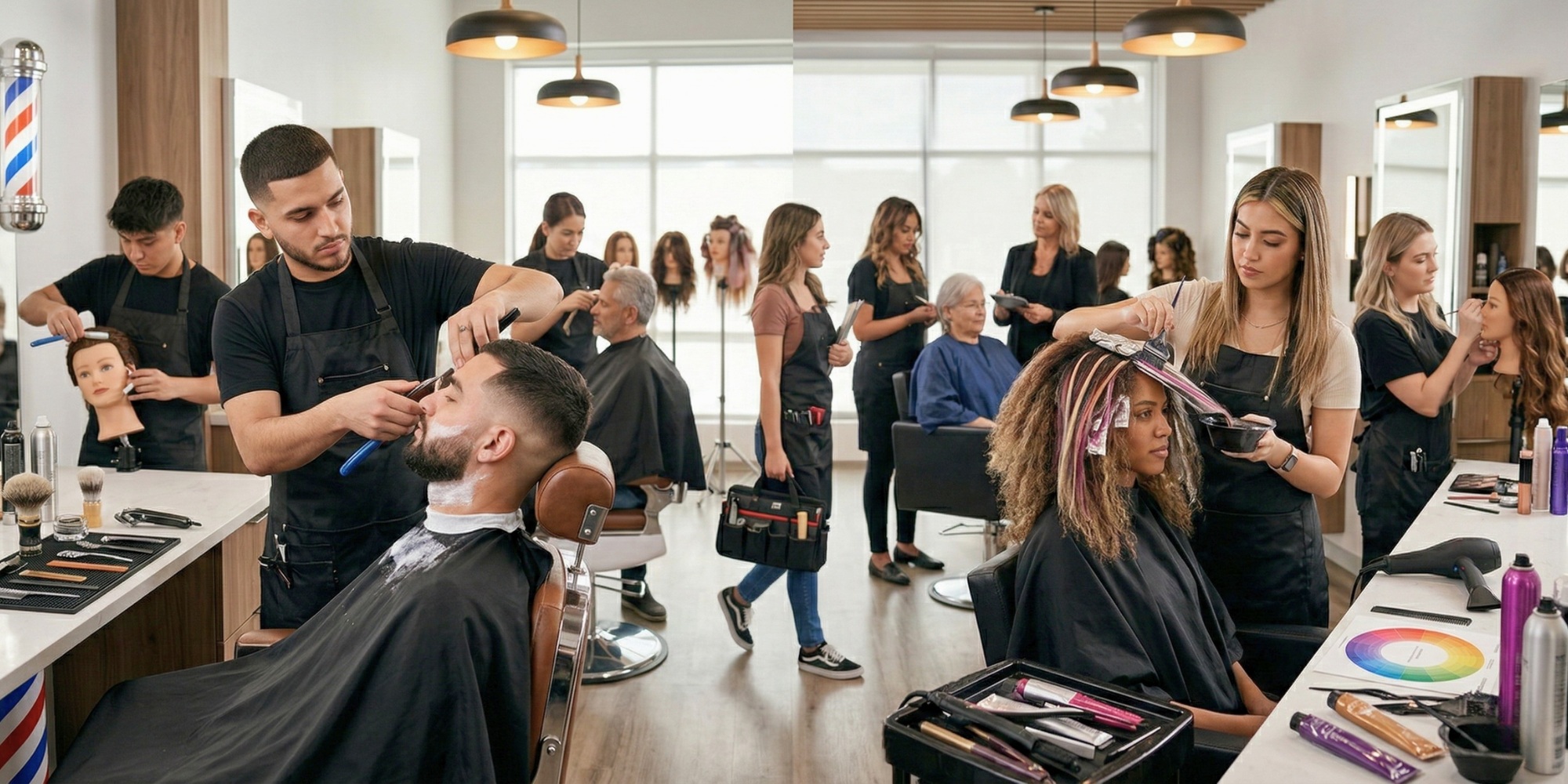
I often get asked: does barbering fall under cosmetology in a legal sense? While they are close relatives, they are actually handled by different regulations. In the U.S., your state board is the one that tells you exactly which tools you are allowed to touch. Because this license covers everything from hair and skin to nails, the range of careers you can pursue with a cosmetology license is surprisingly broad. You could end up in a luxury spa, on a film set, or even in a medical aesthetics office.

Planning for the long term also means having a strategy for barbering and cosmetology license renewal. In 2026, keeping your license “legal” is about more than just a fee; it involves staying up to date with specialized education. If you decide to go for a dual license, you’ll have a bit more paperwork, but you also triple your value. You become the pro who never has to say “no” to a client.

💡 Expert Insight: The 2026 Multi-State Compact

The days of being “stuck” in one state are over. According to the Alabama Board of Cosmetology & Multi-State Regulatory Update, the Cosmetology Compact is officially live. This deal allows pros in states like AZ, CO, TN, and KY to keep a multistate license. This gives you the freedom to move your career across the country without the nightmare of bureaucratic re-testing. Your education is now a mobile asset.

Training and Skills (Choosing Your Expertise)

When you walk into a barbering and cosmetology school, you’ll notice the paths split pretty quickly. I like to think of a cosmetology program as a “total package” degree in aesthetics. You’ll dive deep into skin barriers and the complex chemistry behind pH-balanced hair color. You aren’t just styling; you’re managing the actual health of the hair and performing clinical-grade facials.

On the other hand, the barbering vs haircut distinction is really about the tools and the tradition. Barbering is the art of the blade. It’s all about the architecture of the face and specific hair growth patterns.

I’ve seen a massive shift in who is actually in the classroom lately. Data from Global Growth Insights shows a 21% surge in male-focused enrollments recently. This isn’t just about simple buzz cuts anymore; it’s about a new generation realizing that “Male Grooming” is now a high-ticket luxury category. If that artistic precision is what you’re after, I recommend checking out this roadmap to starting a career in barbering to see how those skills translate into a real job.

The Crossover Strategy (The Power Move)

The most successful pros I see in 2026 are “Hybrid Specialists.” While a cosmetology license gives you a lot of range, people still ask: can you be a barber with a cosmetology license? For cutting hair, the answer is usually yes, but for using a straight razor, it’s almost always “no.” This legal gap is exactly why so many people look into getting barber license after cosmetology.

If you already have one license, don’t stress about “starting over.” Barber license after cosmetology (or the other way around) is usually much faster through “Crossover” programs. These let you apply your existing hours toward a second credential, often only requiring an extra 200–400 hours. It’s the fastest way to make sure you can legally offer everything from a balayage to a hot-towel shave. Before you jump in, though, you’ll want to look at the actual barber school costs and hours to make sure the schedule works for you.

💡 Expert Insight: The Shift to Scalp Health

The 2026 market has moved from simple “beauty” to “wellness.” Reports from America’s Beauty Show highlight that things like biotech scalp treatments and peptide serums are the fastest-growing revenue streams right now. Clients are willing to pay a premium for scalp health. Mastering this “clinical” side is what separates a standard stylist from a high-earning specialist.

Barbershop vs. Salon (The Lifestyle Choice)

Deciding between a barbershop and salon difference is mostly about your personal “vibe.” Barbershops usually have a high-energy, social atmosphere with a lot of walk-in traffic. Salons are usually more about appointments and long transformations that might take several hours.

The numbers really support taking a specialized approach. The BLS 2025/2026 update shows that while barbers often have a slightly higher median wage, the real growth is in specialized skin care. By combining the precision of barbering and hairdressing, you put yourself in the highest earning category in the industry.

Ready to Build Your Own Legacy?

Choosing a career in the beauty world is about so much more than just learning to cut hair – it’s about finding your place in a thriving, multi-billion dollar economy. At Perimeter Beauty & Barber Institute, we don’t just train you to pass a state exam. We want to make sure you’re ready for the day you walk into an elite salon or a modern grooming lounge.

Our “Salon Ready” philosophy is built on over 20 years of experience in the Georgia beauty community. I believe in balancing technical precision with the business smarts you need to actually make money and grow. Whether you’re looking for high-ticket salon transformations or the precision-driven culture of modern barbering, we’re here to help you get there.

If you’re ready to see how this all works in person, you can find out more about our next steps and how to join us on our Enrollment page. I’d love to help you map out your journey – just fill out the contact form below this article, and let’s get started on building your legacy together.

FAQ: Professional Deep-Dive

Q: Can you do barbering with a cosmetology license?
A: You can definitely cut and style hair, but most states strictly reserve “open-blade” facial shaving for licensed barbers. Cosmetologists are usually limited to using safety razors or shears.

Q: Does barbering fall under hospitality?
A: Not exactly. While it is a service industry, it is legally categorized under “Personal Care” and is governed by professional licensing boards rather than hospitality regulations.

Q: How long is a crossover program for barbering of cosmetology?
A: If you already have one license, a bridge program usually takes about 8 to 12 weeks (200-400 hours), depending on what your specific state requires.

Q: Is this industry actually recession-proof?
A: While nothing is 100% certain, “Personal Care” is one of the most resilient industries out there. I’ve noticed that people almost always prioritize their grooming, even when they’re cutting back on other expenses.

Q: What is the main benefit of the 2026 Multistate Compact?
A: It saves you a ton of time and money. It removes the need to pay for multiple state licenses or retake exams if you move between participating “Compact” states.

How to Get a Barber License in 2026: A Real-Talk Guide to Requirements and Exams

I’ve met a lot of guys who can deliver a perfect skin fade with their eyes closed but feel completely stuck the moment they have to look at a state board website. Transitioning from a hobbyist or an underground barber into a licensed professional shouldn’t feel like you’re trading your creativity for a pile of government paperwork.

In the 2026 hair industry, your skill is what gets people in the chair, but your license is what keeps the doors open. Moving toward legitimacy is probably the most significant business move you can make for your future. If you are looking for the full breakdown on hours, applications, and the testing process, you should definitely check out How to Become a Barber: Your Complete Roadmap to Starting a Career in Barbering before you take your next step.

The Barrier to Entry Protects Your Business

Many people look at barber license requirements as a frustrating obstacle. I prefer to think of them as a moat that protects your career from low-quality competition. According to the 2026 updates from the IDFPR, the requirements for a barbering license now include specific training on different hair types and textures and a required abnormal skin growth education course.

When you meet the standards set by the board of barbering and cosmetology, you are doing more than just getting a permit. You are gaining a legal shield. In a world of social media influencers, your status with the barbering and cosmetology board tells your clients and your insurance provider that you are a high-level professional trained to spot medical risks before they become a serious problem.

Common Licensing Steps That Most People Miss

Every state has its own specific set of rules, but the path to getting a barbering license usually follows a very similar checklist:

  • The Basics: You’ll need to meet a minimum age, provide a valid ID, and sometimes submit a basic health form.
  • Training Hours: You have to complete a specific amount of time at a board-approved barber school.
  • Safety Courses: Many states now require specific sanitation or health-related coursework that is separate from your actual hair-cutting practice.
  • The Application: This includes your proof of hours, various forms, and the required fees.
  • The Exams: You will almost always have a written theory test, and some states still require a practical exam.
  • License Maintenance: Once you’re official, you’ll need to stay on top of your barbering and cosmetology license renewal to keep your shop legal.

For example, the Florida DBPR checklist focuses heavily on school hours and competency, while New York’s licensing page mentions a health certification completed by a physician. Even California has recently moved to a written-only format for licensure, which shows how much things can change depending on where you live.

Overcoming Nerve on Exam Day

The most common worry I hear about is the state board exam for barbering. It’s natural to feel like a written test can’t possibly measure how well you handle a pair of shears. However, the barbering exam in 2026 isn’t there to judge your artistic style; it’s there to make sure you are a safe professional.

If you are wondering how many questions are on the barber exam, the structure is usually pretty manageable. According to the latest Board of Barbering and Cosmetology applicant guidelines, most written theory exams in California consist of about 85 scored questions and maybe 10 unscored pre-test questions. You usually have about two hours to finish, which is plenty of time if you have prepared.

The barbering state board places a lot of weight on chemical safety and sanitation. As the 2026 Sunset Review Report highlights, the board’s main mission is preventing consumer harm, such as chemical burns or the spread of infections. Passing this test proves you have the knowledge to avoid the kind of mistakes that lead to lawsuits.

The Return on Investment of Going Pro

It is easy to look at the barbering license cost and feel a bit of sticker shock. But I want you to think about the cost of the opportunities you miss by not having one.

While you might ask how long it takes to get a barber license, consider that a year-long program is often the only thing standing between you and the high-profit services. Data from BusinessDojo’s 2026 Industry Report shows that while basic cuts have decent margins, specialized services like hot shaves and beard sculpting – which require a license – have profit margins of over 80%.

Being licensed also opens up doors that are closed to underground barbers:

  • Access to professional liability insurance
  • The ability to sign a commercial lease for a suite or shop
  • Access to professional-grade payment processors
  • Wholesale pricing from top-tier hair care vendors
  • The ability to hire employees legally without fearing a surprise inspection

The Risks of Barbering Without a License

There will always be people who ask if they can just keep cutting hair in their garage or basement. While it might seem like an easy way to save money, it is a very risky way to build a career. In 2026, the legal and financial stakes for unlicensed work are higher than they have ever been.

1. Criminal Charges and Heavy Fines

In the eyes of the law, practicing barbering without an active license isn’t just a minor mistake; it is a legal offense. State boards use heavy fines to stop garage operations because they don’t follow the health and safety rules. In Florida, for example, the DBPR notes that unlicensed barbering is often treated as a second-degree misdemeanor. In New York, it can lead to fines of up to $500 or even jail time.

2. The Risk of Being Banned

This is the part that catches most people off guard. If you get caught working illegally now, the board has the right to delay or jeopardize licensure.. Agencies like the Texas Department of Licensing and Regulation can deny licenses based on a lack of good moral character, which often includes past illegal work.

3. Financial Liability

No insurance company will cover you if you are working without a license. This means if a client has a bad reaction to a product or gets a minor infection, you are personally responsible for their medical bills. A single lawsuit could lead to a court judgment that follows you for years.

4. Digital Limitations

The modern industry is digital. According to Boulevard’s 2025 Trend Benchmarks, nearly half of all professional bookings now happen through online platforms. If you aren’t licensed, you are locked out of these systems, making it much harder to grow your client list.

Why Training Hours Are the Foundation

Before you can actually get your license, you have to put in the hours. The board wants proof that you have learned the fundamentals that protect the public, like infection control and straight-razor safety.

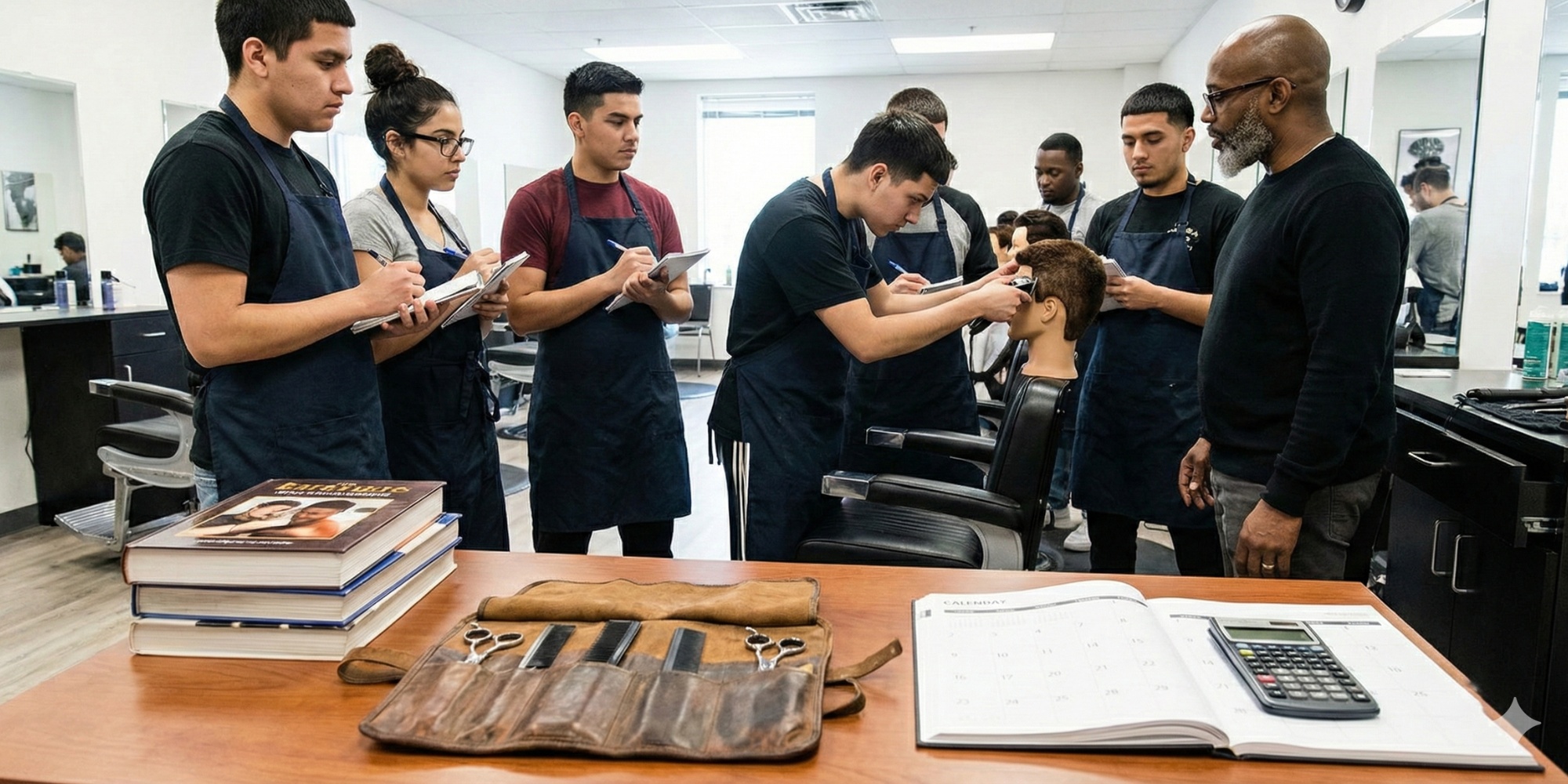
The best move you can make is choosing a program that makes those hours feel like real-world training rather than just busywork. At Perimeter Beauty & Barber Institute, we focus on making sure you are Salon Ready. This means training in an environment that feels like a real shop, where you build the habits that employers actually look for: speed, consistency, and professional communication.

We have been helping people build these kinds of careers for years. It’s about more than just passing a test; it’s about starting a legacy that you can be proud of.

If you want to see what our training floor looks like and how we can help you turn your talent into a legitimate career, you can find more information on our Enrollment page. Feel free to use the contact form we’ve provided at the bottom of the article, and one of our team members will reach out to help you get started.

The Real Deal on Barber School: Costs, Hours, and What It Actually Takes to Start

I’ve spent enough time in the beauty and grooming world to know that the spark usually starts with something small – maybe a great video you saw online or a conversation in your local shop. You see the artistry, the community, and the freedom, and you think to yourself: “I want to do that.”

But then, the practical side of your brain starts to take over. You begin worrying about the tuition, the time it takes to finish, and whether you even meet the requirements to sign up. If you’re feeling a little overwhelmed by the logistics, take a breath. I’ve broken down everything you need to know about starting barber school in 2026 without all the confusing industry jargon.

Let’s strip away the confusion and dive into the specifics of starting your journey this year.

Understanding the Financial Investment

Let’s get the “money talk” out of the way first. When you’re looking at a barbering academy or a local barber college, the price tag can vary quite a bit. According to recent data, you’re looking at anywhere from $10,000 to $25,000 for a full program.

Why is there such a big gap? It usually comes down to the school’s location and reputation. A high-end academy in a major city might cost more, but they often provide busy clinic floors where you get much more “chair time” with real clients.

Beyond Tuition: The Hidden Costs

One thing I always tell my students to budget for is their professional gear. Most barbering courses require you to purchase a high-quality kit. Expect to spend between $1,000 and $3,000 on professional clippers, shears, and razors. It feels like a lot upfront, but these are the tools that will literally earn you your living for years to come.

Can You Get Financial Help?

I often hear people ask, “Do you get paid for barber school?” Unfortunately, no – you’re the one paying for the education. However, you don’t always have to pay for it entirely out of pocket.

  • Federal Aid: Most accredited schools allow you to apply for financial aid for barbering school through the FAFSA.
  • Grants: For the 2025-2026 academic year, the maximum Pell Grant is $7,395. Since these are grants, they generally don’t need to be repaid.

The Time Commitment: How Long Will You Be in School?

The most common question I get is: “How long does it take to learn barbering?” In this industry, we don’t measure time in months; we measure it in hours. Every state has its own “magic number” of hours you must complete before you can sit for your license exam.

  • The Sprints: In states like Oregon, you might only need around 750 hours.
  • The Standard: Most states, including California and Texas, land at the 1,000-hour mark.
  • The Marathon (Georgia): For those of us here in Georgia, the state requires 1,500 hours for a Master Barber license.

Fitting School Into Your Life

I know many of you are balancing jobs or families. At Perimeter Beauty & Barber Institute, we offer an intensive schedule to help you reach those hours efficiently:

  • Tuesdays & Wednesdays: 9:00 AM to 9:00 PM
  • Thursdays & Fridays: 9:00 AM to 4:30 PM

Entry Requirements: Is the Door Open for You?

I’ve met incredibly talented people who were afraid to apply because they didn’t finish high school. I want to clear that up right now: your past doesn’t have to dictate your future in this trade.

The Diploma Hurdle

Can you go to barber school without a high school diploma or GED? In many cases, yes. Many schools use what’s called an “Ability to Benefit” (ATB) test. If you can pass this basic exam, you’re in. Some programs even let you work on your GED and your barber course at the same time.

Starting Young

If you’re looking into barber school under 18, you’re actually ahead of the curve. States like Texas and Georgia allow you to start as early as 17. Starting early means you could be a fully licensed professional by the time your peers are just starting their second year of college.

Your Future at Perimeter Beauty & Barber Institute

We aren’t just a school; we’re a launchpad for your creative career. With over 20 years in the business and instructors who bring over 80 years of combined experience, we provide a learning environment that is rooted in real-world success.

We focus on making you “salon ready” from day one. This means going beyond just the haircut – we focus on client retention, business skills, and the confidence you need to succeed in a professional shop.

Are you ready to turn your passion into a career? You can find out more about how to get started on our Enrollment page. Also, feel free to fill out the contact form at the end of this article, and one of our advisors will reach out to help you find the best schedule and financial plan for your future.

How to Become a Barber: Your Complete Roadmap to Starting a Career in Barbering

There is something uniquely rewarding about the atmosphere of a busy barbershop. It is one of those rare professions where you can see the immediate impact of your work in the confidence of the person walking out the door. If you have been watching your own barber and thinking about making a career move, you are likely wondering where to start and if the effort is actually going to pay off in the long run.

I want to help you navigate the process of how to become a barber by looking at the practical requirements, the time investment, and the reality of the daily grind. Transitioning into this industry is a major decision, so having a clear roadmap is the best way to ensure you don’t feel overwhelmed as you start being a barber.

Everything You Need to Know About Barbering: What The Career Really Looks Like

Before you dive into the technical training, it is important to understand that this profession is a blend of artistry and high-level service. You aren’t just performing a task; you are managing an experience for every person who sits in your chair.

When I look at the daily life of a pro, the work usually involves several key areas:

  • The Technical Craft: Mastering the tools of the trade, including clippers, shears, and razors to create clean fades and sharp finishes.
  • Safety and Sanitation: This is a regulated industry. Maintaining a sterile environment and following health protocols is a huge part of your professional responsibility.
  • Communication: Understanding what a client wants even when they struggle to describe it is a skill that separates the beginners from the experts.
  • Physical Stamina: You will spend most of your shift on your feet, so building the endurance to stay focused throughout the day is part of the job.

The Bureau of Labor Statistics (BLS) provides a helpful national outlook for those in the beauty industry through their Occupational Outlook Handbook. While it gives a solid overview of the field, the real success depends on your local market and your personal commitment to the craft.

Should I Get Into Barbering? A Realistic Fit Check

If you are asking yourself if barbering is a trade that fits your personality, you should consider how you feel about hands-on, repetitive work. This is a career where your progress is visible; you can literally see your skills improving with every haircut you finish.

I usually suggest this path to people who enjoy the process of constant refinement. It is a great fit if you can handle being a beginner for a while and aren’t afraid of making mistakes as you learn. However, if you prefer a desk job or find customer-facing roles draining, you might find the social aspect of the shop challenging.

A simple example of professional growth involves the consultation process. A new barber might start cutting immediately after a brief instruction, whereas a seasoned professional will stop to clarify the desired height of a fade or how the hair should blend into the beard. These small moments of communication prevent errors and build a loyal client base much faster than technical skill alone.

Is Barbering Worth It? Understanding the Market and Pay

The financial side of the business is often the biggest concern for newcomers. According to data from the BLS, the median hourly wage for those in this field was $18.73 in May 2024.

While a basic calculation might lead you to a yearly estimate of around $38,958, that rarely tells the whole story. In this industry, your income is often a mix of base pay, commissions, and tips. The BLS also expects the employment of hair professionals to grow about 5% over the next decade, with nearly 84,200 job openings appearing annually across the sector. Your personal success will ultimately be driven by your speed, how many clients you can retain, and your local pricing structure.

The Steps to Becoming a Barber: A Standard Roadmap

Regardless of where you are located, the process of how to become a qualified barber follows a fairly consistent structure.

Step 1: Know Your State Regulations First

Every state has a board that oversees beauty and barbering services. Before you sign up for any training, you should verify the specific hours and exam requirements in your area. This step is vital because licensing is a legal requirement, not just a suggestion. If you ever plan to move, check how your state handles reciprocity. For instance, the board in Pennsylvania explains that you may need additional testing or certification letters if your original license comes from a state without a direct agreement.

Step 2: Choose Your Training Path (School Vs Apprenticeship)

You generally have two main ways to get into the field:

  • Barber School: This offers a structured environment with a set curriculum designed to help you pass your state exams.
  • Apprenticeships: Some states allow you to learn on the job. The California Board of Barbering and Cosmetology highlights programs where students can earn a wage while they train under a licensed professional.

Step 3: Master the Foundational Skill Stack

Becoming a qualified professional means focusing on the basics until they become second nature. I recommend spending extra time on sanitation, clipper control, and shear work. These are the building blocks that allow you to eventually take on more complex styles.

Step 4: Pass Your Required Exams

Most states require you to pass both a theory exam and a practical demonstration. Once you have cleared these hurdles and received your license, the real learning begins as you start working with a diverse range of clients.

Is Barbering Easy or Hard to Learn?

I think the best way to describe the learning curve is that it is easy to start but difficult to master. You can learn the basic mechanics of how to use a trimmer relatively quickly, but learning how to adjust those techniques for different hair textures and head shapes takes time.

The progression usually moves from feeling clumsy with your tools to delivering inconsistent results, and finally reaching a point where you are both reliable and fast. If you are worried that you don’t have enough natural talent, keep in mind that this trade rewards discipline and repetition more than anything else.

Can You Learn Barbering at Home or Online?

I often see people searching for the best way to learn barbering at home. While the internet is an incredible resource for watching tutorials and studying theory, it is rarely a complete substitute for hands-on training.

Online resources are excellent for:

  • Understanding tool maintenance and guard transitions
  • Learning about different hair products and scalp health
  • Studying the sanitation theory required for your state exam

However, since most states require a specific number of supervised hours, you should view home study as a way to supplement your formal education rather than replace it.

Your Next Step: Finding Your Path at Perimeter Beauty & Barber Institute

When you are ready to take this seriously, having an experienced team behind you makes all the difference. At Perimeter Beauty & Barber Institute, we have been helping students build their futures for more than 20 years. With a combined 80 years of industry experience, we understand exactly what it takes to get you salon-ready.

Our approach is built around the requirements for Georgia licensure, ensuring you get the hands-on practice and the theory you need to feel confident in a professional shop. We focus on everything from core cutting techniques to the business side of the industry, like salon management and client retention. Whether you want to work in a high-end shop or eventually move into instructor training, starting with a strong foundation is the smartest move you can make.

If you are ready to take the next step and see what our campus is all about, you can find out more in Enrollment. I also encourage you to reach out to us directly through the contact form below. We can talk about your availability, your long-term goals, and how we can help you get your career moving in the right direction.