Cosmetology Exam Prep Guide: Written Test Practice, Practical Kit, and State Board Rules

“`html id=”rbsm40″
Stepping away from the creative rhythm of the beauty school floor and walking into a formal testing environment can feel intimidating. The exam process asks you to shift from hands-on artistry into rules, safety procedures, written questions, and strict practical steps. That can feel unnatural at first, especially if you learn best by doing. This guide breaks the process into clear, manageable parts so you can understand what happens before, during, and after your cosmetology state board exam.

Main Points To Remember

  • The written test can be a serious barrier: Published state data shows that theory exams may be harder for some candidates than the practical portion. For example, the Texas Department of Licensing and Regulation reported a much lower FY2025 Operator Written pass rate than its Operator Practical pass rate.
  • Safety matters more than fancy styling: Practical exam evaluators are focused on infection control, sanitation, client protection, clean organization, and safe habits rather than trendy or complicated finished looks.
  • Labeling rules are not universal: Disinfectant, sanitizer, and simulated-product labeling requirements can vary by state and testing packet, so candidates should never rely only on older blogs or another student’s kit list.
  • Online systems are now part of the process: Many boards and vendors use digital accounts, eligibility notices, and online scheduling, but the current Candidate Information Bulletin or Test Taker Guide should always be your final source.

Before You Book Your Board Exam

Before you can prove your hands-on ability, you first need to move through the state licensing process correctly. Understanding how to apply for your cosmetology state board exam is one of the easiest ways to reduce stress before test day.

Every state has its own licensing authority, and many states work with testing vendors such as PSI Services to manage exam scheduling. In many places, the process begins after graduation, when your school confirms your completed training hours with the state board or testing system. After those hours are verified, you may receive an eligibility notice explaining how to schedule your cosmetology exam through an online portal, by phone, or through another state-approved method.

During this step, you also need to check how much the state board test for cosmetology costs in your specific area. Fees are not the same nationwide, and many states separate the theory fee from the practical fee. For example, the official Georgia PSI Test Taker Guide lists a $45 theory exam fee and a $64 practical exam fee for cosmetology. The Arkansas Department of Health fee schedule lists practitioner testing costs at $60 for the written portion and $65 for the practical test.

Because each state handles training hours, exam fees, score validity, retake rules, license renewals, and testing requirements differently, it helps to review our guide on cosmetology license requirements by state. Reviewing those details early can help you plan your budget and avoid surprises when it is time to schedule your exam.

Many students still assume they can mail forms after graduation, but a growing number of boards and testing vendors now rely on online systems. The Maryland Board of Cosmetologists, for example, says PSI no longer accepts Maryland applications by mail, fax, or email as of March 31, 2025, and candidates must submit the application online. That does not mean every state follows the exact same rule, but it shows why current online instructions matter more than old printed handouts.

Testing vendors also revise their instructions over time. Kit rules, labeling rules, scheduling steps, retake policies, and score-validity windows can change. Before you buy supplies or look up how to schedule your cosmetology exam, download the newest Candidate Information Bulletin, Test Taker Guide, or official state board notice for your license type. If you are still learning the basic education requirements for this career path, you can also read our guide on can anyone get into cosmetology school.

Why Theory Prep Needs Serious Attention

Many students worry most about the practical test because it happens in front of an evaluator. However, available state data shows that the written portion can be the more difficult challenge for some candidates.

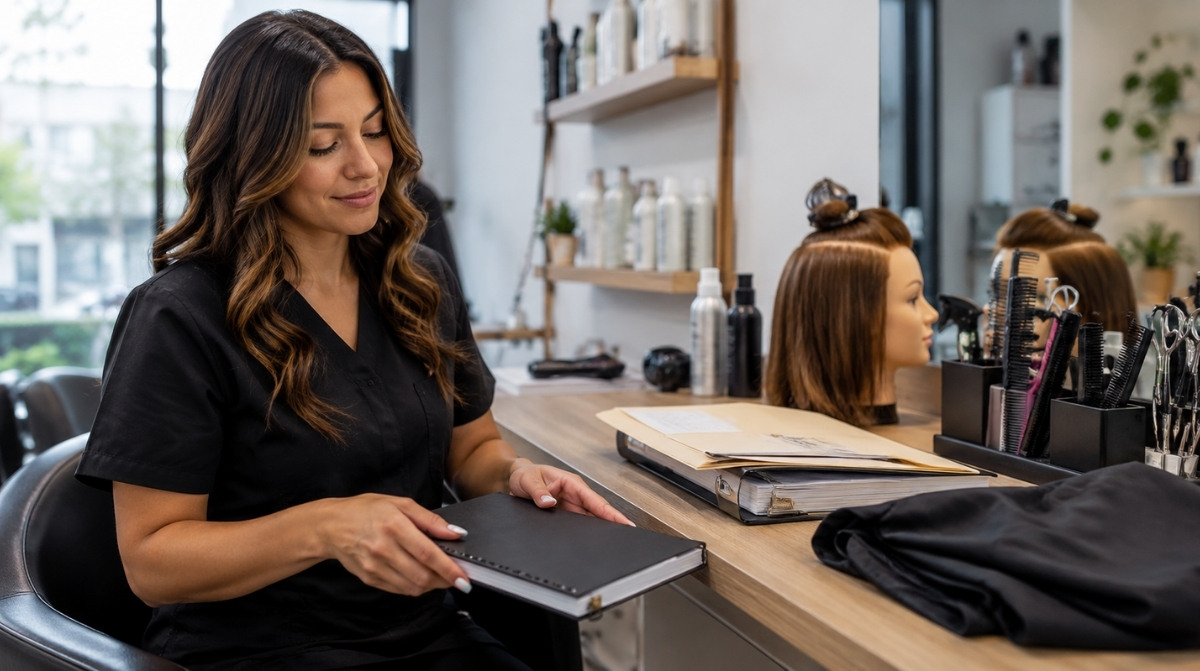
To pass your cosmetology written exam, you need to understand that the test is not measuring creativity. It is measuring safety knowledge, scientific understanding, legal awareness, infection-control habits, and your ability to choose the best answer under pressure. A large part of your cosmetology theory practice test prep should focus on sanitation, disinfection, hair and skin structure, chemical services, nail care, contraindications, and consumer protection.

You also need to understand your local scope of practice. This means knowing which services a licensed cosmetologist may legally perform in your state and which services may belong to another license category or regulated profession. If your cosmetology state law questions ask about medical massage, advanced skin procedures, tattooing, permanent cosmetics, or other specialized services, you need to know where your state draws the boundary.

State-specific rules matter because beauty laws and chemical-safety issues continue to evolve. For example, the Arkansas Department of Health posted a notice stating that any hair relaxer product sold in Arkansas that contains a carcinogen or reproductive toxicant must follow the warning-label requirements of Act 964 of 2025. This does not mean that exact notice will appear on your exam, but it shows why law, chemical safety, and consumer protection are active parts of professional licensing.

Official state data also shows why theory study should not be treated as an afterthought. The Texas Department of Licensing and Regulation exam records show that the FY2025 Operator Written pass rate was 49.05%, while the Operator Practical pass rate was 89.10%. That does not prove every state has the same pattern, but it does show why salon experience alone is not enough. If you are wondering how hard the cosmetology state board theory section can be, this is a strong reminder to study with structure.

Using Practice Questions The Smart Way

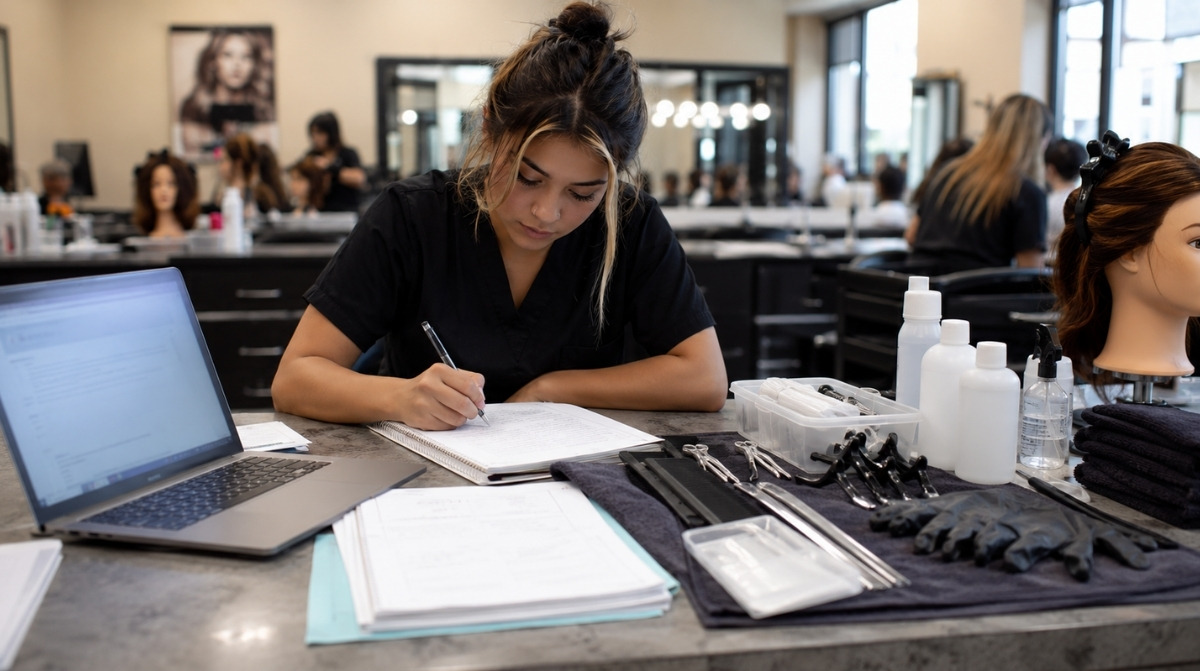
Because the written test involves memorization, careful reading, and applied safety judgment, your study method matters. Sitting with a huge textbook and highlighting random sections is rarely the best approach for hands-on learners. A stronger method is active recall, where you make your brain retrieve the answer before exam day.

Adding a digital cosmetology practice test to your daily routine can help you get used to exam-style wording. Strong study materials should break large topics into smaller quizzes covering infection control, hair care, chemical services, skin care, nail care, and state law. A useful cosmetology written exam study guide should help you understand the reasoning behind the answer, not just memorize a letter choice.

You do not need to spend heavily on extra materials right away. A free practice test for the cosmetology state board can help you see where your knowledge is strong and where it needs work. When you take a cosmetology free practice test online, review the answer explanations carefully. Do not only memorize the correct option. Use it as a real cosmetology exam review and learn why the other options are wrong.

As you work through cosmetology exam questions and answers, keep a list of the topics you miss most often. If you keep missing cosmetology questions for the state board related to chemical relaxing, infection control, anatomy, skin conditions, or state law, that list becomes your final-week study plan. This makes your cosmetology exam practice much more focused and less overwhelming.

What To Expect On Test Day

A lot of exam anxiety comes from not knowing what the day will look like. Understanding the basic flow of a professional cosmetology exam center can help you feel more prepared before you arrive.

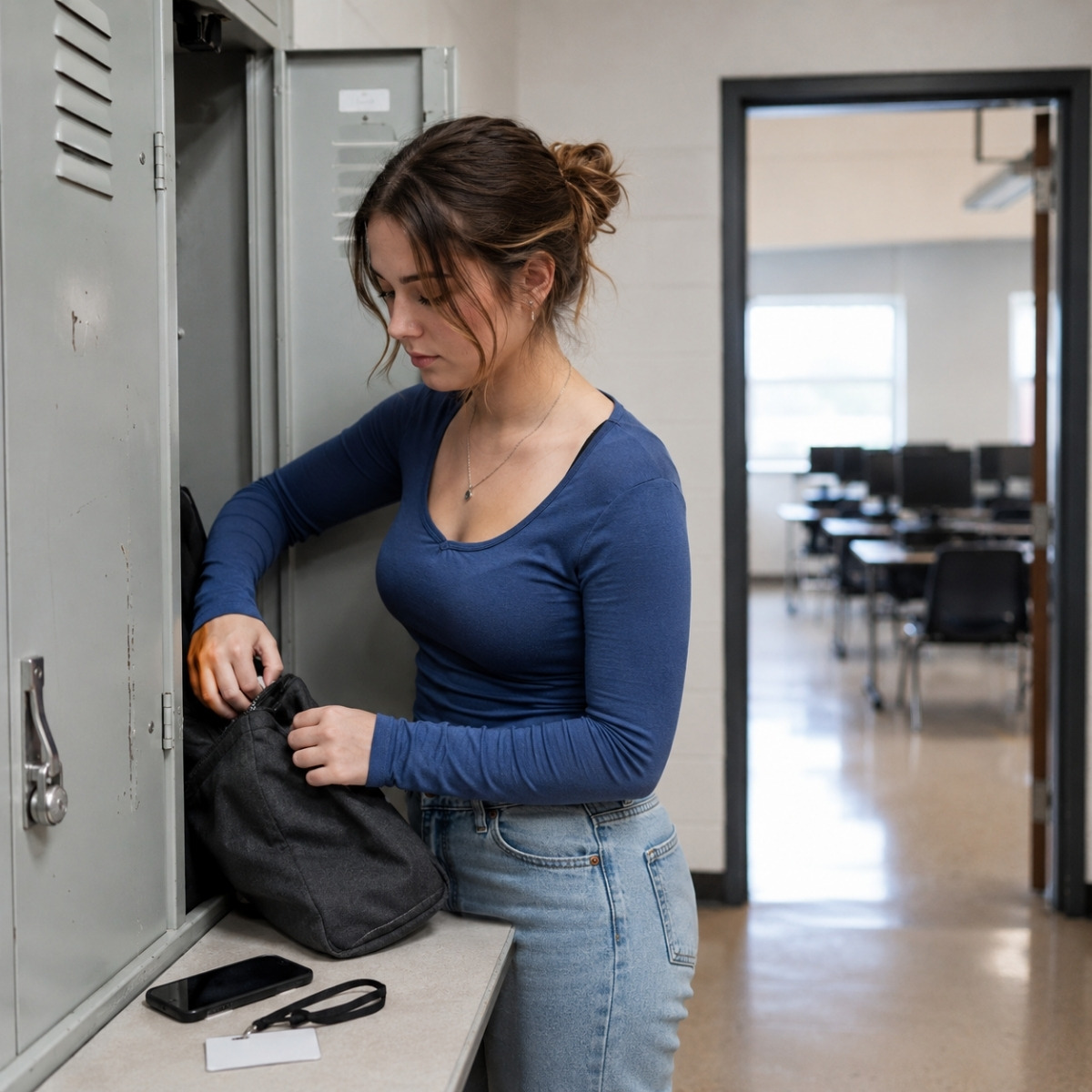
On test day, plan to arrive at least thirty minutes early unless your official bulletin gives a different instruction. Testing staff will usually verify your identification and confirm your registration status. Because exam security is strict, you may be asked to place your phone, watch, bag, notes, and other restricted personal items into a secure locker.

After check-in, an administrator will direct you to the assigned testing area. If you are taking the theory exam at a physical test center, the exam is usually computer-based and includes a timer so you can pace yourself. How many questions are on the cosmetology state board exam varies by state and vendor, but many theory exams are timed and built around multiple-choice questions.

Some states and vendors now offer remote proctoring options for certain exams, so the phrase cosmetology online test can mean different things. The PSI Cosmetology and Barber National Exams page notes that remote theory testing and virtual practical testing are available for certain participating states. Never assume your format based on a friend’s experience in another state. Always check the current bulletin for your license type and location.

Packing Your Practical Kit Without Guesswork

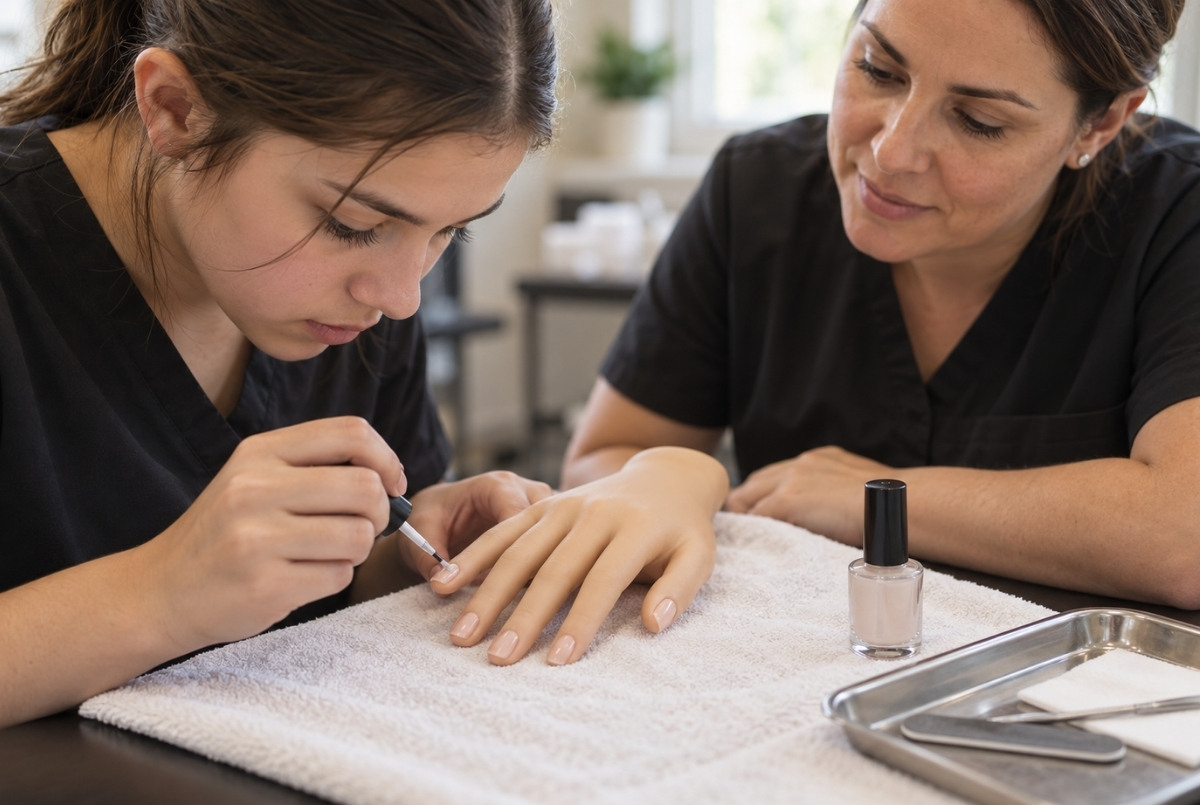
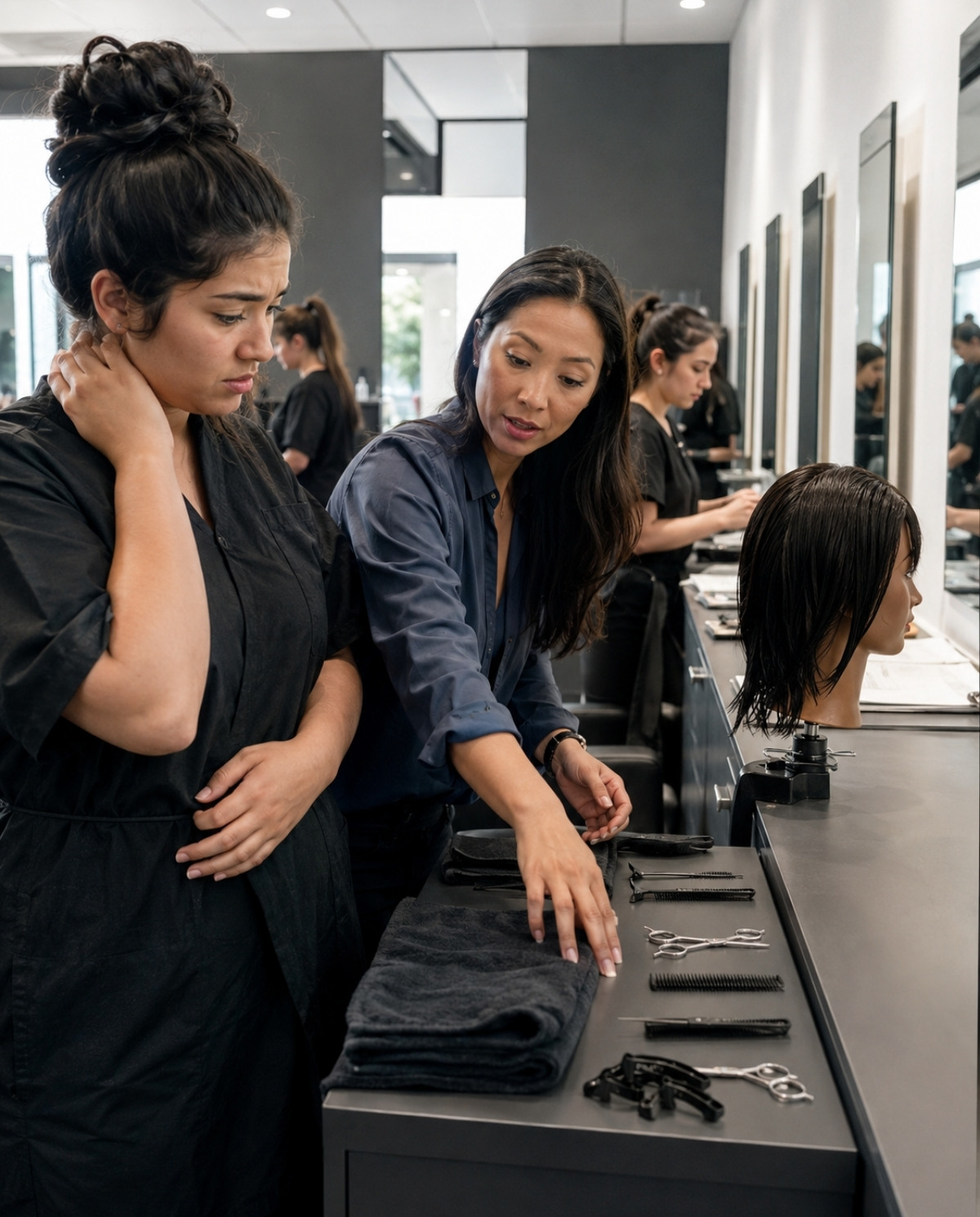
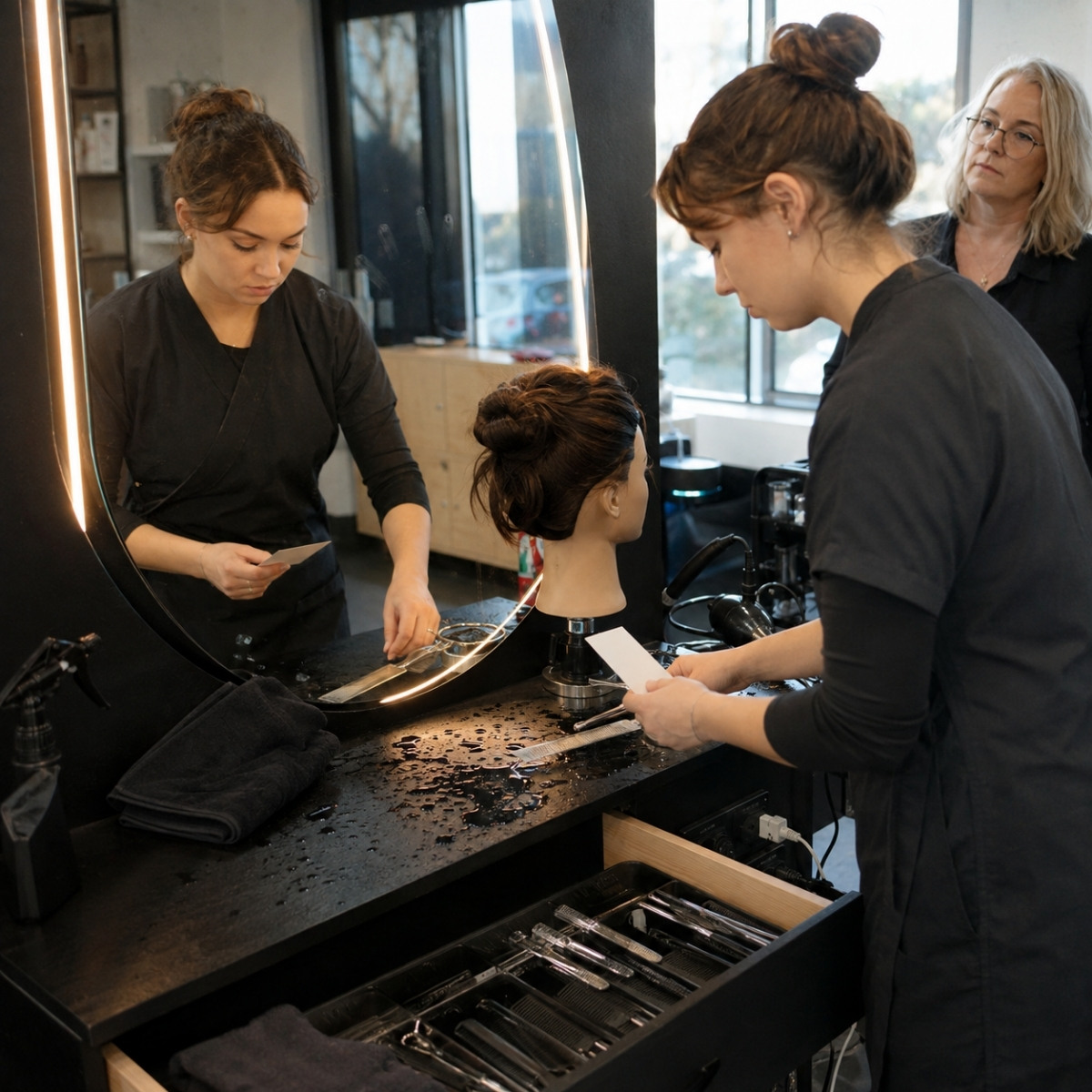
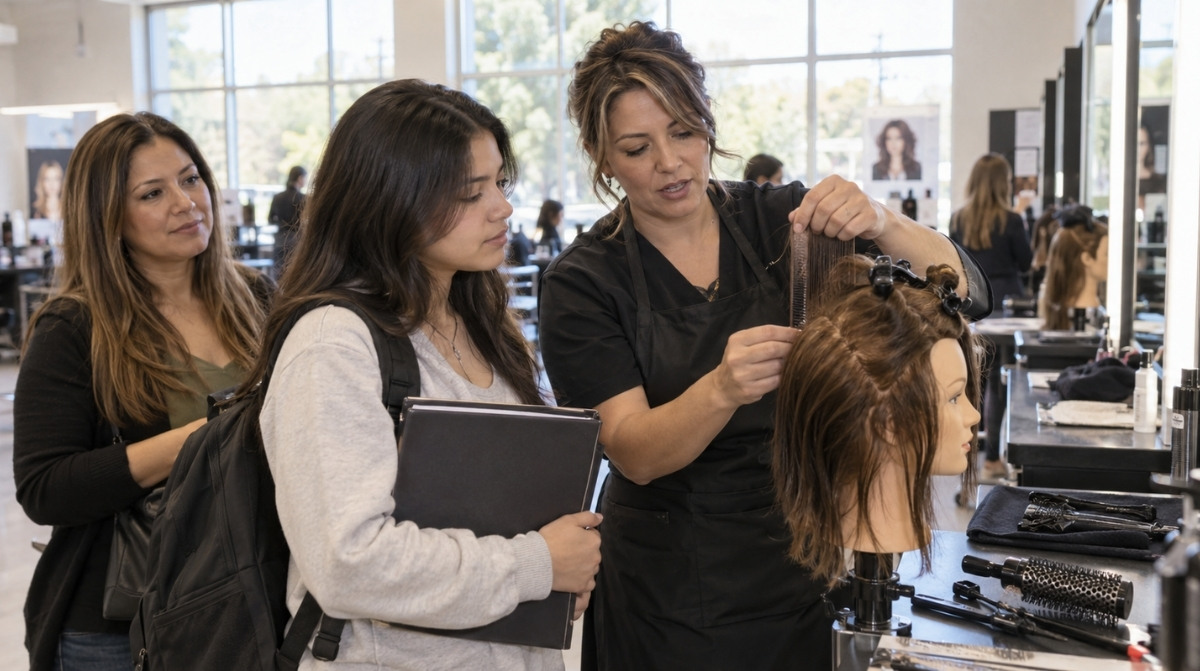
The cosmetology practical exam is where your technical training becomes visible. Learning how to pass the cosmetology state board exam, especially the practical section, means understanding what evaluators are truly watching. They are not looking for a runway-ready haircut or dramatic final style. They are looking for sanitation, clean setup, safe transitions, proper infection control, and the ability to follow instructions under time pressure.

Your cosmetology kit for the state board should be built around your official exam packet, not a random online list. There is no single universal cosmetology kit list for the state boards that applies everywhere. For example, the Georgia PSI Test Taker Guide explains that PSI National Practical Tests do not use one standardized supply list, so candidates must bring the proper professional equipment, products, and containers while following the listed rules.

Dress requirements can also vary by state. For Georgia PSI testing, candidates must wear neat, clean, professional attire, a sleeved smock or lab coat, and closed-toe shoes. The current guide does not require all-black clothing, so candidates should avoid relying on outdated dress-code advice from old posts or word-of-mouth tips.

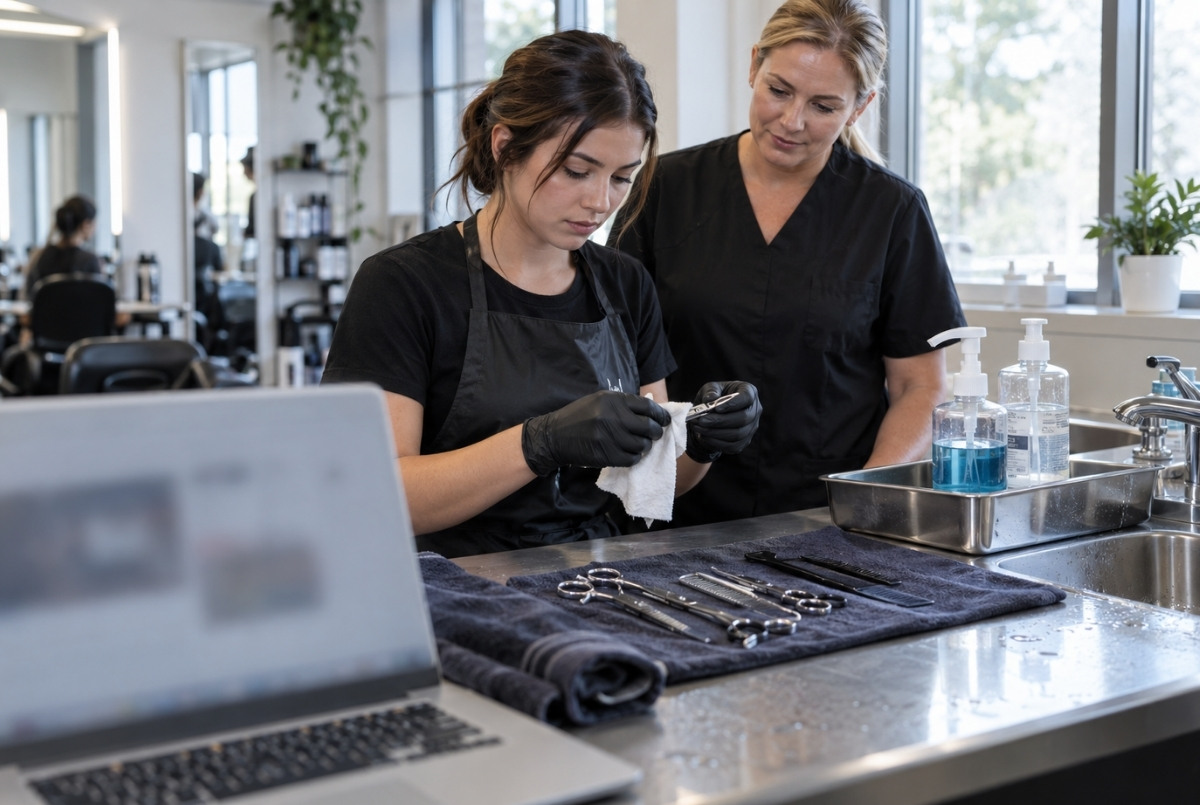
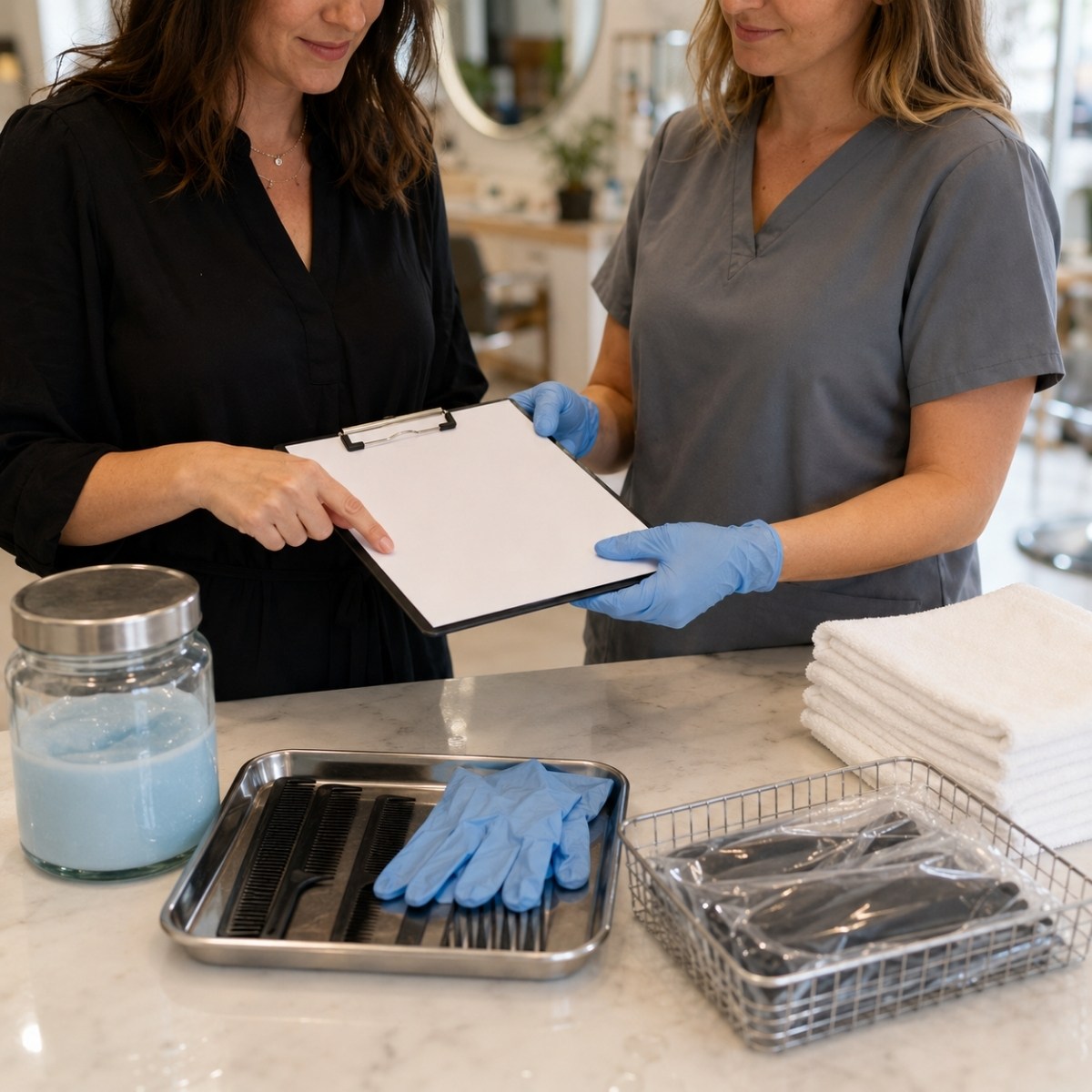
Blood exposure preparation is another important part of practical testing. If a blood exposure occurs during the exam, or if your exam requires a demonstration, you must follow the exact procedure in your testing packet. The Ohio State Cosmetology and Barber Board practical testing packet, for example, gives specific blood exposure instructions involving antiseptic, wound covering, gloves or finger guards, disposal of contaminated materials, and proper infection-control steps.

Learning how to organize a cosmetology kit properly can save valuable time during timed transitions. If you drop a comb, clip, or implement during many practical exams, you should treat it as contaminated, avoid reusing it, sanitize your hands as instructed, and use a clean replacement from your kit. Practicing from your packed kit before exam day helps your movements feel automatic instead of rushed.

Labeling rules deserve special attention because they are state-specific. According to the Ohio practical testing directives, disinfectants and hand sanitizers must have original or photocopied manufacturer labels, and handwritten or typed labels are not acceptable for those products. Georgia’s PSI guide allows self-created or actual labels for certain simulated products but requires manufacturer labels for disinfectants and other products that must meet safety-data requirements. The safest approach is to follow your exact state packet, label early, and avoid last-minute kit changes.

Where Your License Can Take You After Passing

When studying starts to feel heavy, remember what this exam represents. Earning your official cosmetology license can open the door to professional credibility, career flexibility, and more control over your future in the beauty industry.

The beauty field is no longer limited to one traditional salon-chair path. Licensed professionals may move into independent work, salon ownership, specialty services, education, brand support, beauty retail leadership, content-driven client building, or event and production styling depending on state rules, license scope, and additional training.

After you pass the required cosmetology test for licensure and complete your state licensing steps, you can begin looking at the wider career paths available to trained beauty professionals. To explore those options more clearly, you can read our guide on what careers fall under cosmetology, which may include salon styling, platform education, film and event styling, beauty retail leadership, brand support, and independent studio ownership depending on your license, state rules, and additional training.

The beauty labor market remains active, but the numbers should be presented carefully. The U.S. Bureau of Labor Statistics projects overall employment of barbers, hairstylists, and cosmetologists to grow 5% from 2024 to 2034, with about 84,200 openings projected each year on average. Related fields also show continued demand: BLS projects skincare specialists to grow 7% from 2024 to 2034, with about 14,500 openings per year, and manicurists and pedicurists to grow 7%, with about 24,800 openings per year.

Market trends also show why modern beauty professionals need more than technical ability. McKinsey & Company’s State of Beauty analysis notes that beauty discovery and purchasing are shifting through e-commerce, social commerce, digital marketplaces, and fast-moving platforms such as TikTok Shop. In a separate wellness-market analysis, McKinsey also reported that many U.S. and U.K. consumers now prioritize clinical effectiveness over clean or natural claims when evaluating wellness products. For future beauty professionals, that means product knowledge, clear client education, safety awareness, and trust-building are becoming more important.

This is why proper training matters beyond simply passing an exam. The state board is your entry point, but your long-term confidence depends on the habits you build during school: sanitation, professional communication, product awareness, technical consistency, and the ability to work safely under real client expectations.

If you are thinking through the cost of training, you can review our guide to cosmetology school financial aid, which covers options such as federal aid, grants, FAFSA-related planning, 529 savings plans, scholarships, and payment strategies. The goal is not only to pass the cosmetology written exam or practical test. The goal is to build a foundation that supports a real career in a competitive beauty market.

Plan Your Next Step With Perimeter Beauty & Barber Institute

Passing your licensing exam is a major milestone, but choosing the right training environment can shape how prepared you feel before test day and after graduation. A professional school setting gives you structure, guidance, hands-on repetition, and a clearer path from student practice to licensed work.

If you are ready to explore your options, visit our Enrollment page to learn more about admission requirements, schedule a campus tour, and see how the enrollment process works at Perimeter Beauty & Barber Institute.

Have questions about getting started, visiting the campus, or choosing the right program? Leave your details in the contact form below, and an admissions representative can help you understand your next step.

Common Questions About The Cosmetology State Board Exam

Can you take the cosmetology state board exam online from home?

It depends on your state, license type, and testing vendor. Some exams still require an approved testing center, especially practical exams that involve direct observation. However, some PSI-administered cosmetology programs offer remote theory testing or virtual practical testing for certain participating states, as shown on the PSI Cosmetology and Barber National Exams page. Always check your current state Candidate Information Bulletin before assuming your exam can or cannot be taken from home.

What should you do if you fail the cosmetology exam?

If you do not pass on your first attempt, do not panic. Many candidates need a second try, and it does not mean your career path is over. Learning how to pass the cosmetology written exam or practical section on a retake usually means reviewing your score report, identifying weak areas, and studying with a more targeted plan. Retake rules vary by state, but many systems allow candidates to retake the failed portion after paying the required fee and following the board’s waiting-period or scheduling rules. For example, the Maryland Board of Cosmetologists says candidates who fail may retest on an unlimited basis, while Kentucky Senate Bill 22 allows cosmetology board license applicants to retake a failed portion an unlimited number of times, with each retake at least one month after receiving actual notice of the failure.

How long is the waiting period before a retake?

The waiting period depends on the state and testing agency. Kentucky’s SB 22 sets a one-month wait after notice of failure before retaking a failed portion, while other states may base retesting on application deadlines, available exam dates, or vendor scheduling rules. The safest move is to check the current bulletin from your state board or testing provider as soon as you receive your score report.

Do cosmetology state board scores expire?

Yes, exam scores or eligibility windows can expire, but the timeline depends on the state. Maryland says testing scores must be passed successfully within two years of each other to be considered valid by the Board. Georgia’s PSI Test Taker Guide states that courses completed after July 1, 2018 are valid for four years, and if no passing score is achieved within that four-year period, the candidate must reapply with the Georgia Board. Because these timelines can affect your license application, it is best to complete your licensing steps as soon as possible after passing.
“`

Cosmetology License Requirements by State: What You Need to Know Before You Enroll

“`html
If you spend time in the beauty world, you will see plenty of people talking about creative freedom, personal branding, and the excitement of working behind the chair. What often gets less attention is the practical side of becoming legally ready to work. Before you can build a client base or open your own space, you need to understand training hours, testing steps, renewal rules, and state board expectations.

Many future beauty professionals pause because they are unsure whether school will fit their schedule or whether they can handle a formal licensing exam. If you want a clearer starting point, this guide on cosmetology education requirements can help you understand what aspiring students usually need before entering the field.

Key Takeaways

  • Rules Change by State: Cosmetology licensing is controlled by individual state boards, so age rules, training hours, exam formats, fees, and renewal schedules can differ from one state to another.
  • More States Are Moving Toward 1,000 Hours: Several major states now use a 1,000-hour cosmetology pathway, and recent research suggests lower hour requirements may reduce tuition and improve completion without showing a detectable drop in cosmetologist earnings.
  • License Mobility Is Improving: The Multi-State Cosmetology Licensure Compact is meant to make interstate practice easier for eligible licensees once fully implemented, but it should not be treated as automatic nationwide license transfer.
  • Renewal Rules Protect More Than Paperwork: License renewal and continuing education requirements help boards reinforce sanitation, legal compliance, consumer protection, and updated health-and-safety practices.

Why Cosmetology Rules Look Different Across the Country

A salon desk displays an unmarked map, blank requirement cards, shears, combs, and a softly blurred mannequin head to represent state cosmetology rules.

State laws decide who can legally provide beauty services for pay. Since the United States does not use one single national cosmetology standard, cosmetology regulations by state can look very different depending on where you plan to work. Every state board sets its own rules for training, exams, license categories, and legal scope of practice.

These rules are not designed to judge your creativity. They are mainly there to protect public health and consumer safety. Boards want licensees to understand sanitation, infection control, chemical safety, skin anatomy, product handling, and the legal limits of the services they provide. Learning these rules early helps you avoid delays, fines, and confusion once you begin your career.

What State Boards Usually Require

When you compare cosmetology license requirements by state, you will usually see differences in minimum age, education background, school hours, exam structure, application fees, and criminal-history disclosure rules. Many states require applicants to be at least 16 or 17 years old, but the exact rule depends on the board.

For example, the Texas Department of Licensing and Regulation lists a 1,000-hour cosmetology operator course and a minimum application age of 17. The New York Department of State requires a 1,000-hour approved course plus written and practical examinations.

This is why a generic national checklist is not enough. Your licensing plan should begin with the exact rules in the state where you want to work. A strong beauty school can help you stay organized with age documentation, school records, exam applications, fee payments, and any required disclosures so you do not lose time during the licensing process.

Because cosmetology can cover several types of beauty services, students often ask where the legal boundaries are. If you want to understand your future service options, you can review this article on working as an esthetician, barber, or nail tech with a cosmetology license to see which services may fit under a standard cosmetology scope.

How Training Hours Shape Your Timeline

One of the biggest milestones for future licensees is completing the required school hours. The number of hours you need depends on your state board, your license type, and the approved curriculum in your area. Anyone comparing cosmetology school hours by state will quickly notice that nearby states can have very different requirements.

For example, New York requires 1,000 hours, California now lists 1,000 school hours for cosmetologists through the California Board of Barbering and Cosmetology, and Texas sets its cosmetology operator course at 1,000 hours. Meanwhile, states such as Ohio, Arkansas, and Georgia still commonly use a 1,500-hour pathway for standard cosmetology licensure, although the license title and testing process can vary.

Before enrolling, you should check the cosmetology hours for the state where you plan to build your career. Tracking these hours needed for cosmetology license by state rules helps you avoid paying for a program that does not satisfy your board’s requirements. Choosing a program that organizes the required hours clearly can help you graduate on schedule and move into the salon environment with fewer preventable delays.

A 2025 EdWorkingPaper from the Annenberg Institute at Brown University found that lowering cosmetology-hour requirements can raise completion, lower tuition, and expand enrollment among some groups, with no detectable decline in cosmetologist earnings. This does not guarantee that every student’s future income will stay the same, but it does suggest that very high hour requirements can increase the cost of entry without clearly improving earnings outcomes.

Preparing for the State Board Exam With Less Stress

After your required hours are completed and documented, the next major step is the official licensing exam. It is normal to feel nervous here, especially if you are more comfortable with hands-on styling than written testing. The goal is not to prove that you are the most creative stylist in the room. The board wants to confirm that you understand safety, sanitation, infection control, and the services covered by your license.

A cosmetology student reviews an unmarked study sheet while a sectioned mannequin head, clips, combs, and gloves sit on a salon workstation.

Building a Practical Study Plan

A useful cosmetology state board exam review should go beyond the services you practiced in class. The written or theory portion often focuses on chemical safety, sanitation, infection control, hair care, skin care, nail care, and cosmetology state law questions.

Using a cosmetology practice test free online can help you become familiar with the format before test day. A dedicated cosmetology written exam study guide can also help you review tool disinfection, product safety, chemical texturizing, infection control, and other topics that often appear on licensing exams. This preparation helps connect your hands-on skills with the safety knowledge expected of a licensed professional.

What to Know Before Test Day

  • Question Count: You should research how many questions are on the cosmetology state board exam in your specific state so you can pace yourself properly. Many states use national testing content, but the exact exam depends on the board and testing vendor. The NIC National Cosmetology Theory Examination, for example, contains 110 items, with 100 scored questions counted toward the final score.
  • Practical Exam Rules: Do not assume every state still requires the same hands-on practical test. California states that effective January 1, 2022, the practical exam is no longer required for all license types and candidates only need to pass the written exam. Other states may still require practical, written practical, theory, or state-law testing.
  • Exam Fees: You should include test costs in your career budget. Always check how much it costs to take the state board for cosmetology through your board or testing vendor because fees can vary depending on the exam type.
  • Scheduling Steps: Your school may help submit graduation paperwork, but you still need to understand how to apply for cosmetology state board exam testing and how to schedule cosmetology exam dates through official proctors such as PSI, Pearson VUE, Prov, or another approved vendor.
  • Difficulty Level: Students often ask how hard the cosmetology state board exam actually is. The exam is meant to measure baseline safety and competency, not artistic perfection. If you understand sanitation, infection control, chemical handling, and your license scope, you can approach the testing process with more confidence.

As you plan for exam fees and total school costs, remember that you may not have to pay for everything out of pocket. For help understanding funding options, review this guide on cosmetology school financial aid, FAFSA, grants, and 529 plans.

Keeping Your Cosmetology License Active

Earning your license is a major accomplishment, but keeping it active takes ongoing attention. If you step away from the salon, move, or simply miss a renewal deadline, your license status can become a serious problem. In many cases, an expired license can be fixed, but the steps depend entirely on your state board.

A working beauty professional organizes a clean salon workstation with a blank renewal folder, continuing education packet, sanitizer bottle, gloves, and disinfected tools.

How Renewal Timelines Usually Work

Every state sets its own renewal cycle. Some boards use a fixed calendar date, some use your birth month, and others base renewal on the date your license was issued. Some states renew every year, while others use two-year or longer cycles. If you are on the West Coast, you may wonder whether you can renew your CA cosmetology license online. Most state boards now offer digital portals to make renewal faster.

If you miss your deadline, you need to know how long after cosmetology license expires you can wait before penalties, status changes, or cancellation rules apply. Waiting too long can increase your costs and interrupt your ability to work legally. You should also know how to check if your cosmetology license is expired through the state registry so you can calculate renewal fees and restore your ability to work as quickly as possible.

When a License Becomes Too Expired for Simple Renewal

If a license is ignored for several years, the board may classify it as cancelled, expired beyond renewal, or null and void. The terminology depends on the state. Reinstatement can be stressful because each board has its own rules.

For example, anyone researching how to reinstate a null and void cosmetology license in Florida should know that the Florida Department of Business and Professional Regulation states that a license becomes null and void after a licensee fails to renew for two consecutive licensure cycles. A null and void license generally cannot be reinstated unless the applicant shows illness or economic hardship, and each application is reviewed case by case. This means you should not assume a late fee alone will solve a long-expired license.

Many states also require continuing education courses for cosmetology before renewal is approved. For instance, the Georgia State Board of Cosmetology and Barbers requires five hours of board-approved continuing education for renewal, including three hours in health and safety. These rules help reinforce sanitation, infection control, state law awareness, and safe professional practice.

Long-term occupational health research also shows why safety education matters in the salon environment. A study published in Occupational and Environmental Medicine found associations between hairdresser work and certain hormone-related outcomes, including higher odds of prebaseline hysterectomy and higher rates of incident endometriosis, while not finding notable associations with several cancers studied. This does not mean every stylist will experience the same outcome, but it does support the importance of ventilation, product awareness, protective habits, and careful chemical handling throughout a beauty career.

What Happens When You Move to Another State?

Beauty careers are not always tied to one location forever. You may move for family, a relationship, a better market, or a new professional opportunity. The challenge is that your license does not automatically become valid everywhere just because you completed school and passed an exam in one state.

Reciprocity, Endorsement, and Transfer Requirements

If you are moving, you need to research how to transfer cosmetology license to another state properly. This process often involves reciprocity or endorsement, but those terms do not always mean the same thing. Reciprocity usually means one board recognizes another state’s license or training standards. Endorsement usually means the new board reviews your active license, training hours, exams, and sometimes work history before deciding whether you qualify.

To avoid surprises, study the cosmetology license transfer from state to state requirements before you relocate. You may need to submit an application, pay a processing fee, and request official license verification from your original state board. If your original state required fewer school hours than your new state, you may also need additional testing, extra hours, a state-law exam, or documented work history.

Arkansas shows why the details matter. The Arkansas Department of Health explains that a person transferring hours from another state without holding a current out-of-state license must pass written and practical examinations to qualify for an Arkansas license. Florida uses a different structure. The Florida DBPR states that applicants who qualify for cosmetology licensure by endorsement do not have to take the Florida cosmetology examination, but they must hold a valid out-of-state cosmetology license and complete the required HIV/AIDS course.

Online Applications and the Compact Pathway

If you are asking whether cosmetology licenses transfer to other states easily, the honest answer is that it depends on the destination state. Some boards allow you to manage a cosmetology license transfer from state to state online, while others require more documentation or manual review. In some cases, you may submit a cosmetology license by reciprocity application through a digital portal.

Before signing a lease, accepting a salon position, or moving your client base, check the exact transfer rules for your target state. Understanding your license mobility also helps you evaluate the full range of licensed careers you can pursue under cosmetology, whether you want to work as a platform artist, editorial stylist, salon manager, or independent professional in a new city.

Legal and structural legislative analysis from the University of Missouri School of Law Scholarship Repository tracks the ongoing execution of the Multi-State Cosmetology Licensure Compact. The official Cosmetology Compact explains that the system is designed to create a multistate license pathway for eligible cosmetologists who live in compact member states and hold an active, unencumbered license. Once fully implemented, this structure should allow qualifying beauty professionals to practice across member state lines without applying for separate traditional reciprocity packages in each participating state.

However, the compact should not be described as automatic nationwide portability. It applies only to participating states, and eligibility still depends on the licensee’s home-state license, board rules, and implementation timeline. It is an important step toward better mobility, but you should still confirm whether your state has enacted the compact and whether multistate licenses are actively being issued before relying on it for relocation plans.

Build Your Career With Clear Licensing Support

Training hours, exam rules, renewal deadlines, and transfer requirements are easier to manage when your school helps you connect classroom learning with real-world beauty industry preparation. At Perimeter Beauty & Barber Institute, students train in an environment focused on helping future professionals develop the skills, knowledge, and confidence needed to enter the cosmetology field.

The school’s Master Cosmetologist program is designed for Georgia licensure and lists 1,500 required hours. Students can build hands-on experience in haircutting, coloring, perming, styling, manicures, pedicures, acrylic sets, lash and brow services, facials, waxing, and makeup application. The program also highlights salon business, client retention, resume writing, and job-seeking skills as part of career preparation.

Because the program is built around Georgia licensure preparation, your training can help you develop the practical, sanitation, and regulatory knowledge needed for the state board process. This kind of preparation matters because the beauty industry requires both creativity and legal responsibility.

Beyond technical training, Perimeter Beauty & Barber Institute supports career readiness through practical skill development, professional habits, and employment assistance resources. The school’s catalog notes that employment assistance may include posting positions related to its programs and hosting job fairs, although job placement is not guaranteed.

Starting a beauty career is not just about completing hours. It is also about choosing a training environment that helps you understand the professional expectations behind the license. If you are ready to learn more about enrollment, visit Enrollment and contact the school to discuss your next step.

Frequently Asked Questions

Can I offer cosmetology services from home without a license?

No. State regulations generally require a valid beauty license for professional cosmetology services, whether the work happens in a salon, home studio, mobile setup, or event location. Providing hair, nail, or skin services for compensation without the proper credential can lead to fines, disciplinary issues, misdemeanor exposure in some states, and possible complications with future license applications.

Why do some states combine barbering and cosmetology under one agency?

Barbering and cosmetology were historically regulated through separate structures in many places, with different license categories, school approvals, and testing rules. Some states now use combined barbering-and-cosmetology administration. Texas, for example, combined its Barbering and Cosmetology programs under TDLR through HB 1560, and the Texas Department of Licensing and Regulation now manages Barbering and Cosmetology under one program. This can help standardize health, safety, sanitation, establishment, and administrative rules, but it does not mean every state has merged its boards or erased the difference between barber and cosmetology licenses.

Do lower cosmetology-hour requirements automatically hurt service quality?

Not necessarily. A landmark econometric review hosted by San Jose State University found that more stringent licensing rules did not show a general positive association with higher consumer ratings for the beauty-service occupations studied. The study used Yelp ratings as a customer-satisfaction measure, so it should not be treated as a perfect measure of safety or technical quality. Still, it supports the idea that extremely high licensing burdens do not automatically translate into better customer-rated service.

To better understand how interstate career mobility is changing for beauty professionals, you can watch this overview of the Cosmetology Licensure Compact and State Board Rules. The video explains how the compact may simplify professional mobility while still depending on participating states and official implementation.
“`

Cosmetology School Financial Aid: FAFSA, Grants, 529 Plans, And More

Choosing a career in the beauty industry is a massive step toward building your own independence and letting your creativity shine. But looking over tuition sheets, kit fees, and equipment costs can bring on an immediate wave of stress. It is completely normal to worry about how you are going to afford a quality program, or if you will be stuck taking on high-interest debt before you even get to pick up a pair of professional shears.

The good news is that you do not always have to fund your entire training completely out of pocket or wipe out your savings on day one. Because professional beauty programs require structured technical hours to get you ready for state licensing, there may be legitimate financial systems, payment options, or outside resources that help reduce the pressure. If you are sitting there wondering if you even meet the baseline requirements to get your foot in the door, it helps to read through a realistic guide on cosmetology education requirements to understand the typical admissions criteria and student mindsets. Once you learn how federal aid, specialized grants, tax credits, private scholarships, and modern savings plans may work depending on the school and program, you can map out a safer strategy to pay for your education.

Key Takeaways

  • Title IV Status Must Be Verified: FAFSA-related federal funding may help with beauty school costs, but only when the specific institution and program participate in federal Title IV student aid programs. Do not assume accreditation, licensing, or school approval automatically means FAFSA eligibility. Always confirm the school’s current Federal School Code status and program eligibility directly before making plans around federal aid.
  • Look Past the Base Tuition: School budgets can quickly change once required tools and school-related fees are added. Make sure you plan for extra expenses like professional kits, textbooks, uniforms, registration fees, and state licensing-related costs.
  • Clock Hours Affect Your Progress: Many beauty programs track training through clock hours instead of traditional college credit semesters. Because of this, missed class time can slow down your progress, affect completion timelines, and create extra financial pressure.
  • Funding Rules Are Not Universal: State workforce programs, private beauty scholarships, VA benefits, 529 savings plans, tax credits, and payment plans can reduce out-of-pocket costs, but the rules vary by school, program, student status, and state regulations.

What Your Beauty School Budget Really Includes

Open cosmetology student kit with shears, combs, clips, mannequin head, calculator, textbooks, apron, and tuition cost breakdown on a classroom table.

Before we look at how to get financial aid for cosmetology school, we need to talk about how these programs actually structure their fees. A massive mistake prospective students make is looking strictly at the base tuition and assuming that is the final price tag. Trade school billing is uniquely broken down compared to standard universities. The real question you should be asking is not just how much tuition costs, but what your full education budget will actually include.

The truth is that the overall cosmetology school cost fluctuates based on your geographic location, how deep the curriculum is, the type of school, the program length, and what is bundled into the price. On a national level, the average cost for cosmetology school generally lands somewhere between $5,000 and $20,000, according to data from SoFi Financial Insights. If you are specifically hunting for a cosmetology school under 10k, your options are going to be mostly limited to regional vocational centers, short-term certificate tracks, community college options, or institutions located in smaller markets.

To figure out exactly how much tuition is for a cosmetology school, you have to look deeper than the baseline instructional rate. Many beauty schools require students to buy a mandatory student kit. This is not just a backpack with a few notebooks; it can be a professional collection of tools such as shears, styling irons, mannequins, sanitation supplies, and textbooks that you will use during training and may keep after graduation.

These student kits and learning materials can add a serious required expense to your bill. Data from a Renaissance Academie Cost Analysis shows one example where kits and textbooks were listed at about $2,498. Some schools bundle these items directly into your tuition, while others expect you to pay for them separately before classes even start. When you are mapping out how to pay for cosmetology school, always ask the admissions office directly whether the student kit, books, uniforms, registration, and state board prep materials are included in the advertised price or if they are independent, upfront costs.

You should also ask for the school’s complete cost of attendance or full cost breakdown. That number may include tuition, required fees, supplies, transportation, and licensing-related allowances. This matters because any aid, scholarship planning, or payment strategy should be based on the real total, not just the clean tuition number on a brochure.

FAFSA, Federal Aid, and Clock-Hour Programs

Beauty school student and advisor reviewing financial aid checklist, cost of attendance paperwork, calendar, calculator, and program planning documents at a desk.

The single most common question people have is whether they can use fafsa for cosmetology school. The answer is yes for some eligible schools and programs, but not for every beauty school. FAFSA-related aid only applies when the institution and the specific program participate in federal Title IV student aid programs. Keep in mind that accreditation or licensing by itself does not automatically mean a school accepts FAFSA. You need to verify the school’s active Federal School Code and current participation status through the U.S. Department of Education’s official Federal School Code Lists or by asking the school’s financial aid office directly.

When a cosmetology school with FAFSA approval is eligible for federal aid, submitting the application can help qualified students access Pell Grants, student loans, and other assistance. However, funding at a trade school can work differently than it does at a traditional four-year college. Standard universities often distribute aid by academic semesters or calendar terms. In contrast, many beauty programs measure academic progress using clock hours, which track the actual time students spend learning in class, practicing techniques, or completing required training activities.

Attending a cosmetology school with financial aid means funds may be distributed in specific installments tied directly to completed hours and instructional weeks rather than a simple calendar date. The Federal Student Aid Handbook explains that clock-hour payment periods depend on successful completion of required hours and weeks of instructional time. As highlighted in the Continental School of Beauty Financial Guides, beauty school aid is often released in chunks as students clear milestones. Because of this setup, skipping class does a lot more than just hurt your technical skills; it can delay your clock-hour completion, push back aid disbursements at eligible schools, and create a temporary unpaid balance until you catch up on your time.

Before depending on federal aid, ask four direct questions: Does this exact school currently participate in Title IV? Is this exact program aid-eligible? What Federal School Code should I use, if any? How are clock hours, payment periods, and attendance tracked? These answers protect you from building your budget around aid that may not apply.

Grants, Scholarships, and Military Education Benefits

If you want to graduate with the lowest amount of debt possible, your main focus should be finding financial aid for cosmetology school that you never have to pay back. At Title IV-eligible institutions, the main federal source of non-repayable assistance is the Federal Pell Grant, which is awarded based on financial need calculated from your FAFSA. For the 2026–27 award year, the maximum Federal Pell Grant scheduled award sits at $7,395, though the exact amount a student receives depends on individual eligibility, enrollment status, program structure, and federal rules.

Beyond federal help, it is smart to search for specialized grants for cosmetology school that are funded by private foundations and major corporate beauty brands. The American Association of Cosmetology Schools points out that non-profit groups like Beauty Changes Lives run seasonal scholarships that can help pay for tuition, tools, and supplies for qualifying students.

If you are balancing family responsibilities, look into targeted demographic resources. There may be cosmetology grants for single mothers, along with training vouchers for displaced workers, low-income adults, and career changers. These awards are not always explicitly labeled for beauty school. Many state workforce development boards, local community foundations, vocational rehabilitation agencies, and nonprofit career-training programs offer education vouchers for approved job-training paths.

For residents in certain states, local funding programs can make an important difference. For example, the Georgia Student Finance Commission offers the HOPE Career Grant for HOPE Grant-qualified students enrolled in selected high-demand fields, though you always need to verify that your exact program is on the active list. If you are checking out regional paths like Paul Mitchell The School Arkansas financial aid pathways, you should ask the local office about specific state workforce development funds or vocational rehabilitation options that might apply to you.

For those with a military background, you might be wondering does va pay for cosmetology school. Veterans and eligible dependents can often use GI Bill® educational benefits to fund approved trade school training. The VA GI Bill Comparison Tool notes that the Post-9/11 GI Bill can be used at colleges, universities, trade schools, apprenticeships, and for licensing or certification tests, including cosmetology license tests. To use these benefits for a beauty program, the school or program must be approved for VA benefits. Always connect directly with the school’s VA certifying official to confirm your specific tuition coverage, book allowances, licensing-test coverage, and monthly housing stipend details.

529 Savings, Tax Credits, and Self-Pay Options

If grants, scholarships, or benefits do not fully cover your balance, or if you do not qualify for need-based aid, you can bridge the gap with alternative financial tools. For instance, families frequently ask can 529 be used for cosmetology school. According to the Chase Investment Insights on 529 Rules, 529 funds can generally be used for vocational and trade school tuition, fees, books, supplies, and equipment. Federal rules also allow 529 plans to be used for qualified postsecondary credentialing expenses, which may include costs required to earn or maintain certain professional credentials.

But be careful with the phrase tax-free. While 529 withdrawals are generally tax-free at the federal level when used for qualified education expenses, state tax laws can differ. The experts at Saving for College note that some states define qualified expenses differently, so families should save receipts, match withdrawals to expenses in the same tax year, and double-check local state rules before paying for credentialing costs.

If you are trying to figure out how to pay for cosmetology school without financial aid entirely, do not assume you need the full lump sum on day one. A major source of anxiety for students is asking do you have to pay for cosmetology school upfront. Some beauty institutions offer internal monthly installment plans that break your remaining balance down across the length of your program. Some payment tracks may be interest-free, while others may carry administrative fees, late penalties, or withdrawal-balance rules. This can give you the flexibility to pay your way through classes out of pocket while keeping your regular job, but make sure to review the enrollment paperwork carefully before signing.

You can also reduce part of your out-of-pocket cost when tax season rolls around. You can potentially claim your cosmetology school expenses on taxes using the federal Lifetime Learning Credit if the school is an eligible educational institution and you meet IRS requirements. The IRS Lifetime Learning Credit covers 20% of the first $10,000 in qualified education expenses, up to a maximum of $2,000 per tax return. Because it is a non-refundable tax credit rather than a deduction, it reduces the actual tax you owe but will not trigger a refund check if your tax liability is already zero.

Be Careful With “Free Beauty School” Claims

Beauty student practicing haircut techniques on a mannequin head in a salon classroom with a payment calendar, notebook, checklist, brushes, and tools nearby.

While you are looking into your options, you are bound to see wild online ads or articles promising ways to get a cosmetology school for free. Please approach these headlines with a healthy dose of skepticism. Unaccredited online entities often use these claims as clickbait to collect your personal data, and they may hand out certificates that do not legally qualify you to take your state licensing exam.

In reality, achieving a genuine, zero-out-of-pocket beauty education usually means stacking multiple legitimate funding streams together. A student might pair a private scholarship with state workforce funding, VA benefits, vocational rehabilitation support, institutional aid, or a payment plan to reduce the final balance. At schools that are Title IV eligible, federal Pell Grants or federal loans may also be part of the plan. The right mix depends on your school, program approval, residency, income, student status, military background, scholarship deadlines, and state rules.

Instead of chasing unrealistic shortcuts, investing in high-quality, professional training is the safer route to a sustainable career. The beauty industry is showing steady demand. According to data from the U.S. Bureau of Labor Statistics, employment for barbers, hairstylists, and cosmetologists is projected to grow 5% from 2024 to 2034, which is faster than the average for all occupations.

The Boulevard 2026 Cosmetology Career Outlook highlights the wide range of career directions available after structured training, including salon styling, bridal work, beauty entrepreneurship, film production makeup, color specialization, and salon management. Because this path is so versatile, it is highly valuable to read up on whether you can work as an esthetician, barber, or nail tech with a cosmetology license to see how far your credentials can legally carry you under what the law actually says. Getting a proper foundation at a licensed beauty school helps you prepare for long-term career options within your state’s legal scope of practice. If you are still trying to figure out if this industry matches your personal goals, take a look at what specific careers fall under cosmetology to explore your licensed options.

Start Planning Your Beauty Career

Investing in your beauty education is about so much more than just paying tuition. It is about choosing a training path that helps turn your natural creativity into real professional skills. A hands-on learning environment can make a major difference when you are building technical confidence, preparing for licensing requirements, and figuring out where you want your beauty career to go next.

If you want to see how training at Perimeter Beauty & Barber Institute can fit into your life and your personal budget, head over to our Enrollment page to see how the process works. You can also use the contact form at the bottom of this page to send your questions, connect with an advisor, and take the next step toward your future in the beauty industry.

Frequently Asked Questions

Can I hold down a full-time job while going to beauty school?

Yes, but it really comes down to your stamina and the specific schedules the school offers. Many institutions provide flexible training tracks, including daytime, evening, or weekend options, which can let you keep working while you rack up your state-required hours. Just keep in mind that because clock-hour programs track your attendance closely, you need to choose a schedule you can realistically stick to without falling behind on your time.

What happens to my financial plan if I have to take a leave of absence?

Since many trade schools live and die by clock hours, taking an official leave of absence can pause your academic progress and affect your completion timeline. At schools that participate in federal aid, it may also affect future financial aid disbursements. If you end up withdrawing permanently, the school may calculate how much tuition or aid was earned based on the portion of the payment period or program you completed. If you leave early, you might wind up owing a balance directly to the school or having to resolve unearned aid, depending on the school’s policies and your funding situation.

Will aid or savings plans pay for my state licensing exam fees?

It can, but you need to check how those costs are handled. The Federal Student Aid Handbook explains that for programs requiring professional licensure, the total cost of attendance budget must include an allowance for things like licensing exam fees and application costs. However, timing can be tricky because some fees are due while you are still enrolled, and schools handle documentation differently. You can also look into using 529 funds for professional credentialing costs if they meet state and federal rules.

Are beauty school scholarships impossible to win?

Not at all. While large national scholarships get a lot of entries, some local and industry-specific awards receive fewer applications than students expect because people assume they will not win and skip applying entirely. Private beauty organizations often care about your creative drive, work ethic, financial need, community goals, and career plans rather than just looking at old high school transcripts. Putting real effort into your application essays can give you a stronger chance than you might think.

Barbering and Cosmetology: Decoding the License, Training, and Career Differences

If you are standing at a career crossroads that feels more like a legal maze, I totally get it. It’s a common source of stress: that nagging fear that choosing one path – either barbering or cosmetology – will lock you into a single lane forever. You aren’t just picking a school; you are deciding on your daily lifestyle and the legal limits of what you can actually do for your clients.

In 2026, those old-school walls between a traditional barbershop and a high-end salon are basically disappearing. Modern clients don’t choose a pro based on the sign hanging over the door; they choose based on expertise. Whether you want to master the science of hair chemistry or the sharp precision of a straight-razor shave, your first move is understanding which license gives you the most power for your five-year career plan.

Quick Takeaways for Future Pros

  • The Hybrid Edge: In 2026, the highest earners are “Hybrid Specialists” who know how to mix clinical skin health with precision barbering.
  • Freedom to Move: The new Cosmetology Compact now lets professionals in participating states work across state lines without having to retake their exams.
  • The Grooming Boom: Enrollment for male-focused grooming has jumped by 21%, turning traditional “barbering” into a high-end wellness service.
  • The Crossover Shortcut: If you already have one license, you can usually pick up the second one in just 200–400 hours through a bridge program.

The Legal Side of Things (Making the Safe Choice)

I often get asked: does barbering fall under cosmetology in a legal sense? While they are close relatives, they are actually handled by different regulations. In the U.S., your state board is the one that tells you exactly which tools you are allowed to touch. Because this license covers everything from hair and skin to nails, the range of careers you can pursue with a cosmetology license is surprisingly broad. You could end up in a luxury spa, on a film set, or even in a medical aesthetics office.

Planning for the long term also means having a strategy for barbering and cosmetology license renewal. In 2026, keeping your license “legal” is about more than just a fee; it involves staying up to date with specialized education. If you decide to go for a dual license, you’ll have a bit more paperwork, but you also triple your value. You become the pro who never has to say “no” to a client.

💡 Expert Insight: The 2026 Multi-State Compact

The days of being “stuck” in one state are over. According to the Alabama Board of Cosmetology & Multi-State Regulatory Update, the Cosmetology Compact is officially live. This deal allows pros in states like AZ, CO, TN, and KY to keep a multistate license. This gives you the freedom to move your career across the country without the nightmare of bureaucratic re-testing. Your education is now a mobile asset.

Training and Skills (Choosing Your Expertise)

When you walk into a barbering and cosmetology school, you’ll notice the paths split pretty quickly. I like to think of a cosmetology program as a “total package” degree in aesthetics. You’ll dive deep into skin barriers and the complex chemistry behind pH-balanced hair color. You aren’t just styling; you’re managing the actual health of the hair and performing clinical-grade facials.

On the other hand, the barbering vs haircut distinction is really about the tools and the tradition. Barbering is the art of the blade. It’s all about the architecture of the face and specific hair growth patterns.

I’ve seen a massive shift in who is actually in the classroom lately. Data from Global Growth Insights shows a 21% surge in male-focused enrollments recently. This isn’t just about simple buzz cuts anymore; it’s about a new generation realizing that “Male Grooming” is now a high-ticket luxury category. If that artistic precision is what you’re after, I recommend checking out this roadmap to starting a career in barbering to see how those skills translate into a real job.

The Crossover Strategy (The Power Move)

The most successful pros I see in 2026 are “Hybrid Specialists.” While a cosmetology license gives you a lot of range, people still ask: can you be a barber with a cosmetology license? For cutting hair, the answer is usually yes, but for using a straight razor, it’s almost always “no.” This legal gap is exactly why so many people look into getting barber license after cosmetology.

If you already have one license, don’t stress about “starting over.” Barber license after cosmetology (or the other way around) is usually much faster through “Crossover” programs. These let you apply your existing hours toward a second credential, often only requiring an extra 200–400 hours. It’s the fastest way to make sure you can legally offer everything from a balayage to a hot-towel shave. Before you jump in, though, you’ll want to look at the actual barber school costs and hours to make sure the schedule works for you.

💡 Expert Insight: The Shift to Scalp Health

The 2026 market has moved from simple “beauty” to “wellness.” Reports from America’s Beauty Show highlight that things like biotech scalp treatments and peptide serums are the fastest-growing revenue streams right now. Clients are willing to pay a premium for scalp health. Mastering this “clinical” side is what separates a standard stylist from a high-earning specialist.

Barbershop vs. Salon (The Lifestyle Choice)

Deciding between a barbershop and salon difference is mostly about your personal “vibe.” Barbershops usually have a high-energy, social atmosphere with a lot of walk-in traffic. Salons are usually more about appointments and long transformations that might take several hours.

The numbers really support taking a specialized approach. The BLS 2025/2026 update shows that while barbers often have a slightly higher median wage, the real growth is in specialized skin care. By combining the precision of barbering and hairdressing, you put yourself in the highest earning category in the industry.

Ready to Build Your Own Legacy?

Choosing a career in the beauty world is about so much more than just learning to cut hair – it’s about finding your place in a thriving, multi-billion dollar economy. At Perimeter Beauty & Barber Institute, we don’t just train you to pass a state exam. We want to make sure you’re ready for the day you walk into an elite salon or a modern grooming lounge.

Our “Salon Ready” philosophy is built on over 20 years of experience in the Georgia beauty community. I believe in balancing technical precision with the business smarts you need to actually make money and grow. Whether you’re looking for high-ticket salon transformations or the precision-driven culture of modern barbering, we’re here to help you get there.

If you’re ready to see how this all works in person, you can find out more about our next steps and how to join us on our Enrollment page. I’d love to help you map out your journey – just fill out the contact form below this article, and let’s get started on building your legacy together.

FAQ: Professional Deep-Dive

Q: Can you do barbering with a cosmetology license?
A: You can definitely cut and style hair, but most states strictly reserve “open-blade” facial shaving for licensed barbers. Cosmetologists are usually limited to using safety razors or shears.

Q: Does barbering fall under hospitality?
A: Not exactly. While it is a service industry, it is legally categorized under “Personal Care” and is governed by professional licensing boards rather than hospitality regulations.

Q: How long is a crossover program for barbering of cosmetology?
A: If you already have one license, a bridge program usually takes about 8 to 12 weeks (200-400 hours), depending on what your specific state requires.

Q: Is this industry actually recession-proof?
A: While nothing is 100% certain, “Personal Care” is one of the most resilient industries out there. I’ve noticed that people almost always prioritize their grooming, even when they’re cutting back on other expenses.

Q: What is the main benefit of the 2026 Multistate Compact?
A: It saves you a ton of time and money. It removes the need to pay for multiple state licenses or retake exams if you move between participating “Compact” states.

How to Get a Cosmetology License: Everything You Need to Know

I know the feeling of being totally ready to dive into the beauty world, only to get hit with the realization that the legal side of things is a total maze. I’ve seen so many people get stuck before they even start because the instructions on how to get a cosmetology license are scattered all over the place. I want to clear that up for you. I’m going to lay out a straightforward path so you can stop worrying about the paperwork and start focusing on your future career.

The most important thing to keep in mind is that beauty licensing is handled state-by-state. While the general journey is similar, the specific details like how many hours you need or the exact fees will depend on your local board.

Verify Your State’s Specific Requirements First

Before you spend a dime or commit to a schedule, you need to know what your state board actually expects. When people look for cosmetology license requirements or general cosmetology requirements by state, they are usually trying to avoid a costly mistake.

I always recommend going straight to the source. Find the official website for your state board—it might be called the Board of Cosmetology or the Department of Professional Regulation. You’ll want to double-check the required training hours, the types of exams you’ll have to take, and the current application fees.

For instance, California requires 1,000 hours of instruction for their programs. Virginia also moved to a 1,000-hour requirement at the end of 2025. Because these rules can shift, verifying the info directly with the board is the only way to be 100% sure you’re on the right track.

Deciding on Your Training Path (School vs. Apprenticeship)

There are two main ways to get your education, and the right choice usually comes down to how you like to learn.

The Traditional School Route

Attending a cosmetology school is the most common path. You join a program that is already approved by the state, complete your hours, and the school helps prepare you for the testing process. When I talk to students about how to enroll in cosmetology school, I always remind them to check that the school is board-approved and accredited if they are hoping to use federal financial aid.

The Apprenticeship Route

I often see people searching for a way to get a cosmetology license without school. In the beauty world, this usually means finding a cosmetology apprenticeship. This path lets you learn through a mix of hands-on, paid work experience and classroom instruction. For example, a Registered Apprenticeship is a formal model that leads to a portable credential. States like California have used this as a great lower-cost alternative to traditional schooling. If you’re interested in an apprenticeship for cosmetology, check Apprenticeship.gov or your state board to see if it’s an option where you live.

Planning Your Timeline and Budget

One of the most frequent questions I get is how long does it take to get a cosmetology license. The real answer depends on your life. Your timeline is built on how many hours you need, whether you are full-time or part-time, and how quickly your state processes the paperwork. In some places, like California, a mailed application can take eight weeks, so I always suggest using online portals whenever possible.

Regarding costs, you have to budget for tuition, your kit, and the fees for your cosmetology state board exam. If you’re worried about the price, check if your school has a federal school code on the Federal Student Aid website. If you can’t find a code, Federal Student Aid explains it may mean the school doesn’t participate in those programs. Also, the IRS often allows you to claim certain education expenses on your taxes if you attend an eligible trade school.

Mastering the State Board Exam

The part that usually makes people the most nervous is the actual testing. If you want to know how to pass the cosmetology state board exam, my best advice is to treat the practical portion like a performance.

Most states use exams from the NIC, and they provide Candidate Information Bulletins that tell you exactly what is on the test. Other states might use vendors like Prometric for their practicals. I tell my students to practice their setup and sanitation steps until they are muscle memory. Most people lose points on procedural things like infection control rather than the actual beauty services.

Managing Your License Long-Term

Once you have that license in hand, you need to protect it. I recommend saving your license number somewhere safe because you’ll need it for everything from job applications to renting a booth.

You also need to stay on top of your cosmetology license renewal. Every state has different rules; for example, New York licenses are valid for four years, while Pennsylvania requires you to retake the exam if your license is expired for more than five years. Texas provides an online flow for renewals, and Florida is very strict with null and void licenses. I always suggest setting a calendar reminder as soon as you get licensed.

If you ever decide to move, you’ll need to look into a cosmetology license transfer from state to state, which is often called reciprocity. You’ll usually apply for a new license in your new home based on your previous training and experience. Some boards, like California, will send official verification letters directly to your new state. Some states, like Virginia, are even working on a licensure compact to make this transition easier for pros in the future.

Handling Unique Situations

I know that things like education history or legal backgrounds can feel like a barrier, but there is usually a path forward.

  • Education and Age: Most schools and boards require a high school diploma or GED, but you should always check the specific policy of the school you choose.
  • Identification: If you don’t have a Social Security Number, some states like California allow you to apply using an ITIN.
  • Legal History: If you have a felony or misdemeanor, states like Texas often require disclosure and evaluate applications case-by-case. I always suggest contacting the board early so you don’t have any surprises later.

How to Get Started Now

If you’ve been thinking about this career for a while, the best move you can make is to take that first step toward training. At Perimeter Beauty & Barber Institute, I focus on giving you a clear and structured path to meet Georgia’s state requirements. For those aiming to become a Master Cosmetologist, we follow the state-mandated 1,500 hours to ensure you are fully prepared for the board.

We also offer specialized tracks if you want to focus on a specific area. We have a 1,000-hour Esthetician program, a 600-hour Nail Technician program, and a 1,500-hour Master Barber program. For those looking to move into education, we also provide a 750-hour Instructor training program.

If you are ready to stop wondering and start doing, you can find more details on our Enrollment page. I’d love to help you figure out which path is right for your goals. You can also fill out the contact form right below this article, and someone from our team will reach out to help you map out your best path forward.

Can I or Anyone Get Into Cosmetology School? A Guide to Cosmetology Education Requirements

I see this question pop up in my inbox and on forums all the time: “Is it actually possible for me to get into beauty school?” Usually, the person asking is worried because they have a GED instead of a diploma, they didn’t finish high school yet, or they’re only 16 and ready to start their career early.

If that’s you, I want to give you the straight talk. You aren’t just looking for a pep talk; you need to know the logistics so you don’t waste your energy on a path that might be blocked. I’ve spent enough time in the beauty industry to know that the “requirements” can feel like a maze.

I’m going to break this down the way a real beauty professional would explain it: clearly, honestly, and without confusing you.

The Three Gatekeepers: Why Answers Always Seem to Conflict

The reason you get different answers when searching for “how to enroll in cosmetology school” is that there isn’t just one set of rules. You’re actually dealing with three different organizations, and they don’t always agree with each other.

1) The School’s Own Rules

Every school has its own “vibe” and its own internal standards for who they let in. While many prefer a high school diploma or a GED, some are more flexible with conditional enrollment if you are currently working on your credentials.

2) The State Board Requirements

This is the most important one if you actually want to work. Even if a school lets you sit in a chair and learn, you can’t get a license unless you meet the state’s criteria. In Georgia, everything goes through the Georgia State Board of Cosmetology and Barbers. If they say you need a certain education level to take the exam, that is the final word.

3) Federal Financial Aid (FAFSA)

If you are planning to use federal grants or loans to pay for school, the government has very strict rules. Usually, this means you need a high school diploma or a GED. However, there are some “Ability-to-Benefit” (ATB) pathways. These are specific setups where you can prove you have the academic skills to succeed even without a traditional diploma, often through an Eligible Career Pathway Program.

Can You Go to Cosmetology School Without a High School Diploma?

This is the big one. I’ll break down the most common scenarios I see:

If You Have a GED

If you’ve been wondering, “Can I get into cosmetology school with a GED?” the answer is almost always a resounding yes. In the eyes of most admissions offices and the state of Georgia, a GED is equivalent to a high school diploma. It is a very standard and respected route into the industry.

If You Don’t Have a Diploma or a GED

This is where you have to be careful. You might find a cosmetology school without GED or diploma requirements for enrollment, but that doesn’t mean you can get your license later.

I always tell people to look for these options if they are in this boat:

  • Conditional Enrollment: You start your beauty training while simultaneously finishing your GED.
  • ATB Testing: Taking an approved test to show you’re ready for the coursework.
  • Career Pathways: Programs designed to help you get your adult education and your professional certificate at the same time.

Just remember: being allowed to start classes is not the same thing as being eligible for a license or financial aid. Always ask the school specifically about the “Ability-to-Benefit” rules before you sign anything.

Starting Young: Can You Go to Cosmetology School at 16?

I love seeing young people who know exactly what they want to do. If you’re searching for “cosmetology school for teens” or “cosmetology for high school students,” you’re in luck.

In many cases, you can start your training at 16 or 17. If you are under 18, you will just need a parent or guardian to sign the paperwork with you. Some high schools even have partnerships with local programs, or you might find “high schools with cosmetology” where you can earn hours toward your license while finishing your regular classes. Just keep in mind that the age you start training might be different from the age you are allowed to sit for the actual state exam.

Is It Hard to Get Into Cosmetology School?

A lot of people worry that they won’t get accepted because they aren’t “artistically talented” yet. Let me clear that up: beauty school is where you learn the talent. It isn’t like a traditional university where they are looking at your SAT scores or your GPA from three years ago.

When people ask me “how hard is it to get into cosmetology,” I tell them it’s usually not about your grades – it’s about the logistics. Most “rejections” or delays happen because:

  • Paperwork Errors: You’re missing a valid ID, your birth certificate, or your transcript.
  • Funding: Your financial aid hasn’t been processed yet.
  • Class Capacity: There are only so many stations on the floor and so many instructors. If a class is full, you just have to wait for the next start date.

So, while not everyone gets in the very second they want to, it’s usually a matter of getting your documents in order rather than beating out “competition.”

How to Make Sure You’re Choosing the Right Path

If you want to know how to get accepted into cosmetology school without the stress, I suggest following these three steps:

1) Check the State Rules First

Go to the Georgia State Board of Cosmetology and Barbers website. See what they require for the specific license you want (Cosmetology, Hair Design, etc.).

2) Ask the “Clarity Question”

When you talk to an admissions officer, don’t just ask if you can join. Ask: “Based on my current education status, will I be eligible for the state exam and federal financial aid once I finish this program?”

3) Tour the School

You need to see the clinic floor. You need to see if the instructors are actually interacting with students and if the environment feels like a place where you can grow.

Who Is Beauty School Actually For?

I believe beauty school is for the “doers.” It’s for people who are tired of sitting behind a desk and want to use their hands to create something.

In my experience, you will be a great fit if you understand that:

  • Attendance is everything. You are literally “clocking hours.” If you aren’t there, you aren’t progressing.
  • Repetition is the only way to get good. You will fail at a few haircuts and updos before you nail them. That’s the point.
  • It’s a people business. You aren’t just doing hair or skin; you’re managing emotions and building relationships.

If you’ve felt like a bit of an outsider in traditional school, you’ll likely find your tribe here. It’s a place where non-traditional backgrounds are the norm, not the exception.

Starting Your Journey at Perimeter Beauty & Barber Institute

If you are looking for a place that understands these requirements and can help you navigate them, you should look into what we’re doing at Perimeter Beauty & Barber Institute.

I’ve looked closely at how we run things here, and our focus is on making sure you are career-ready the moment you walk out the door. We offer several different paths depending on where you want your career to go:

  • Master Cosmetologist
  • Master Barber
  • Esthetician
  • Instructor Training

We are very transparent about our process. If you want to see the nitty-gritty details on what you need to bring to your orientation, you can check out our school’s specific admissions guidelines and student resources on our site.

Ready To Take The Next Step?

I always recommend seeing the space in person. You can fill out the contact form right below this article, and someone from our team will reach out to chat about your goals, help you figure out the education requirements, and get you scheduled for a tour. I’d love to see you on the clinic floor soon.

Cosmetology Without a License: How to Legally Build Your Career and Stay Safe

If you have been scouring the internet for ways to break into the beauty world without a license, you aren’t trying to be reckless. You are simply being realistic.

Maybe you need to start earning sooner, or perhaps the thought of a full-time program feels like a lot to take on right now. I have also seen how confusing it is when you get five different answers on Reddit or TikTok and you’re just wondering which path is actually legal.

I want to break this down for you in plain English. I’ll explain what “licensing” really implies in our industry, where the legal “danger zone” usually starts, and the actual cosmetology jobs without license requirements that you can start today while staying on the safe side.

License vs Certification vs Business License: The Simple Breakdown

This is where most of the confusion starts, so let’s clear it up.

A Professional License

Think of this as your legal permission from the state to perform specific services on the public. States require this because beauty work often involves chemicals, sharp tools, or hygiene risks that can cause real harm if handled incorrectly.

A Certification

A certification is basically a “badge of skill.” You can get certified in things like lash extensions or specialized facials through private companies. It helps your credibility and looks great to clients, but on its own, it does not give you legal permission to charge for a service if your state requires a license.

A Business License

This is just about operating as a legal business entity. It covers taxes, city permits, and your right to sell products. Even if you don’t need a personal cosmetology license for a specific role, you’ll almost certainly need a business license to charge money for products or services.

A simple way I like to remember it: license = permission to perform, certification = proof of skill, business license = permission to get paid.

How the Law Decides What Is Regulated

Most state boards don’t care about your talent level; they care about risk.

Usually, a service is regulated if it involves:

  • Cutting or chemically altering hair
  • Professional-grade chemicals (strong peels or relaxers)
  • Tools that require high-level sanitation
  • Anything that can break the skin or cause an infection
  • Procedures that could lead to burns or long-term damage

Services that stay on the “surface” are often where the gray areas live. This is why you will hear one person ask, “can you be a makeup artist without a license?” and get a “yes,” while someone in another state says “no.” Both might be right – it just depends on the local board.

Beauty Careers You Can Often Start Without a License

If your goal is to get your foot in the door and start building a brand, you have several options that don’t involve performing regulated services.

Non-Service Beauty Roles

These are great for building your network without any legal risk:

  • Beauty retail and product sales
  • Social media content creation (reviews, tutorials, or mannequin demos)
  • Salon front desk, booking coordinator, or concierge
  • Beauty writing for blogs or newsletters
  • Product consulting (helping people find a routine without doing the treatments)
  • Beauty photography or videography

Product-Based Side Hustles

If you want to be your own boss, focusing on products is a smart move:

  • Starting a press-on nail brand
  • Selling beauty tools or accessories
  • Creating digital products like hair care guides or makeup checklists

This path usually requires a solid business setup, but it’s a way to explore cosmetology without a license while staying legal.

Salon Ownership: You Can Often Own Without Being Licensed

This surprises many people, but in most places, you can actually own a salon without holding a personal license yourself.

If you have ever wondered, “can I open a salon without a cosmetology license?” or “how to open a hair salon without a cosmetology license?”, the answer is usually yes – as a business owner.

The key is how you structure it:

  • You hire licensed professionals to perform the regulated services.
  • The facility must have its own “establishment license.”
  • You stay compliant with local health, safety, and zoning permits.
  • You manage the business, while the pros handle the hair and skin.

So, can you own a salon without a cosmetology license? Definitely, as long as you aren’t the one picking up the shears.

The Big Questions: Lashes, Nails, Hair, and Makeup

Most people aren’t trying to break the law; they just want to know: “can you practice cosmetology without a license in these specific areas?”

Here is how the legal lines are usually drawn:

Where the Risk Usually Rises

  • Lashes: Because it is so close to the eyes and involves adhesives, most states say no if you ask “can I be a lash tech without a cosmetology license?” or even “can I do lashes without a cosmetology license?”
  • Nails: If you’re asking “can I be a nail tech without a cosmetology license?” or “can I do nails without a cosmetology license?”, be careful. Any service involving tools or cuticle work is usually regulated.
  • Hair: You generally cannot do hair without a cosmetology license if it involves cutting or chemicals. However, simple braiding without heat or chemicals is sometimes allowed.
  • Makeup: This is the most flexible. Many people ask “can you do makeup without a cosmetology license?” and the answer is often yes, as long as you aren’t prepping the skin with regulated treatments.
  • Specialties: If you are wondering “can you be an esthetician without a cosmetology license?” or “can you be a barber without a cosmetology license?”, the answer is usually that you need a specific, shorter license for those roles. Also, if you ask “can you do microblading without a cosmetology license?”, keep in mind that is often treated as permanent makeup or body art and has its own set of rules.

How to Check the Rules for Your Career Path

If you want to move forward with total peace of mind, I recommend this plan:

1) Be specific about your service “Makeup” is vague. “Applying makeup for weddings” is specific. The more specific you are, the easier it is to find the rule.

2) Check with the right Board Go straight to your state’s Board of Cosmetology or the Health Department. Avoid trusting random forum posts.

3) Confirm all three layers Check if you need a personal license, an establishment license for your workspace, and a local business permit.

4) Build a legal bridge Focus on content, products, or administrative roles while you are working toward your goals.

The beauty industry is full of opportunities, and there is plenty of room for you to grow. Whether you choose to work in the business side of things or eventually go for your full careers with a cosmetology license, starting the right way is what protects your future brand. Take it one step at a time, stay curious, and always keep the legal side of things in check so you can create with total confidence.

Can You Work as an Esthetician, Barber, or Nail Tech with a Cosmetology License? What the Law Actually Says

If you have just finished beauty school or you’re staring at your license wondering what your actual day-to-day job can look like, you aren’t alone. I hear this question from students all the time: I have a cosmetology license, so can I just start doing facials full-time? Or, do I need a separate license to work in a barbershop?

There is a lot of noise out there, and sometimes even salon owners or fellow stylists give advice that doesn’t quite line up with the law. The truth is that while a cosmetology license is incredibly broad, it isn’t a free pass for every single service in the building. It all comes down to your scope of practice, which is a fancy way of saying what your state legally allows you to do under your specific license.

The “Scope of Practice” Reality Check

In the U.S., every state board has its own set of rules. For instance, in New York, a cosmetology license is a bit of a “catch-all” that includes esthetics, nails, and even some barbering tasks like beard trimming.

Then you look at a state like Texas, and things get more specific. They provide very clear guides on what a Cosmetology Operator can do versus what they can’t. A big one there is the razor: cosmetologists are often limited to safety razors, while straight-razor shaving is reserved for barbers.

So, if you’re asking yourself, “can I work as an esthetician with a cosmetology license?” the answer depends entirely on the definitions set by your state’s regulatory board. You can basically do exactly what the law says – no more and no less.

My 5-Minute Verification Process

Before I ever add a new service to my menu or help a student plan their career, I use a quick verification process to stay safe:

  1. Find your official state board website (like the Georgia Board of Cosmetology and Barbers).
  2. Search for “Scope of Practice,” “Laws and Rules,” or “Industry Bulletins.”
  3. Check the definitions for specific words like eyelash extensions, chemical peels, straight razors, or facials.
  4. Get it in writing. If the rules are blurry, I always email the board and save their response.

States like California use industry bulletins to clarify new trends, while Texas centralizes everything into license-specific guides. Doing this prevents you from accidentally risking the license you worked so hard to get.

Can You Work as an Esthetician with a Cosmetology License?

In most states, the answer is yes, but with limits. Usually, a cosmetology license covers what we call “basic skincare.”

In New York or Florida, the legal definition of cosmetology explicitly includes skin treatments and waxing. However, you have to be careful with the “advanced” stuff.

“Basic Skincare” vs. “Advanced Procedures”

For example, Illinois regulators have released statements prohibiting both cosmetologists and estheticians from performing procedures that affect the deeper, living layers of the skin. Similarly, California is very direct about things like microneedling, stating it falls outside the scope of any board licensee.

Also, keep an eye on your title. The National Coalition of Estheticians Association (NCEA) points out that in some states, you can perform the service but you legally cannot call yourself an “Esthetician” unless you have that specific license. If you are building a brand or a website, that’s a detail that really matters more than you’d think.

Doing Nails on a Cosmetology License

This is usually the most straightforward path. In places like Texas and Florida, the cosmetology license naturally includes manicures, pedicures, and the application of artificial nails.

Even though it’s legally “allowed,” I always tell people that the real challenge here is technique and safety. If you want to be a top-tier nail tech, you need to stay on top of sanitation and product chemistry to keep your clients safe and your business growing. Even if you can be a nail tech without a separate license, you still need those professional standards to stay employable.

The Truth About Eyelash Extensions

Lashes are where things get confusing because a lot of people think a weekend certificate is the same thing as a license. It isn’t. You need a license scope that covers it.

California’s board is very clear: you must be a licensed cosmetologist or esthetician to legally apply lash extensions. Texas actually has a specific license just for lashes, but they also allow Cosmetology Operators to perform those same services.

The biggest thing I see in professional circles, like the community over at SalonGeek, is the stress over insurance. Even if your license allows lashes, you need to make sure your professional liability insurance actually covers them. One thread on the forum discusses how moving from simple lifts to extensions can change your coverage needs. If you add a service without checking your policy, you might be flying solo if something goes wrong.

Can a Cosmetologist Work as a Barber?

This is where the surprises happen. While many hair-cutting techniques overlap, the “straight razor” is usually the legal wall.

In Texas, for example, a cosmetology license lets you do almost everything a barber does except for straight-razor shaving. You can’t even advertise that you do it for money. Meanwhile, in New York, the cosmetology license actually includes shaving and beard trimming in its basic definition.

It’s also interesting to note that in Texas, a Class A Barber can do almost everything a cosmetologist does, but they are often restricted from doing eyelash extensions. This is why “having a license” isn’t the whole story – you need the right license for your specific career goals.

A Quick Warning on Working Without a License

I know the temptation is there to start working as a nail technician without a license or to “do lashes on the side” while you’re still in school. But the risks are massive. Most boards have very strict language about “performing or advertising” services for compensation without a license. It can lead to heavy fines or even being banned from getting your license in the future. It is much better to finish your hours and start your career on solid legal ground.

Your Career Path at Perimeter Beauty & Barber Institute

If you are looking at all these different lanes and trying to figure out which one to pick, that is where we come in. At Perimeter Beauty & Barber Institute, we focus on making sure you are “Salon Ready” the moment you graduate.

Pick a Broad License for Maximum Flexibility

If you want the most flexibility possible, our Master Cosmetologist program (1,500 hours) is the “big” license. It covers the fundamentals of hair, skin, and nails in one pathway. It’s perfect if you want to be able to jump between chairs or offer a full-service experience to your clients. This is the ultimate “cosmetology license to esthetician” or “cosmetology to barber” foundation.

Focus on Your Specialty Fast

However, if you already know exactly what you love, we offer focused tracks to get you into the industry faster:

  • Esthetician (1,000 hours): We dive deep into facials, waxing, and makeup, while also helping you with career prep like resume writing and job-seeking skills.
  • Nail Technician (600 hours): This is a faster track that covers everything from basic manicures to advanced acrylic sets and nail art.
  • Master Barber (1,500 hours): If you want to master the art of the straight-razor shave and classic grooming, this is the specialty for you.

Students train using professional product lines like CHI, which means you’ll be training with professional-grade products in a real-world environment. Plus, we offer flexible schedules – including Day, Night, and even 2-Day options – so you can fit school into your actual life. We even offer instructor training if you want to teach later on.

Easy Next Step: Visit Us in Dunwoody

The best way to get your questions answered is to come visit us. You can book a 30-minute campus tour right on our website, meet the instructors, and see the salon floor in action. I’d love to help you figure out which license will get you to your goal the fastest.