How Long Does It Take to Finish Cosmetology School? What Students Should Expect

If you feel stuck in a daily grind that leaves little room for creativity, moving into a hands-on beauty career may offer the change you have been looking for. Taking that first step can still feel like a serious commitment, especially when you are estimating your timeline and trying to understand who beauty programs are intended for and what their admission requirements involve. Beauty education is generally shorter than a four-year degree, but students must still satisfy the training and licensing standards established by their state. This guide examines required clock hours, common attendance schedules, differences among states, and circumstances that may change your expected completion date.

What to Know Before Calculating Your Timeline

  • Expected Duration: Full-time cosmetology training frequently takes about 7 to 14 months, while part-time study may require approximately 14 to 24 months or longer.
  • Recorded Training: State boards generally require students to document a designated number of hours through a state-approved program.
  • Different State Minimums: California requires 1,000 hours, while Georgia and Arkansas use a 1,500-hour school-based cosmetology curriculum.
  • Possible Setbacks: Absences, closures, leaves of absence, schedule changes, transfer reviews, and incomplete academic or practical requirements can affect the projected graduation date.
  • Scheduling Choices: Some institutions provide evening, part-time, or approved distance-theory formats, but the available options depend on the school and applicable regulatory requirements.

Why Clock Hours Control Program Length
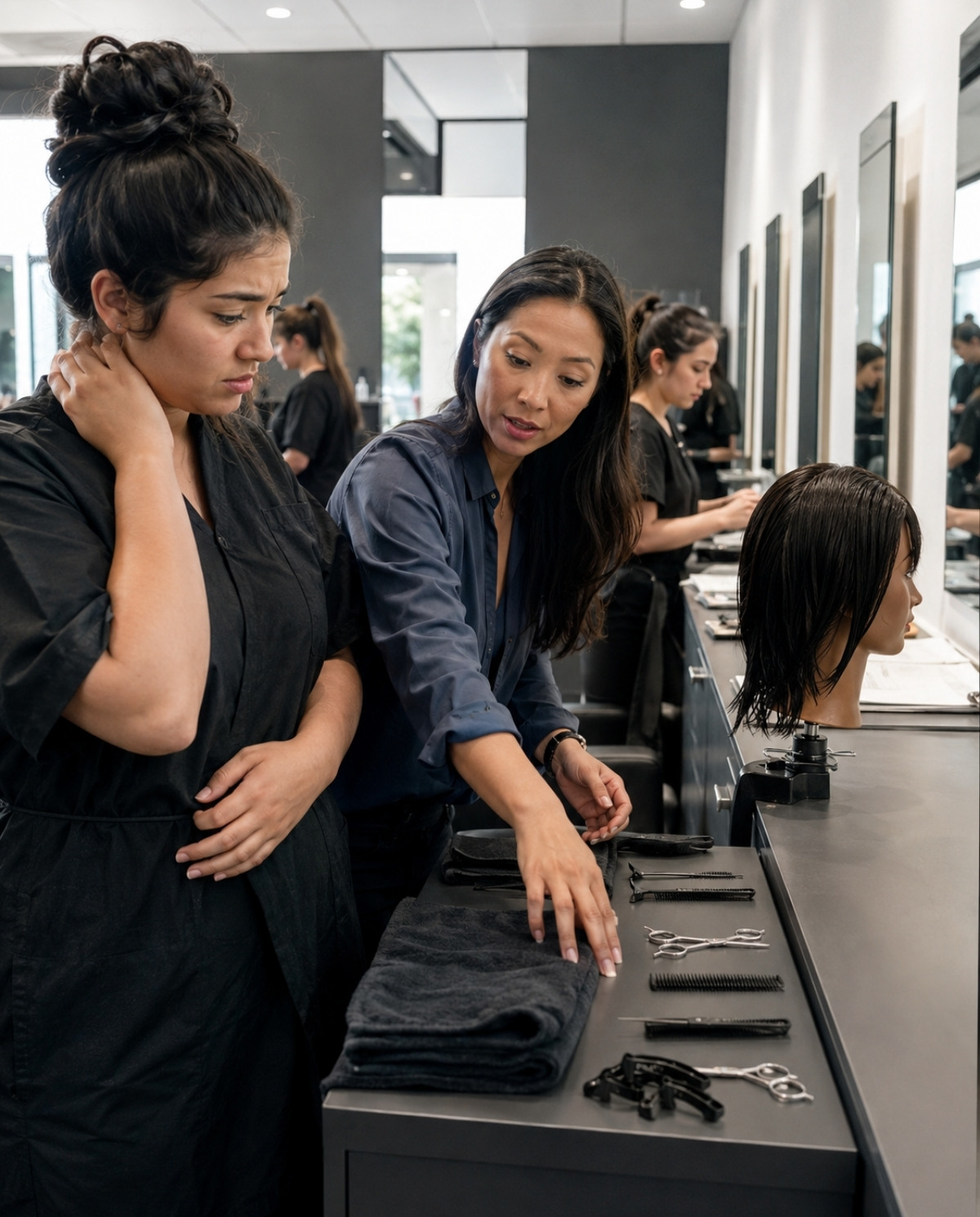
Instructor helps a first-week cosmetology student arrange combs, clips, shears, towels, and a mannequin at a training workstation.

Universities commonly measure academic progress with credit hours that account for classroom instruction and expected study outside class. Beauty schools generally use another model. For licensure-oriented cosmetology programs, state boards commonly measure progress through clock hours completed in a state-approved training program.

A clock hour does not necessarily mean 60 uninterrupted minutes of classroom lecture. Under the federal definition, a clock hour generally includes at least 50 minutes of monitored instruction or qualifying academic activity within a 60-minute period. Schools must maintain attendance records that comply with the rules applying to their programs, including state-board, accreditor, and federal student-aid requirements where applicable.

Before becoming eligible for a licensing examination or initial license, students generally must finish both the prescribed hours and the required curriculum. Those hours may include classroom theory, instructor demonstrations, technical practice, and supervised client services in a student salon. When permitted by the state and included in the approved program, limited distance education or externship activities may also count toward the total.

School-based cosmetology programs in many states require between approximately 1,000 and 1,600 hours, although the exact curriculum and authorized services differ. California requires 1,000 hours, Georgia requires 1,500 hours, and Washington requires 1,600 hours. Apprenticeship routes operate under separate requirements and may involve substantially different hour totals.

The official Georgia cosmetology curriculum rules establish a 1,500-hour school program. Arkansas also requires 1,500 hours for its school-based cosmetology pathway. A student scheduled for 30 hours each week would need approximately 50 instructional weeks to reach 1,500 hours before holidays, closures, absences, or other interruptions are considered.

Anyone expecting to relocate during or after school should research cosmetology licensing standards, examination rules, and transfer policies in the destination state. An out-of-state transcript does not guarantee that every completed hour will be recognized by another board or institution.

Begin this research with the appropriate state licensing authority. The total number of hours is important, but students may also need to consider school approval, required subjects, practical-service minimums, attendance documentation, and examination eligibility.

These standards can change when legislatures or licensing boards update the law. California’s SB 803 reduced the required cosmetology curriculum from 1,600 to 1,000 hours beginning January 1, 2022. Materials published by the California Board of Barbering and Cosmetology document the reduction and removal of the state practical examination. California schools may nevertheless maintain approved programs that exceed the 1,000-hour minimum, making it important to compare each institution’s published curriculum before enrolling.

Estimating Full-Time and Part-Time Completion Dates

The number of hours you attend each week has a major effect on when you can finish. Choosing between available schedules requires you to balance your desired completion date with employment, transportation, childcare, family obligations, and living expenses.

For a basic estimate, divide the total required hours by the number of hours scheduled each week. A 1,500-hour curriculum divided by 30 weekly hours equals 50 instructional weeks. This calculation does not include holidays, planned breaks, closures, absences, or limitations on makeup attendance.

Program Requirement 40 Hours Each Week 30 Hours Each Week 20 Hours Each Week 15 Hours Each Week
1,000 hours 25 weeks About 34 weeks 50 weeks About 67 weeks
1,500 hours About 38 weeks 50 weeks 75 weeks 100 weeks
1,600 hours 40 weeks About 54 weeks 80 weeks About 107 weeks

These figures are calculations rather than promises of a particular graduation date. The school calendar, attendance policy, available makeup hours, and your individual record determine when the program can actually be completed.

Moving Through a Full-Time Program

Full-time training is usually the fastest option for students who are prepared to make cosmetology school their primary weekly commitment.

A full-time timetable commonly includes approximately 30 to 40 scheduled hours per week. It may resemble a conventional workweek, although the specific attendance days and daily start and end times differ among schools.

In a state with a 1,000-hour curriculum, attending between 30 and 40 hours weekly produces a mathematical estimate of approximately 25 to 34 instructional weeks. Once holidays, scheduled closures, and other calendar considerations are included, students may see published timelines of roughly 7 to 10 months.

For a 1,500-hour program, the minimum calculation is approximately 38 weeks at 40 hours per week or 50 weeks at 30 hours per week. Consequently, many full-time programs of this size take approximately 9 to 14 calendar months, depending on the institution’s calendar and attendance structure.

Regular attendance is essential. Passing an examination or independently reviewing missed material generally does not erase an absence from a clock-hour record. Students must still reach the required hour total through attendance permitted by the school and state.

Balancing School With a Part-Time Routine

A part-time track may be useful for students who need to remain employed, care for relatives, arrange childcare, or manage other substantial responsibilities.

Where offered, part-time schedules may provide approximately 15 to 20 hours each week through evening classes, shorter weekday sessions, or other approved arrangements. Completing 1,500 hours at 20 hours per week requires at least 75 instructional weeks. At 15 hours per week, the same curriculum requires 100 instructional weeks before breaks and absences are added.

That is why part-time cosmetology programs may take approximately 14 to 24 months or longer. Prospective students should rely on the institution’s current program calendar and enrollment agreement rather than estimating duration from the hour requirement alone.

Some schools incorporate approved online or hybrid instruction for theory subjects that can be taught remotely. Distance education is not available in every program and must comply with state, school, accreditor, and attendance-monitoring requirements.

Hands-on services and technical practice generally must occur in an approved, supervised setting. Depending on state rules, a formally approved externship may allow a limited amount of qualifying training outside the school campus.

Before selecting a hybrid program, verify which subjects are delivered remotely, how participation is documented, where practical activities occur, and whether the format changes the published completion timeline.

Circumstances That May Move Your Graduation Date

A simple calendar estimate can provide a starting point, but it does not account for every event that may occur after enrollment. Because clock-hour programs monitor attendance and curriculum progress, remaining enrolled for a certain number of months is not necessarily the same as satisfying every graduation requirement.

Adult cosmetology student reviews a weekly planner on public transit while commuting with an apron, mannequin stand, and professional tool bag.

Absences and Available Makeup Hours

An absence from a clock-hour program has a different effect from missing a conventional college lecture. Borrowing notes or reviewing a textbook can help you understand the lesson, but it generally cannot replace the attendance hours that were missed.

If you are absent for an eight-hour training day, those hours remain part of your outstanding program requirement. How soon they can be recovered depends on the school’s makeup opportunities, daily or weekly attendance limits, schedule capacity, and availability of instructor supervision.

Missing a full week adds those hours to the amount of training you still need to complete. It does not always extend graduation by exactly one calendar week because some schools may provide approved makeup opportunities before the original projected end date. When additional attendance is limited, however, the calendar delay can be longer.

Review the school’s attendance and completion policies for:

  • Limits on allowable absences;
  • Approved methods for completing missed hours;
  • Charges associated with overtime or extended attendance;
  • Formal leave-of-absence procedures;
  • Conditions for moving between available schedules;
  • The maximum period permitted for program completion.

Technical Progress and Classroom Requirements

Schools may require students to demonstrate sanitation knowledge and essential technical skills before they begin serving clients on the student salon floor. Evaluations may address haircutting, styling, chemical applications, infection control, workstation preparation, and other procedures included in the curriculum.

For a closer look at what students study during cosmetology theory and hands-on training, review the curriculum before committing to a program.

Progress benchmarks are not uniform nationwide. Depending on the school catalog and state requirements, a student may need to repeat an assessment, perform additional practice, or complete designated practical services before advancing. Ask the institution to explain how incomplete assessments or service requirements may affect the projected finish date.

Students who receive federal financial aid must also satisfy the school’s satisfactory academic progress policy. Insufficient attendance or academic performance can affect aid eligibility and may eventually prevent a student from continuing in the program.

Sanitation, Product Safety, and Legal Limits

Protecting clients is a core part of cosmetology education. Students generally study infection control, disinfection, safe product handling, basic hair and scalp awareness, and precautions associated with chemical services such as coloring, lightening, relaxing, and permanent waving.

State cosmetology authorities establish the sanitation, curriculum, and scope-of-practice rules that directly govern schools and licensees. Federal agencies may regulate workplace hazards or cosmetic products, but their responsibilities are not identical to those of a licensing board.

The FDA’s Modernization of Cosmetics Regulation Act of 2022, for example, establishes responsibilities involving cosmetic manufacturers, processors, facilities, and responsible persons associated with regulated products. It does not replace state cosmetology-board requirements or make individual cosmetology students responsible for MoCRA’s facility-registration obligations.

Students must also understand the legal boundaries of the license they are pursuing. Advanced chemical peels, lasers, injections, and other medical-aesthetic procedures may fall outside a cosmetologist’s authorized scope and can require a different professional license, specific statutory authority, or medical delegation and supervision. Completing a private certification course by itself does not necessarily grant legal permission to perform a regulated procedure.

Managing the Physical Side of Training

Cosmetology school involves sustained physical activity. Students may spend long periods standing, leaning, raising their arms, gripping tools, and repeating precise movements with their hands and wrists.

The National Institute for Occupational Safety and Health notes that repetitive motion and awkward working positions can contribute to musculoskeletal strain in salon environments. Supportive footwear, adjustable seating, conveniently positioned tools, improved posture, and appropriate breaks can help reduce physical stress.

Discomfort does not change the required curriculum, but physical problems may interfere with consistent attendance. Learning safer body mechanics during training can support both program completion and long-term work in the beauty field.

Changing Institutions or Attendance Schedules

Transferring to another beauty school may change your anticipated finish date even when you possess an official transcript. The receiving institution may consider the subjects completed, whether the previous school and program were properly licensed or approved, the age of the training, and whether the practical work corresponds with its curriculum.

A receiving institution or state authority may recognize all, some, or none of the hours. Request a written evaluation before leaving your current school or entering a new enrollment agreement.

Changing from a full-time schedule to a part-time arrangement can also significantly extend the timeline. If a different schedule is available, ask the school to recalculate the expected completion date using your accepted hours, remaining requirements, and revised weekly attendance.

The Steps Between Graduation and Licensure

Completing the required curriculum is a major milestone, but the last day of school and the date a license is issued may not be the same.

Depending on the state and license type, graduates may still need to:

  • Submit an examination or license application;
  • Provide official evidence of completed training;
  • Pass a written licensing examination;
  • Complete a practical examination where one remains required;
  • Pay examination, application, and licensing fees;
  • Wait for the licensing authority to review the file and issue the credential.

As a result, graduates may not be legally ready to provide licensed services immediately after leaving school. Examination availability, application-processing times, incomplete documentation, or unsuccessful testing attempts can add several weeks or longer to the overall process.

When preparing for a career change, estimate both the school completion date and the expected date of licensure.

Considering the Value of Cosmetology Training
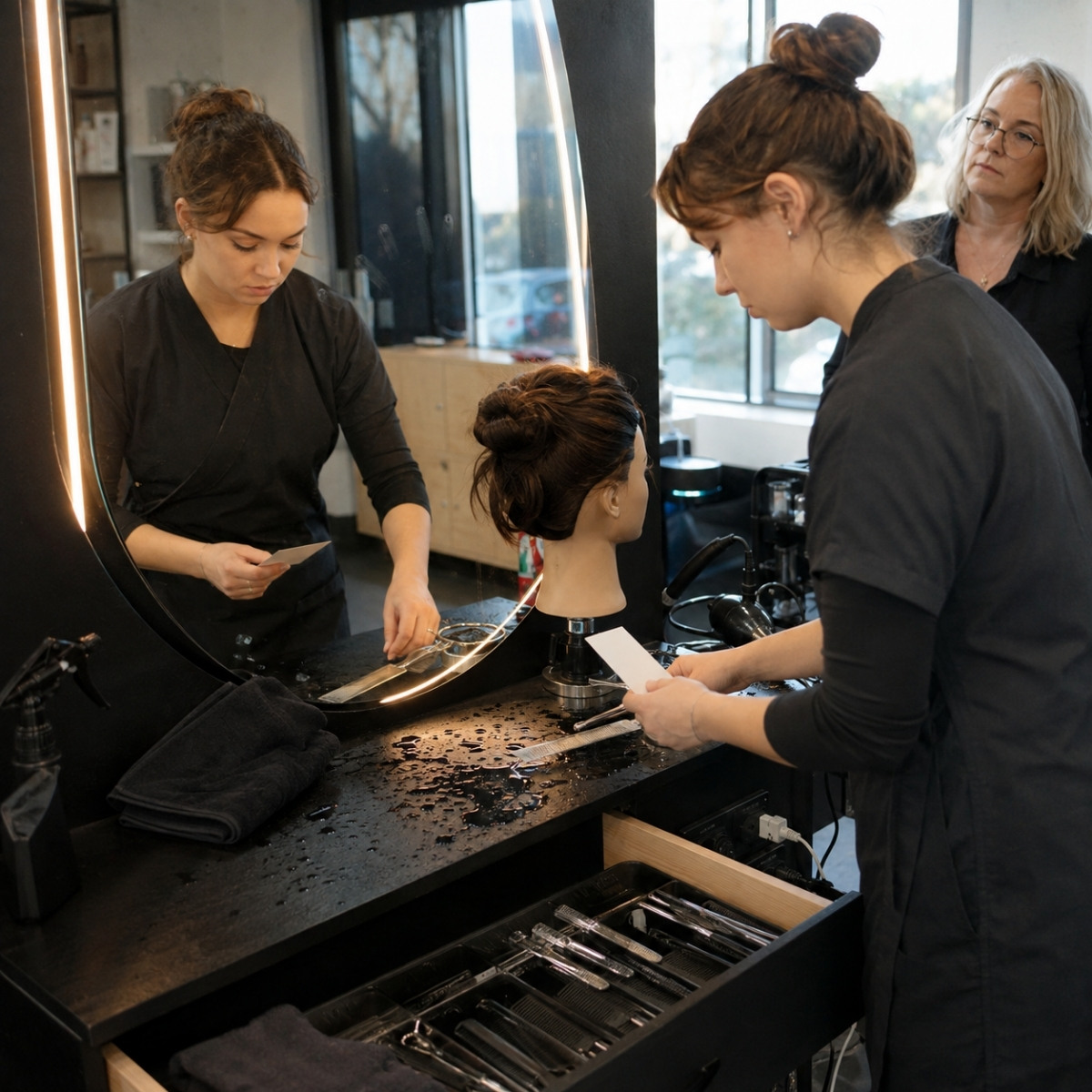
Cosmetology Student Preparing An Organized Workstation For The Next Training Day

Cosmetology school can provide a shorter route into a licensed occupation than a conventional four-year degree. Financial results are not guaranteed, however, and can vary according to tuition, local demand, employment structure, experience, specialty, operating costs, and the ability to attract returning clients.

A comprehensive program serves purposes beyond examination preparation. Supervised training allows students to build consistency, communication skills, time-management habits, sanitation awareness, and confidence when delivering services.

Possible career directions include salon employment, specialization in selected hair services, brand or product education, styling for productions, booth or suite rental, and eventual business ownership. Some opportunities require experience, additional education, business registration, or licensing beyond the original cosmetology credential.

Before enrolling, compare the full program cost with the institution’s available disclosures and outcomes. Determine whether the quoted amount includes:

  • Tuition and enrollment charges;
  • Textbooks and digital course materials;
  • Student tools and equipment;
  • Uniforms or dress-code items;
  • Licensing examination expenses;
  • Initial application or license fees;
  • Charges for overtime or extended attendance.

Review completion rates, licensing-examination pass rates, and employment disclosures where they are available. Attendance at a properly licensed or state-approved school is important for the licensing pathway. Students expecting to use federal aid should separately confirm that both the institution and their particular program participate in the relevant federal student-aid programs.

The U.S. Bureau of Labor Statistics Occupational Outlook Handbook projects 7% overall employment growth for barbers, hairstylists, and cosmetologists from 2025 through 2035. It also projects approximately 80,300 openings each year, on average, during that period. Many of those openings are expected to come from workers transferring to other occupations or leaving the workforce, including through retirement, rather than exclusively from newly created positions.

The national projections show continued occupational demand, but they do not guarantee a particular person’s employment or income. Local conditions, professional experience, licensing status, service specialties, and client development can all affect individual results.

Frequently Asked Questions

Will Another State Recognize My Completed Hours?

It may, but recognition depends on the receiving state and institution. National accreditation alone does not require a licensing board or school to accept hours earned elsewhere.

The receiving authority may examine whether the earlier school and program were properly licensed or approved, whether the transcript is verifiable, and whether the completed subjects correspond with its own curriculum. Someone moving from a state with a 1,000-hour program to one requiring 1,500 hours might need approximately 500 additional hours, but that calculation is valid only after the receiving authority determines how much previous training it will accept.

Moving unfinished school hours is also different from transferring an active professional credential. A licensed cosmetologist may need to qualify through endorsement, reciprocity, examination, experience, or another process established by the destination state.

Why Do Cosmetology and Esthetics Programs Have Different Lengths?

Cosmetology commonly includes haircutting, styling, chemical hair services, and varying degrees of nail and skincare education. Because the license covers a wider range of services, school requirements commonly fall between approximately 1,000 and 1,600 hours.

Esthetics concentrates more heavily on skincare, facials, makeup, hair removal, and other services permitted within that state’s esthetics scope. Georgia requires a 1,000-hour esthetician school curriculum, while Arkansas requires 600 hours for its aesthetician program.

Program length alone does not establish what a graduate may legally perform. Students should compare both the training requirement and the statutory scope of the credential.

Is Federal Financial Aid Available With a Part-Time Schedule?

Students may qualify for federal financial aid if they meet the eligibility requirements and attend an institution and program that participate in federal student-aid programs.

Pell Grant eligibility and award calculations can depend on factors such as the student’s financial circumstances, cost of attendance, and the program’s academic-year and payment-period structure. Students in clock-hour or non-term programs are generally considered enrolled full time for Pell Grant purposes. Federal Direct Loans ordinarily require at least half-time enrollment under the applicable federal and institutional standards.

For clock-hour programs, attendance records, payment periods, satisfactory academic progress, and completion of the required hours and weeks can affect when later disbursements become available.

The current Federal Student Aid Handbook explains that clock-hour and non-term students are treated as full-time for Pell Grant purposes. Students should still speak with the school’s financial-aid office before assuming that a particular schedule or program qualifies.

Can Online Classes Shorten the Required Program Total?

Generally, they cannot. Approved remote theory may allow students to participate away from campus, but those hours normally contribute to the existing program requirement rather than reducing it.

The institution must be authorized to provide the distance-education component and must document participation in accordance with applicable standards. Practical training still requires an approved and supervised setting, although a properly authorized externship may permit limited off-campus training where state rules allow it.

What Is the Best Way to Predict My Finish Date?

Begin with the total hours required for the program and deduct only transfer hours that have been formally accepted in writing. Divide the remaining requirement by the number of hours you are scheduled to attend each week. Then account for holidays, planned closures, scheduled breaks, anticipated absences, and a reasonable allowance for unexpected missed time.

For a more reliable estimate, request written information showing the start date, weekly schedule, published program duration, attendance requirements, makeup policy, and projected completion date.

Plan Your Cosmetology Education at Perimeter

Perimeter Beauty & Barber Institute’s Master Cosmetologist program consists of 1,500 hours, matching Georgia’s school-based cosmetology curriculum requirement. The total number of hours provides the foundation for estimating program length, but your start date, attendance record, school calendar, and available makeup opportunities will ultimately influence when you finish.

Perimeter currently publishes a student schedule of 9:00 a.m. to 9:00 p.m. on Tuesdays and Wednesdays and 9:00 a.m. to 4:30 p.m. on Thursdays and Fridays. Because schedules and start dates may change, visit the Enrollment page or contact admissions to confirm the current timetable and receive an estimate based on the program’s requirements.

If you are ready to explore the campus, use the contact form at the end of this page to request more information or arrange a tour. You can view the learning environment, learn about student salon training, and discuss how the current program schedule may fit your plans.
Facial Cosmetology After BDS: Qualifications, Procedures, and Career Potential

Transitions in clinical dentistry happen for many reasons. Years spent bending over chairs, wrestling with third-party insurance claims, and performing repetitive restorative work can leave even dedicated dentists looking for fresh clinical variety. Precision is already second nature to dentists, so extending those refined hand skills and detailed anatomical knowledge into facial aesthetics can appear to be a natural progression.

Dentists spend years studying head and neck anatomy, facial musculature, nerve pathways, local anesthesia, occlusion, and perioral dynamics. With targeted, procedure-specific training, that foundation may be relevant to treatments around the lips, smile, lower face, and muscles of mastication. However, a dental degree or private certificate does not grant automatic legal authority to perform aesthetic treatments. Clinicians must hold the required license in their jurisdiction and follow their state’s scope-of-practice regulations.

This distinction is especially important for foreign-trained dentists researching options for clinical cosmetology after BDS. A foreign BDS degree on its own does not authorize dental or clinical practice in the United States. International graduates must first satisfy the dental licensure requirements in the state where they plan to work, which often involves completing an advanced-standing DDS or DMD program. In the US, treatments involving neurotoxins and dermal fillers are usually classified as facial aesthetics or aesthetic medicine rather than traditional cosmetology.

Essential Points to Understand

  • Cash-Pay Potential: Many cosmetic facial-aesthetic services are self-pay, which can reduce insurance billing hassles and dental laboratory expenses. Real profitability still depends on product costs, clinical time, liability coverage, marketing expenses, product waste, follow-up visits, and complication care.
  • State Scope Differences: Legal boundaries vary significantly by state. Georgia requires qualifying dentists to complete a Board-approved postgraduate course of at least 21 hours and restricts treatment to specific dental connections and settings. Dentists should always verify current rules directly with their state dental board before offering care.
  • Relevant Anatomical Foundation: Dental education provides extensive knowledge of head and neck anatomy and perioral function, but dentists still need procedure-specific training in patient selection, injection techniques, informed consent, and complication management.
  • Training Does Not Expand Legal Scope: Recognition through ADA CERP or approval through AGD PACE reflects certain standards for continuing-education providers, but neither designation automatically grants legal authority, guarantees board acceptance, or ensures malpractice coverage.

How Dental Scope of Practice Affects Facial Aesthetics

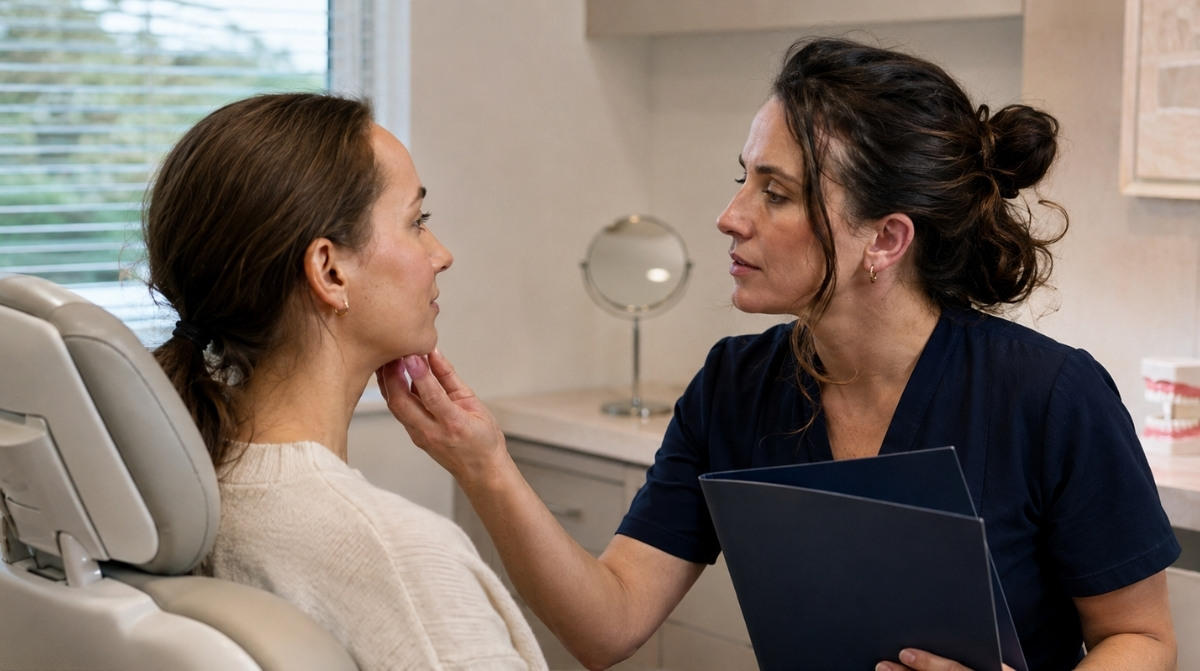
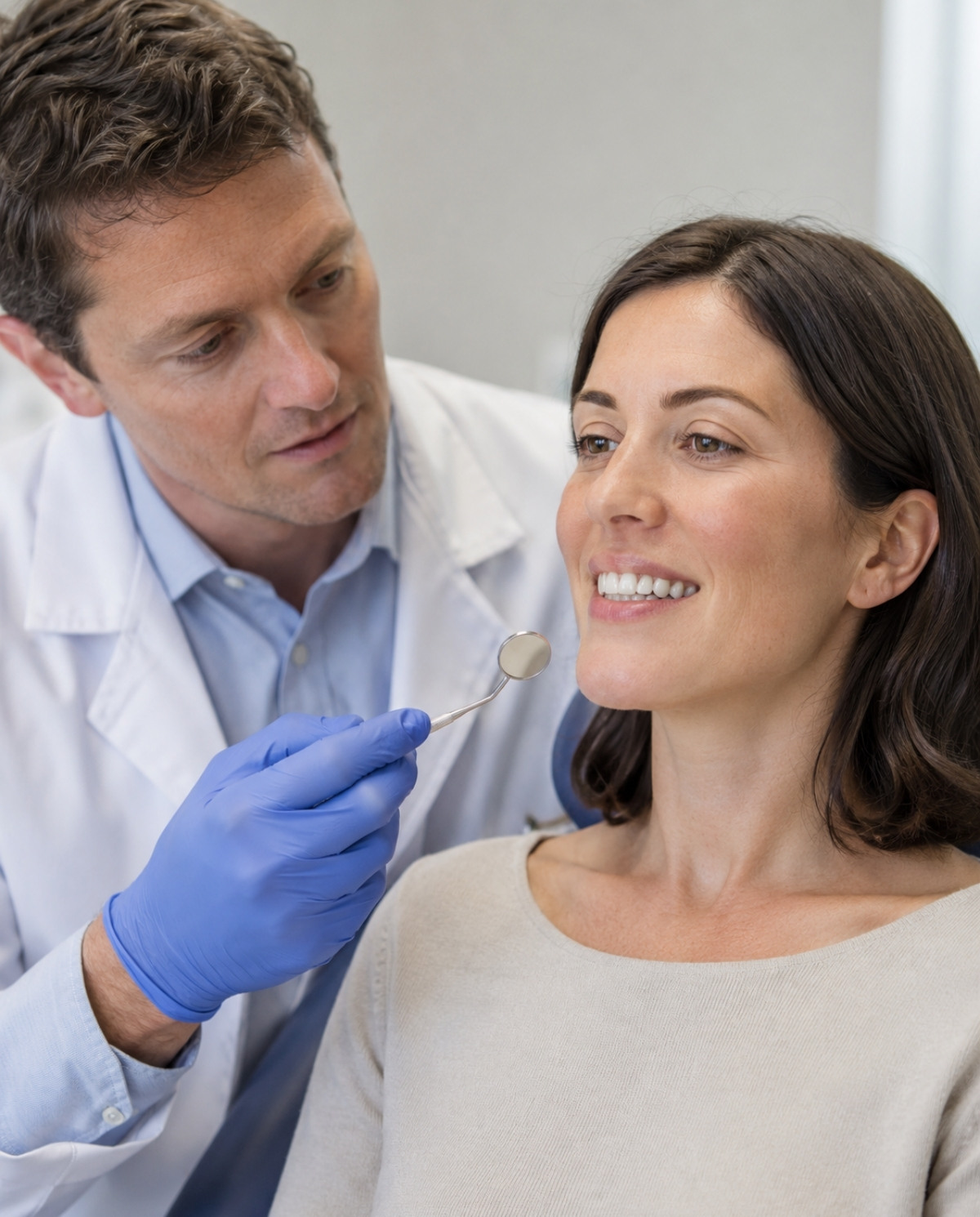
Dentist observing an adult patient’s smile to assess lip support, chin position, bite relationship, and jaw symmetry.

How Dental Education Supports Lower-Face Assessment

Dental school gives clinicians a useful foundation when evaluating the lower face. Dentists work extensively with the trigeminal and facial nerves, facial muscle groups, blood supply, occlusion, and structural balance. Their routine use of local anesthesia and understanding of the relationships between the teeth, lips, cheeks, jaws, and muscles of mastication may help them evaluate perioral symmetry and the way a smile fits within the overall facial frame.

That background does not make additional education optional. Neurotoxins and dermal fillers have their own pharmacology, contraindications, anatomical danger zones, consent requirements, and emergency protocols. Dentists must learn the specific procedures and remain strictly within the anatomical areas and treatment purposes permitted by their state license.

The central legal question is whether a particular facial-aesthetic treatment falls within the dentist’s authorized scope of practice. There is no single national rule. State dental boards may establish limits based on anatomical boundaries, treatment goals, connections to dental care, required educational hours, practice settings, or special permit requirements. Training in an anatomical region does not create legal permission to treat that region when state law excludes it.

Some states allow qualifying dentists to provide functional and cosmetic treatments within defined oral and maxillofacial regions. Other states restrict treatment to the lips, cheeks, jaws, oral cavity, associated tissues, or services tied directly to a dental treatment plan. Dentists must verify these details through current statutes, administrative rules, board policies, or written guidance from the appropriate dental board.

Requirements can differ substantially between states:

  • Georgia: Under Georgia Rule 150-14-.04, licensed dentists may administer qualifying injectable pharmacologics for functional or cosmetic enhancement of the gums, cheeks, jaws, lips, oral cavity, and associated tissues when the service is connected with a dental procedure and performed in a dental treatment setting. Except for dentists who completed an ADA-accredited oral and maxillofacial surgery advanced specialty education program, the dentist must complete a Board-approved postgraduate course of at least 21 hours. The dentist must submit a certified true copy of the completion certificate to the Board within 30 days, conduct the required patient assessment, document the treatment, and personally administer the injectable rather than delegate it.
  • Arkansas: Arkansas’s published dental rules do not provide the same detailed injectable framework found in Georgia. Dentists practicing in Arkansas should obtain current written guidance directly from the Arkansas State Board of Dental Examiners before purchasing products, advertising services, or treating patients.

Reviewing state-level differences is essential before introducing any new service. Beauty professionals must examine cosmetology licensing requirements in their state to understand training hours and regulatory obligations. Dentists must perform a similar review through their state dental board. A dental license, foreign BDS, cosmetology credential, and private facial-aesthetics certificate are separate credentials with different legal effects.

When Functional Care Produces Cosmetic Changes

Functional goals and cosmetic outcomes can sometimes overlap. Some clinicians use botulinum toxin off-label in selected cases involving overactive masticatory muscles, masseter hypertrophy, bruxism, or certain temporomandibular disorders. Relaxing an enlarged or overactive masseter may provide a functional benefit in an appropriately selected patient while also gradually creating a slimmer lower-face appearance.

These treatments should not be presented as universally approved, effective, appropriate, or within every dentist’s scope. The TMJ is the anatomical joint, while the broader group of related conditions is generally called temporomandibular disorders, or TMD. Botulinum-toxin treatment for bruxism and many TMD-related applications is generally off-label in the United States, meaning the product is used for a purpose not specifically listed in its FDA-approved labeling. Off-label use may be lawful within professional practice, but it requires an appropriate clinical basis, informed consent, professional competence, and authorization under state law.

A dentist cannot make an unauthorized cosmetic service lawful simply by describing it as therapeutic or loosely connecting it to a smile makeover. The diagnosis, anatomical site, treatment purpose, clinical records, consent documents, and advertising must accurately reflect the care delivered.

Legal analyses such as the information published by Oberman Law Firm can provide general context about the different ways state boards regulate injectables. However, private legal articles summarize the law rather than establish it. Dentists should rely primarily on current statutes, administrative rules, official board guidance, and advice from a qualified healthcare attorney when questions about legal scope remain unresolved.

Evaluating Facial-Aesthetics Training Options

Dentist discussing curriculum, supervised practice, facial anatomy, and training materials with an experienced clinical instructor.

Comparing postgraduate education can be confusing. Short workshops, online modules, multi-level certificate programs, and privately branded fellowship in medical cosmetology after BDS programs may all use different terminology. Unlike a state dental license or a CODA-accredited dental specialty, titles such as diploma in facial cosmetology after BDS, certificate, and fellowship are not standardized throughout the private facial-aesthetics training industry.

An introductory workshop may last one or several days and cover facial anatomy, patient evaluation, foundational injection techniques, and initial complication recognition. Some longer programs may extend over several months and include multiple treatment zones, supervised clinical participation, case studies, skin procedures, or ongoing mentorship. Neither the program title nor its duration proves its quality, legal acceptance, or clinical completeness.

Before enrolling in any program, verify:

  • Whether your state dental board accepts the provider and curriculum
  • Whether the course covers every subject and training hour required by state regulations
  • How much education is didactic, simulated, observational, or hands-on
  • Whether clinical participation involves appropriately screened live patients
  • Whether the instructors are licensed and qualified to perform and teach the procedures
  • Whether the curriculum covers informed consent, contraindications, anatomy, dosing, product handling, and complication management
  • Whether graduates receive ongoing mentorship or clinical support after completing introductory training
  • Whether the dentist’s professional liability carrier recognizes the specific training

Dentists interested in chemical peels, microneedling, lasers, facials, or other skin services must investigate each procedure separately. A dental license that permits certain injectable treatments does not automatically authorize general esthetics services, laser procedures, or unrestricted skin care. Likewise, a cosmetology or esthetics license generally does not authorize someone to prescribe or inject neurotoxins or dermal fillers.

Beauty professionals may be able to provide related esthetician, barbering, or nail services under a cosmetology license, depending on their state’s scope rules. Dentists should not assume that dental training automatically grants the professional privileges of an esthetician or cosmetologist. Beauty-school education also does not expand the medical or dental scope established by a healthcare license.

The Importance of Supervised Clinical Experience

Online courses can be useful for studying facial anatomy, pharmacology, skin biology, informed consent, and complication theory. However, virtual instruction cannot fully reproduce the tactile judgment required to evaluate tissue, control injection depth, observe product behavior, or manage an unexpected clinical reaction in real time.

Injectable training and skin-procedure education should also be treated as distinct competencies. Dermal fillers require knowledge of vascular anatomy, tissue planes, product characteristics, and vascular-occlusion response. Neurotoxins require an understanding of muscle function, dosing, diffusion, asymmetry, and contraindications. Chemical peels and microneedling require separate knowledge of skin type, treatment depth, infection control, pigmentation risks, wound healing, and aftercare.

When choosing a program, dentists can look for training providers recognized through the American Dental Association’s Continuing Education Recognition Program or approved through the Academy of General Dentistry’s Program Approval for Continuing Education. However, it is important to understand the limits of those designations. ADA CERP recognizes continuing-education providers, not individual courses or treatment techniques, and explicitly states that recognition does not guarantee acceptance by a state dental board. Similarly, AGD PACE approves continuing-education organizations rather than individually endorsing every course or procedure they teach.

The safest approach is to verify both sides before registering. Ask the state dental board whether the proposed course satisfies its requirements. Dentists should also provide the curriculum and procedure details to their professional liability carrier to determine whether additional training or documentation is required for coverage.

Clinical education should place particular emphasis on filler-related vascular occlusion. According to the US Food and Drug Administration, accidental injection of filler into a blood vessel can interrupt blood flow and cause tissue necrosis, vision abnormalities including blindness, or stroke. These outcomes are uncommon, but they can be serious and permanent.

Training should therefore address early symptom recognition, product-specific response protocols, informed consent, emergency supplies, documentation, referral pathways, and immediate escalation when a patient develops visual symptoms or signs of tissue ischemia. Completing a course does not guarantee legal authorization or insurance coverage. Boards and insurers may consider the relevance, content, and documentation of the dentist’s clinical training when determining whether applicable requirements have been satisfied.

Calculating the Business Impact

One potential advantage of adding aesthetic procedures is reducing reliance on third-party insurance payers, delayed reimbursements, and dental laboratory work. Many cosmetic facial-aesthetic procedures are self-pay, which may simplify billing and eliminate dental laboratory fees for those particular treatments.

However, cash-pay services are not automatically highly profitable. Product acquisition, proper storage, expiration, discarded inventory, clinical supplies, staff training, appointment time, liability premiums, marketing, follow-up visits, refunds, and complication care can all affect the final margin.

A more realistic financial calculation includes:

  • Collected treatment revenue minus direct product costs
  • Minus discarded or expired product inventory
  • Minus clinical supplies and staff time
  • Minus marketing expenses and liability premiums
  • Minus follow-up care and complication-management costs

Practices should develop financial forecasts using local treatment prices, actual product utilization, patient demand, and available treatment capacity rather than relying on promotional revenue claims from training providers.

What Procedure Statistics Reveal About Patient Interest

Dentist reviewing anonymous patient-interest data on a tablet as an adult patient enters the reception area.

Many patients seek nonsurgical or minimally invasive treatments because these procedures generally require less recovery time than surgery. Some dermal fillers create an immediate visible change, although swelling may initially affect the appearance. Other products may produce more gradual results. Neuromodulator results usually develop over several days, while chemical peels and skin-remodeling treatments may take longer to show their full effects.

According to the American Society of Plastic Surgeons, approximately 25.4 million minimally invasive cosmetic procedures were performed in 2023. That figure included approximately 9.48 million neuromodulator treatments and 5.29 million hyaluronic-acid filler procedures. These numbers demonstrate substantial national demand, but they do not guarantee that every dental practice will attract the same patients or achieve similar financial results.

Modern cosmetic patients may view the smile as one element of overall facial balance. Someone considering clear aligners or veneers may also ask about lip volume, perioral lines, skin texture, or lower-face symmetry. When state regulations permit and the dentist has appropriate training, integrated facial-aesthetic services may allow selected patients to discuss these concerns within an existing professional relationship.

Chemical peels should not be expected to produce identical effects at every depth. They create controlled exfoliation, and their effects depend on the chemical used, its concentration and formulation, contact time, and treatment depth. Superficial peels may primarily address surface texture and certain pigmentation concerns, while deeper controlled treatments may produce more substantial remodeling and require longer recovery.

Fortune Business Insights estimates that nearly 61% of aesthetic procedures performed in the United States involve nonsurgical facial treatments. Because this information comes from a commercial market report rather than a clinical procedure registry, it should be treated as an industry estimate rather than an exact national count.

Promotional information from the American Academy of Facial Esthetics states that its typical dentist member adds approximately $30,000 per month in production after incorporating facial pain, facial aesthetics, and dental sleep-medicine treatments. However, this is an organization-reported figure covering several service categories. It is not an independently audited estimate of injectable revenue alone, and production refers to gross treatment value rather than net profit or take-home earnings. Dentists should not treat this figure as a guaranteed financial projection.

Creating a Responsible Entry Strategy

Dentists who want to expand into facial aesthetics should follow a structured process that protects their patients, professional licenses, and practices.

The first step is confirming legal scope and licensure. Foreign-trained dentists researching dental cosmetology after BDS or exploring how to do cosmetology after BDS must determine which professional license is required for the services they intend to provide. Those seeking to perform treatments under a dental license must first complete the applicable state dental-licensure pathway. Already licensed dentists should contact their state board to clarify permitted products, treatment purposes, anatomical areas, training hours, permits, record-keeping duties, settings, and delegation rules. Written guidance should be requested whenever the regulations remain unclear.

The second step is choosing appropriate clinical education. Select a dental or medical continuing-education provider whose faculty, curriculum, supervised clinical participation, and emergency training satisfy the relevant dental board. The coursework should cover patient selection, contraindications, informed consent, facial and vascular anatomy, product handling, treatment techniques, documentation, adverse effects, vascular-occlusion management, and referral procedures.

The third step is confirming professional liability coverage. Dentists should not assume that standard dental malpractice insurance automatically covers cosmetic injectables or skin therapies. Provide the insurer with written details about the proposed procedures, products, anatomical areas, training, and practice setting. Obtain written confirmation of coverage before advertising or treating patients. Depending on the insurer, coverage may be included, endorsed, separately underwritten, restricted, or excluded.

The fourth step is establishing clinical systems. Create procedure-specific consent forms, medical-history protocols, standardized photography procedures, product lot and expiration records, follow-up schedules, emergency supplies, adverse-event procedures, and referral relationships. Clinical staff should understand how to recognize urgent symptoms and whom to contact when complications arise.

Finally, introduce services gradually within the existing practice when state regulations and insurance coverage permit. Existing patients may learn about appropriate options during smile-design or facial-balance consultations. Treatment should occur only after a complete assessment, informed consent, appropriate documentation, and verification that the requested procedure remains within the dentist’s authorized scope.

Common Questions About Dentistry and Facial Aesthetics

Must I leave general dentistry to offer facial-aesthetic services?

No. Many dentists incorporate permitted facial-aesthetic procedures into an existing dental practice. Whether this is allowed depends on state regulations, treatment purpose, anatomical area, clinician training, practice setting, and professional liability coverage. Some dentists reserve dedicated treatment blocks so they have sufficient time for consultation, photography, consent, treatment, documentation, and follow-up care.

How does an introductory workshop differ from an extended training program?

An introductory workshop may address foundational anatomy, patient assessment, product principles, basic techniques, and safety fundamentals. Some longer programs add supervised clinical participation, advanced treatment planning, case reviews, complication management, skin-care modules, or mentorship. However, the term fellowship does not automatically mean that a program is a CODA-accredited specialty or a credential recognized by a state board. Dentists should evaluate the actual curriculum and legal acceptance instead of relying on the program title.

Are aesthetic treatments included in ordinary dental malpractice coverage?

Not automatically. Coverage varies by insurance carrier and policy. Dentists should provide their insurer with complete information about the procedures, products, anatomical areas, training, and practice setting and obtain written confirmation before treating patients. Completing a course offered by an ADA CERP-recognized or AGD PACE-approved provider does not independently guarantee coverage.

May dental assistants or hygienists administer injectables?

Delegation rules differ significantly by state and profession. Georgia prohibits dentists from delegating the administration of injectable pharmacologics under Rule 150-14-.04. Dentists in other states must verify whether hygienists or assistants may administer each product and what supervision, education, credentials, or permits are required. Botulinum toxin is a prescription biologic drug, while dermal fillers are generally regulated as medical devices, so the rules for each product category should be examined separately.

Does a certificate increase the legal authority of my dental license?

No. Training can build competence and document education, but it cannot enlarge the legal scope established by state law. The course and procedures must fit within the authority already granted by the dentist’s license and satisfy any additional requirements imposed by the dental board.

Can a foreign BDS graduate treat patients after earning a private aesthetics certificate?

Generally, no. A private certificate does not replace the dental, medical, or other professional license required where treatment occurs. International graduates must first determine which license governs the intended procedure, complete the applicable professional-licensure pathway, and satisfy any additional facial-aesthetics requirements imposed by the relevant board.

Prepare for Your Next Professional Direction

Entering facial aesthetics requires more than theoretical knowledge. Dentists need an active professional license, a clear understanding of state scope, procedure-specific education, clinical judgment, emergency preparation, and confirmed professional liability coverage.

If you are exploring educational pathways in the broader beauty industry, Perimeter Beauty & Barber Institute offers programs in master cosmetology, master barbering, esthetics, nail technology, and instructor training. These beauty programs should not be confused with dentist-specific injectable training or dental-board authorization.

Explore a training path that aligns with your goals. Visit the Enrollment page or complete the contact form below to learn more about Perimeter Beauty & Barber Institute’s available programs.