Esthetician Vs Medical Esthetician: Everything You Need To Know About Clinical Skincare

I’ve noticed a pattern lately with professionals in the skincare world. Many of us reach a point where the standard routine of steam, extractions, and basic hydration doesn’t feel like enough anymore. There is often a moment where you feel like you have hit a ceiling, both in terms of the results you can provide and the income you can generate. Moving from being a basic esthetician vs master esthetician or looking into the world of medical-level specialties is usually how most people break through that plateau. It is a way to finally get a seat at the table in the clinical skin health industry.

Key Takeaways

  • Market Growth: The medical aesthetics sector is projected to grow from $14.93 billion in 2025 to $16.79 billion by 2026, with continued growth projected through 2030, according to Research and Markets.
  • Legal Distinction: Master Esthetician is a specific legal tier in states like Virginia, while medical esthetician is typically a job title rather than a separate government-issued license.
  • Higher Earnings: Advanced services can create stronger earning potential, but compensation depends on your state, license type, employer, commission structure, and whether you also hold a medical license such as RN, NP, or PA.
  • Safety First: A 2025 FDA Safety Communication warned about serious RF microneedling complications, including burns, scarring, fat loss, disfigurement, and nerve damage, reinforcing the need for proper training and clear scope-of-practice compliance.
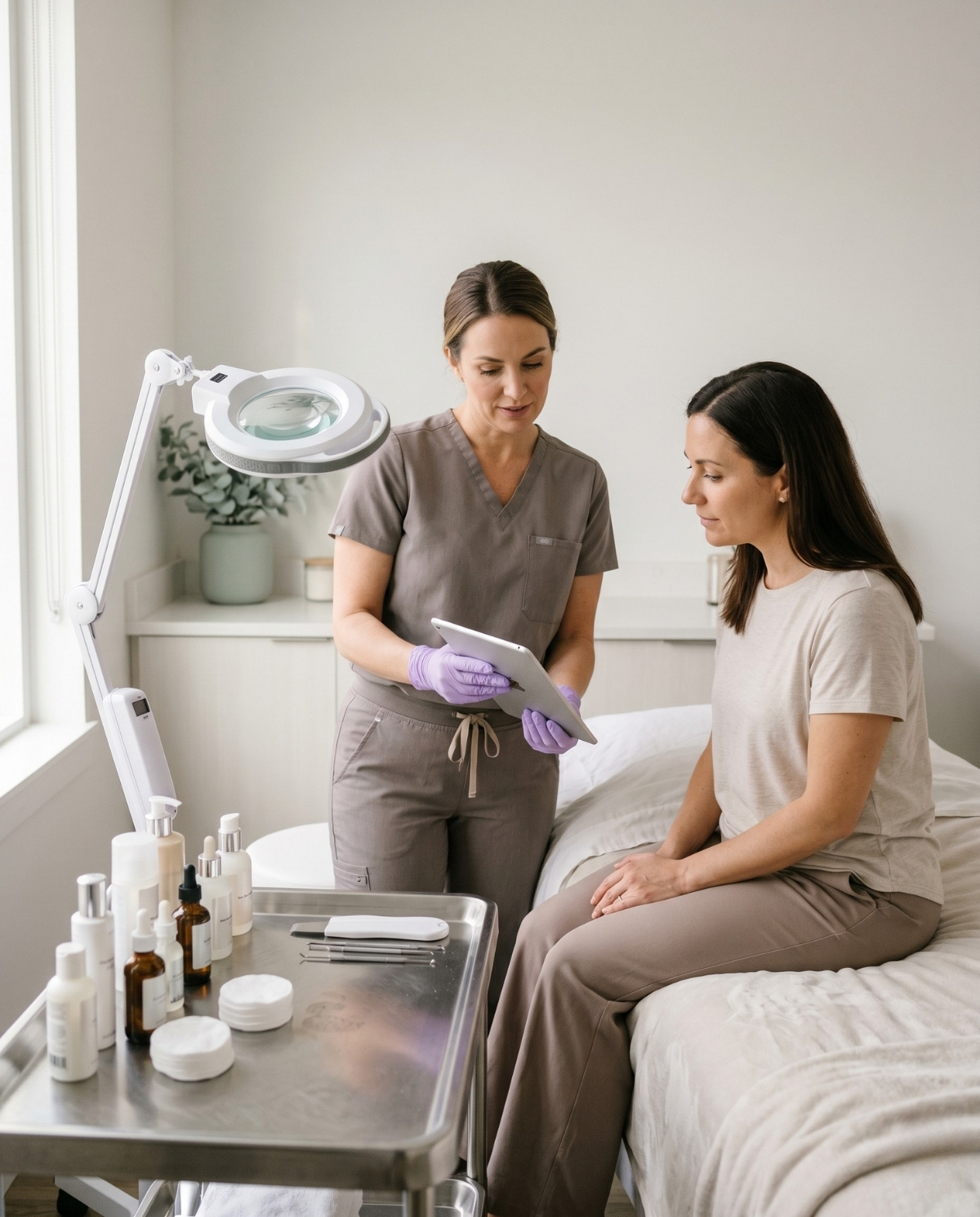
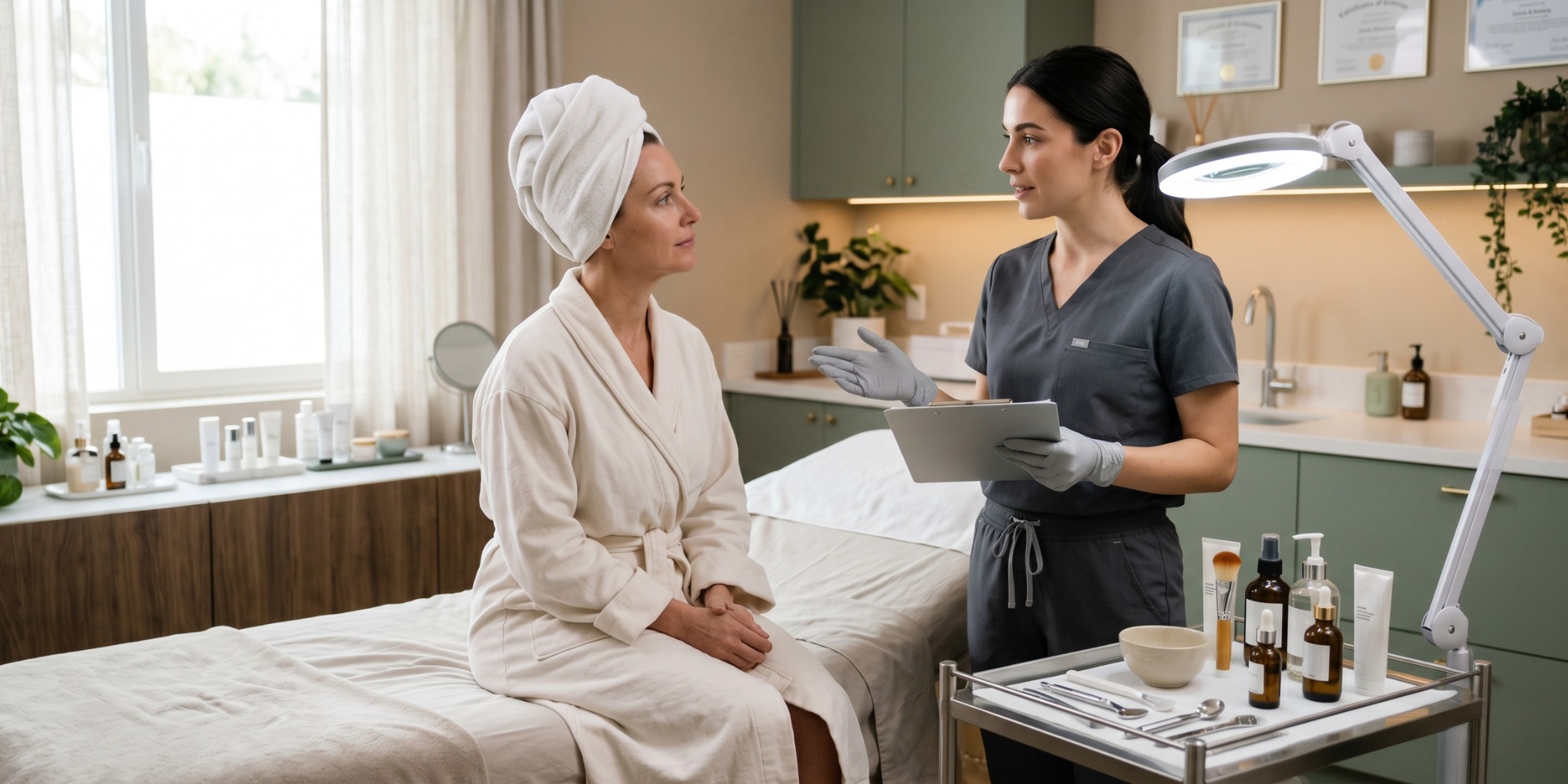
A professional esthetician in taupe scrubs and purple gloves uses a tablet to consult with a client in a bright, modern skincare clinic featuring a magnifying lamp and treatment tools.

The Different Levels of Esthetics

Most initial training programs focus on the lipid barrier, which is the skin’s natural protective shield. This foundation is vital, but if you are just starting out, I find it helpful to look at the entire process of becoming an esthetician, including school costs and requirements, before you decide to specialize.

The industry in 2026 is moving fast toward advanced practice (AP), medspa roles, and clinical esthetics. The most important thing to remember is that while advanced certificates look great, they don’t always change what you are legally allowed to do. Before you start offering things like lasers, IPL, RF, microneedling, injectables, or deeper chemical peels, you have to check with your state cosmetology or esthetics board and, when medical procedures are involved, your state medical or nursing board.

To understand what is a master esthetician, we can look at the Virginia model. According to the Virginia Administrative Code, that state requires a 600-hour basic program followed by a 600-hour master program. This means a total of 1,200 hours. In other states, like Georgia, you might see a single 1,000-hour esthetician program that covers the state-required foundation for licensure.

This higher level of education involves a much deeper look at anatomy, chemical exfoliation, and lymphatic drainage. In Virginia, the scope of practice even allows for specific advanced exfoliation like Jessner’s solutions. These services involve controlled injury to the skin, which requires a much better understanding of skin chemistry than a standard facial.

Entering the Medical World

I see a lot of people getting confused about the difference between an esthetician vs medical esthetician. In the vast majority of the U.S., a medical esthetician is just a job title. It usually means you are an esthetician working in a medical setting like a plastic surgery center or a dermatology office with esthetician services.

The Research and Markets data shows that the market is expanding because people are choosing non-surgical treatments more often. They expect the market to hit $26.2 billion by 2030. This growth is why we see so many more jobs for medical esthetician roles opening up in clinics and medspas.

When you work in these clinical environments, you have to follow the protocols of the medical director. However, that doesn’t mean your state board rules disappear. Your exact services still depend on your license, state board rules, medical-board delegation rules, and the supervising provider’s protocols. You might support a doctor in treating skin issues related to medical conditions, such as the unwanted hair growth associated with PCOS. While the doctor handles the diagnosis and treatment planning, the esthetician may handle aesthetic support when the service is legal for that role. If you’re interested in the money side of things, you can look into the different career paths and salary expectations in today’s market.

Nursing and Aesthetics
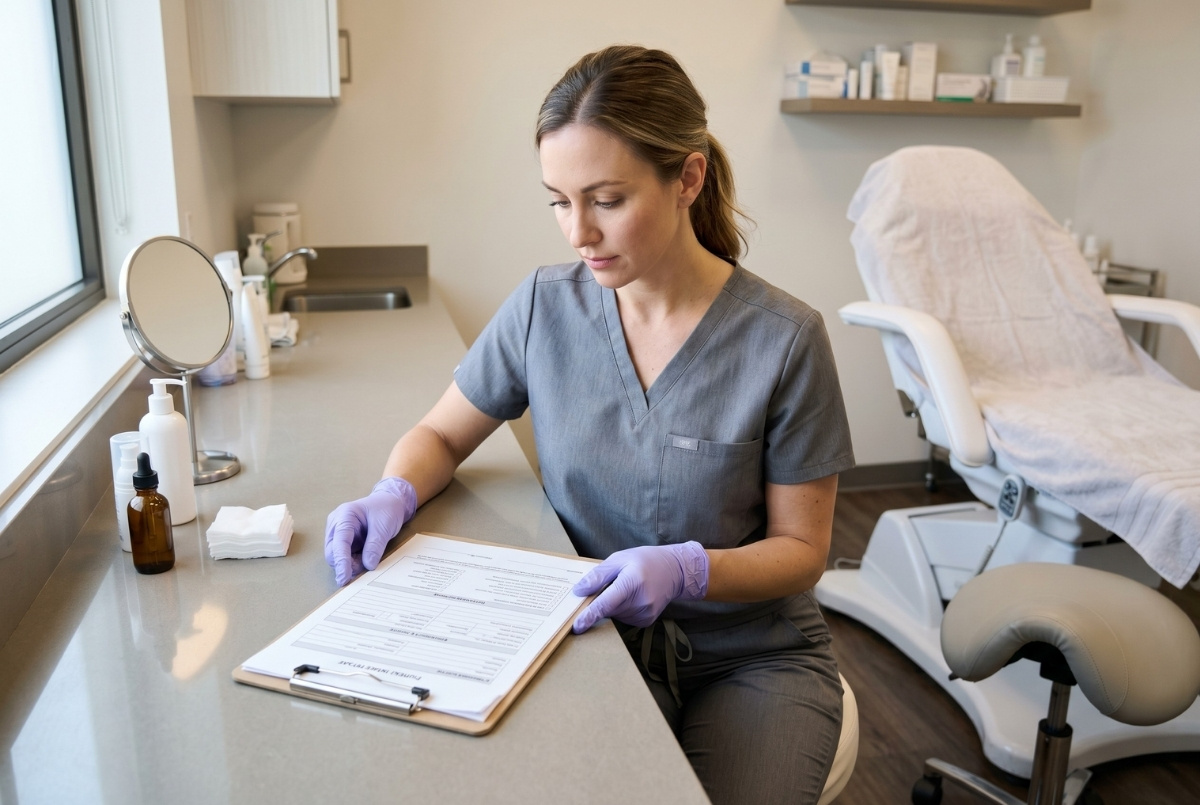
A medical professional wearing grey scrubs and purple gloves reviews a patient intake form on a clipboard in a clean aesthetic clinic.

One of the biggest trends I’m seeing this year is medical esthetics for nurses. Many registered nurses are looking for a change from the hospital environment. If you are an esthetician with RN license, you may have an advantage because the nursing license can open doors to medical-aesthetic services that an esthetician license alone does not cover. In many states, neurotoxin injections like Botox and dermal fillers are performed by licensed medical professionals under state nursing, medical, or delegation rules.

This is why an esthetician nurse may have stronger earning potential than a traditional skincare-only role. For comparison, the U.S. Bureau of Labor Statistics noted that skincare specialists had a $19.98 median hourly wage in May 2024. Transitioning from RN to esthetician work allows you to combine medical skills with skincare, but your ability to inject always comes from the medical license, not the esthetics one.

How State Rules Vary

Your path to an advanced career depends entirely on where you live. Every state has a different rulebook:

  • Virginia: If you want to know how to become a master esthetician in Virginia, you need the two-tier 1,200-hour total training as per the Virginia Administrative Code.
  • Florida: To become a medical esthetician in Florida, you have to navigate the split between beauty and medical-adjacent services. The Florida Department of Health notes that laser hair removal is regulated through electrology and must be supervised by a physician.
  • California: There is no official master license here. The California Board of Barbering and Cosmetology is very strict and states that estheticians cannot use lasers for treatment, even if a doctor is watching.
  • Pennsylvania: According to the state’s licensure snapshot, PA requires 300 hours for a license and does not have a master tier.

Staying compliant is the most important part of growing your business, which is why I suggest checking out this guide on passing state boards and understanding transfer rules.

High-Intensity Services: Botox, Lasers, and Microneedling
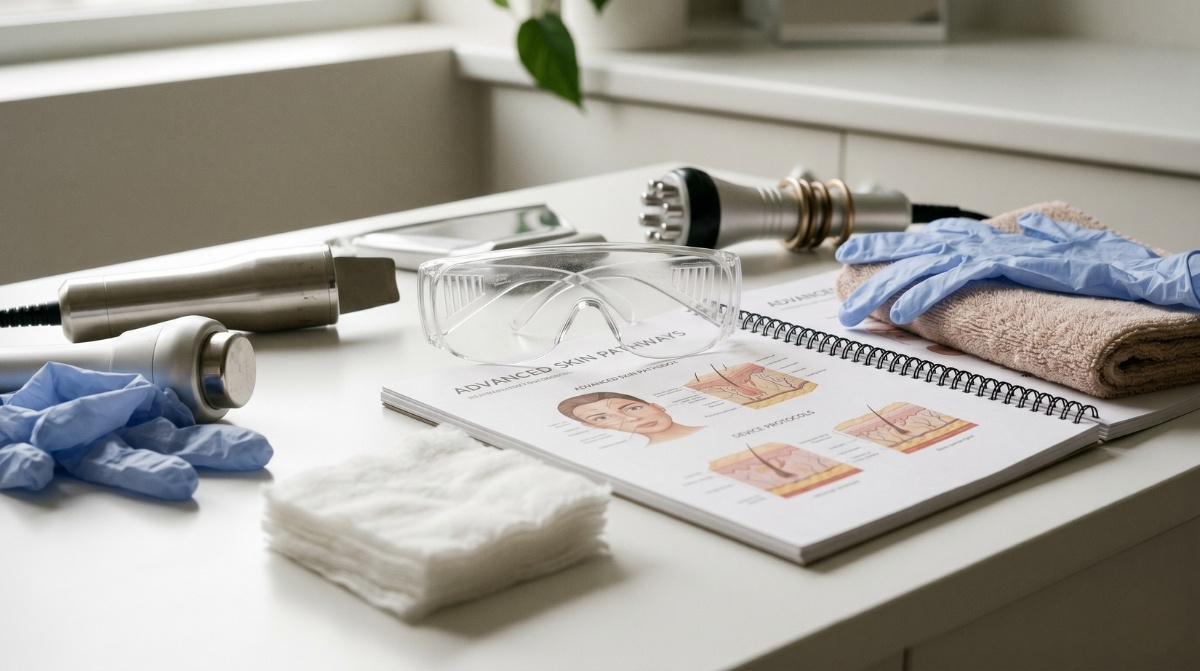
A close-up of clear protective eyewear on an open training manual with skin diagrams, surrounded by blue gloves and aesthetic device tools.

As you move into what is an advanced esthetician role, your menu might change to include more intense tools.

  • Injectables: Generally, estheticians cannot do Botox or fillers through an esthetician license alone. These are medical procedures and generally require an appropriate medical license, such as RN, NP, PA, physician, or another credential allowed by state law. However, an esthetician working under a doctor is essential for patient education, treatment support, and post-care.
  • Microneedling: The rules on how deep can an esthetician go with microneedling change depending on the state, especially when treatment reaches the dermis or uses radiofrequency energy. Some medical settings may allow properly licensed or delegated personnel to perform these treatments under supervision, while other states may prohibit estheticians from performing microneedling even with a private certificate.
  • Lasers: To become a laser esthetician, you have to understand the physics of how light targets pigment, blood vessels, hair follicles, or water in the skin. Always confirm if your state allows estheticians to operate laser devices, requires a separate laser or electrology credential, or limits the service to medical professionals.

The Safety Factor

The 2025 FDA Safety Communication about RF Microneedling is a big deal. It mentioned serious risks including burns, scarring, fat loss, disfigurement, nerve damage, and the possible need for medical or surgical intervention. The FDA also described RF microneedling as a medical procedure, not a cosmetic treatment. This is a reminder of why high-quality training is so important before moving into advanced services. You have to understand device physics, tissue response, sanitation, contraindications, and legal scope to keep your clients safe.

Elite Credentials

If you want to reach the top of the field, you might look at the CIDESCO Diploma. It is one of the best-known international beauty and spa therapy credentials, with standards that have been around since 1957. It can be especially useful if you want a globally recognized qualification instead of relying only on state-level licensing.

I also recommend looking into certifications to get after esthetician school that cover new topics like exosomes or polynucleotides. These are often discussed as next-generation skin-repair treatments, but they should be approached carefully in the U.S. because many involve medical products, injections, or regulatory limits outside a standard esthetician scope. Even if your license doesn’t let you perform the injection part of these treatments, knowing the science makes you a better consultant for your clients.

Taking the Next Step

The data makes it clear that the future of skincare is becoming more clinical. The demand for knowledgeable specialists is higher than I have ever seen it. If you want to reach that top tier, you need a foundation that goes beyond the basics.

At Perimeter Beauty & Barber Institute, the focus is on a “Salon Ready” approach. This means you aren’t just reading from a book; you are getting hands-on experience, client communication skills, sanitation discipline, and professional habits that help prepare you for real service environments. I believe that having that kind of discipline is what separates a standard practitioner from a true leader in the industry.

If you are ready to see what is possible for your career, I invite you to find out more in Enrollment. You can also use the contact form at the end of this article to talk to the team about how to get started on your journey.

FAQ

What qualifications do you need to be a medical esthetician? Usually, you need your basic license plus advanced training in things like chemical peels, device safety, and clinical sanitation. Remember that medical esthetician is a job title, so your actual scope depends on your state laws, your license, your employer, and whether the service is cosmetic or medical.

How to become medical esthetician without a degree? You don’t need a four-year college degree. You need to complete a state-approved esthetics program and then get extra training in medical-office protocols, patient communication, and pre/post-procedure care for clinical settings.

Can an esthetician do microneedling in Michigan or Massachusetts? This is often seen as a medical or medical-adjacent procedure, especially when it reaches the dermis or uses RF energy. Rules vary a lot by state and may involve cosmetology boards, medical boards, nursing boards, and delegation laws. I always recommend checking with the state board directly rather than just trusting a private certificate.
What Can You Do With an Esthetician License? A Detailed Guide to Careers and Salary

When people ask me about starting a career in the beauty industry, they usually want to know if there is a real path forward after graduation. Skincare is no longer just a luxury service; it is increasingly connected to wellness, prevention-minded routines, and long-term skin health. I have noticed that the most successful professionals in 2026 are those who treat their license as a foundation for a serious business while respecting the legal limits of their scope. You are likely looking for a career that offers both stability and room to grow, and fortunately, the options for where to work as an esthetician are expanding every year. Before you dive into the deep end, learning how to become an esthetician is the first step toward mapping out your future.

Quick Facts About the Industry

  • Job Security: The U.S. Bureau of Labor Statistics projects that employment for skincare specialists will grow 7% through 2034, which is significantly faster than most other professions.
  • Work Environments: You can find roles in medical offices, luxury resorts, retail settings, or even cruise-ship spas.
  • Earnings: The median wage in 2024 was around $19.98 per hour. However, roles in physician offices often pay more, with a median of $23.40 per hour. High earners and business owners may reach much higher levels through specialization, location, tips, commission, and ownership, but higher income should be treated as a possible upper-tier outcome rather than a guaranteed salary.
  • Business Ownership: About 26% of professionals in this field are self-employed. Running a business from home is a common goal, but you must stay on top of local zoning and state board rules.

Choosing Your Path: Where Do Estheticians Work?

One of the best things about this license is the variety it offers. I love that your daily environment can change based on your interests and your career goals. Your places to work are not limited to just one type of spa or salon.

Retail and Education

Major beauty retailers like Sephora and Ulta are huge employers for licensed professionals. These companies look for people who can educate customers on product science and provide specialized services. Ulta’s career page and Sephora’s jobs site often list roles for beauty advisors and service providers. I think these are excellent esthetician jobs for beginners because they give you a chance to work with hundreds of different skin types and learn how consumers make buying decisions.

The Medical and Clinical Tier

If you prefer a more clinical setting, you might look into jobs with dermatologist offices or plastic surgery centers. This is often called medical esthetics, though your legal license remains the same. In these roles, you usually focus on long-term treatment planning rather than a single relaxing session. According to Allergan Aesthetics research, 78% of consumers feel more satisfied when they have a long-term plan with their practitioner. This shift toward long-term aesthetic planning fits the broader “Bio-Aesthetics” idea: clients increasingly value barrier support, prevention-minded routines, age-prevention conversations, and realistic treatment plans, as long as every service stays within the provider’s legal scope.

Travel and Luxury Resorts

For those who want to see the world, esthetician jobs on a cruise ship are a unique option. Companies like OneSpaWorld recruit professionals to provide high-end wellness services at sea. These roles are fast-paced and offer a global perspective on beauty. Similarly, destination resorts and five-star hotels hire estheticians to provide polished, professional experiences for guests who expect top-tier service.

Understanding Your Scope: What Can You Do With an Esthetician License?

Before you start applying for jobs after esthetician school, you must understand your scope of practice. This is the legal boundary of what your license allows you to do. In 2026, a great professional is one who knows exactly when a client needs a treatment and when they need a referral to a doctor.

The BLS notes that skincare specialists perform face and body treatments to improve a client’s appearance. For those in Georgia, the law is very specific. Georgia state law includes services like facial massage, brow shaping, and lash services within our scope. However, it explicitly states that esthetics does not include diagnosing or treating dermatological conditions, medical aesthetics, or using lasers. I always tell students that being career-ready means knowing these legal limits. If you want to visualize the daily life of a student, you should check out our guide on what is esthetician school like.

Esthetician Salary and Earning Potential

I know that the average salary for an esthetician is a major factor in your decision. While the national median is around $41,560 per year, your actual take-home pay depends on several factors. Most professionals earn a mix of an hourly pay rate, service commissions, and tips.

The BLS reports that the top 10% of skincare specialists earn over $77,330 per year. Working in a physician’s office can increase the median wage, and specializing carefully may help you build stronger long-term earning potential depending on your market, service menu, client retention, tips, commission structure, and business model. I have seen that professionals who focus on client retention and rebooking strategies tend to have the most stable and high-paying careers.

Entrepreneurship: Can You Work From Home?

Many of my readers dream of starting an esthetics business from home. While going solo gives you control over your schedule and pricing, it comes with a lot of responsibility. You are not just a service provider anymore; you are a business owner.

  • Legality: You must meet state board facility requirements. The Georgia Secretary of State explains that you need a specific salon/shop license in addition to local business permits.
  • Safety: You must ensure every service stays within your scope. For example, the FDA provides strict guidance on things like microneedling devices, which are often classified as Class II devices.
  • Costs: You are responsible for insurance, taxes, supplies, and marketing. I think this path is rewarding, but it requires a solid plan before you leave your day job.

Advancing Your Career: RNs and Specializations

Your career doesn’t have to stop at a basic license. There are many ways to specialize and increase your value in the industry.

RN to Esthetician

Registered Nurses are increasingly moving into the aesthetics field. This crossover allows for more clinical involvement, but it still follows strict rules. The Georgia Board of Nursing states that an RN may perform cosmetic injections only when authorized by a valid individualized order from a physician, nurse practitioner, or physician assistant with prescriptive authority. Standing orders are not an appropriate substitute, and a history and physical exam must be performed by the medical provider first.

Master Estheticians and Instructors

Some states, like Washington, offer a Master Esthetician license for advanced services. In other regions, you might choose to become an instructor. Teaching at an academy is a great way to stay sharp on technical skills while helping the next generation enter the field.

Getting Hired: Resume and Interview Tips

When you are looking for how to get a job as an esthetician with no experience, you should focus on your professional habits. I recommend building a portfolio that shows your clinic hours and sanitation standards. Employers in 2026 are looking for reliability and a client-first mindset.

During your interview, be prepared for a practical exam where you perform a service. They will watch how you set up your station and how you explain post-care routines. I suggest practicing your answers to common esthetician interview questions, such as how you handle skin reactions or how you recommend products based on a client’s specific lipid barrier needs.

Take the Next Step in Your Career

The data shows that the demand for skincare specialists is growing, and consumer interest in long-term skin health is strong. A license is a powerful tool, but your success depends on the quality of your training. At Perimeter School, I believe in a “Salon Ready” approach that prepares you for the realities of a professional environment. We focus on hands-on experience, sanitation discipline, and the communication skills you need to build a loyal client base.

If you want to understand more about the licensing process, please see our guide on how to apply for an esthetician license. Our instructors bring decades of combined experience to the classroom, helping you bridge the gap between graduation and your first paycheck.

To start your journey, you can find out more in Enrollment. We have a contact form at the end of that page where you can reach out to our team to discuss your goals and tour our facility. I look forward to seeing where your ambition takes you in the beauty niche.

FAQ: Common Career Questions

Is it hard to find a job as an esthetician? The outlook is very positive. With a 7% growth rate, there are many roles available in spas, retailers, and medical offices. New graduates should focus on building a strong portfolio and demonstrating professionalism.

What career cluster does an esthetician fall under? This job is typically part of the Human Services cluster. Some modern frameworks group it under Healthcare & Human Services because of the focus on wellness and client support.

Can I move my license to another state? Many states offer reciprocity, but every state has different requirements for hours and testing. I recommend checking the specific rules for your destination state early in the process.

Do I need a degree to be a medical esthetician? You usually only need a state-approved esthetician or cosmetology license. While you don’t need a four-year degree, you must stay within your state’s legal scope, as a basic license does not allow for medical diagnoses, treatment of dermatological conditions, medical aesthetics, lasers, injectables, or other services outside your state’s scope.

How to Apply for an Esthetician License: Passing Your State Boards and Transferring States

Starting a career in skincare is an exciting journey. I know firsthand that finding clear information about local regulations can be quite overwhelming. Every area has its own set of rules regarding how much training you need, the specific tests you must pass, and what tasks you are legally allowed to perform. I want to help you understand the entire process so you can focus on building your skills instead of stressing over paperwork. Here is my complete breakdown to help you navigate schooling, prepare for the state board exams, and earn the right to practice professionally.

Key Takeaways

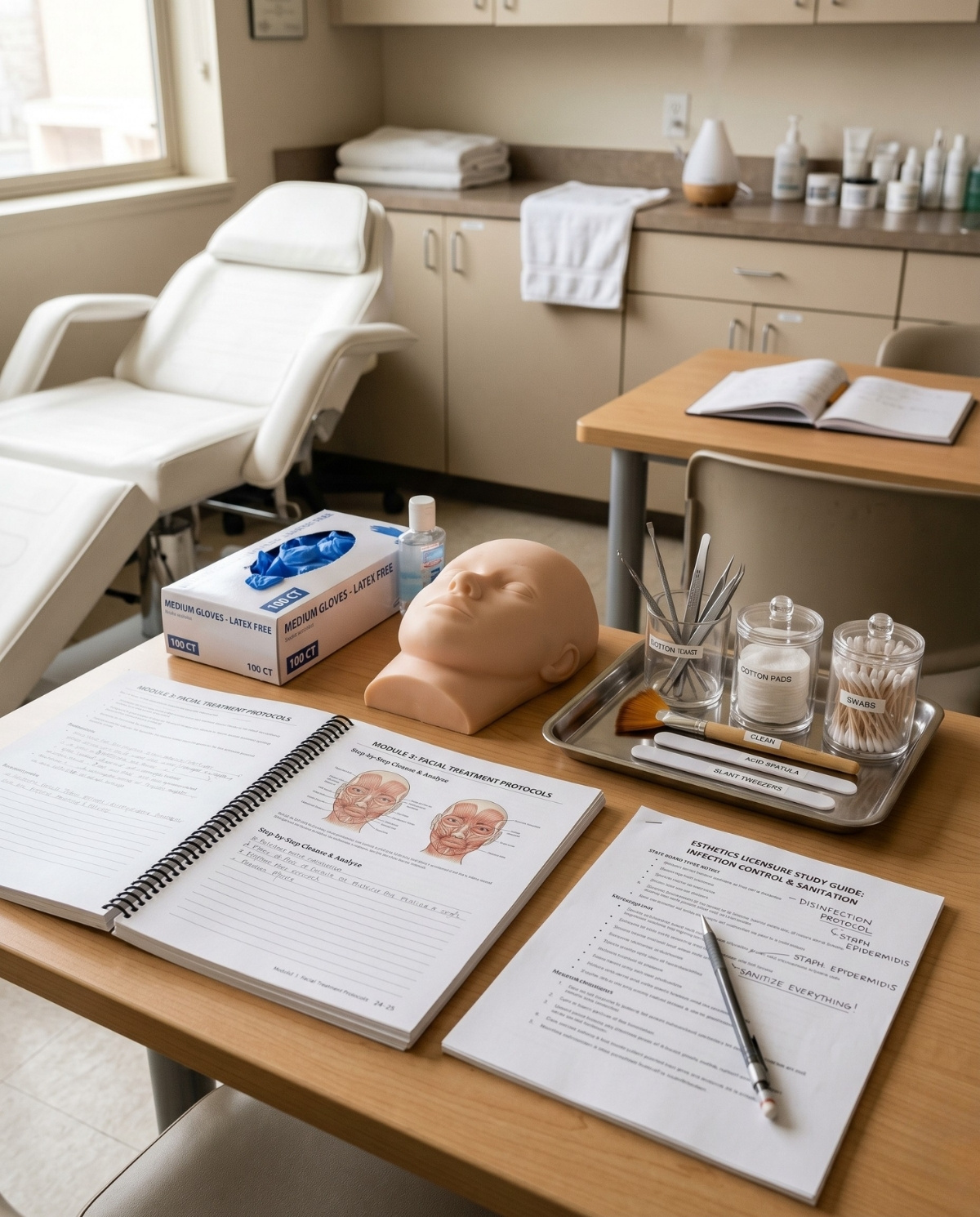
A close-up photograph of an esthetician training desk featuring an open workbook, a practice mannequin head, and labeled skin care tools in a bright, modern beauty school classroom.

What Does It Take to Become a Licensed Professional?

Required Training Hours and Local Differences

I always tell my readers that you cannot legally perform professional skin care without official schooling. When you compare the esthetician requirements by state, the training time is the biggest variable. The required hours reflect how each local board views training standards and the scope of practice. Some areas require fewer hours for basic services, while others demand long programs.

Here is a quick look at current esthetician hours by state:

Online Schooling and the Cost of Education

Many students balancing a job ask me if they can get an esthetician license online. A fully remote path simply does not exist. According to some distance learning standards, a few programs might offer theory classes digitally. Hands-on practical training is still mandatory to graduate and qualify for your exams.

As for the financial side, people often wonder how much it costs to get an esthetician license. Tuition generally falls between $4,000 and $12,000. I suggest looking at our comprehensive guide on how to become an esthetician and handle the costs to understand this better. I view tuition as the core foundation of my career because your investment dictates your clinical experience before graduation.

Preparing for the State Board Exams

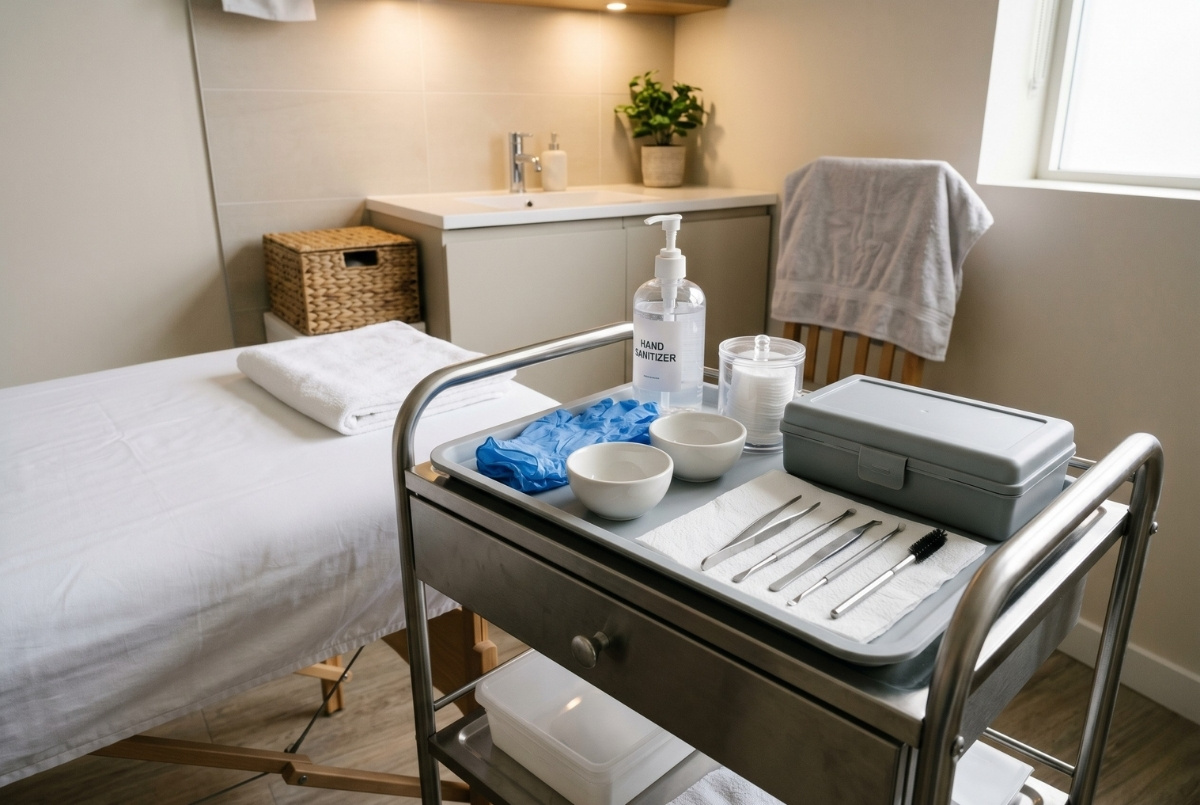
A detailed interior photograph of a clean, well-organized skincare treatment room featuring a stainless steel medical rolling cart in the foreground. The cart's tray holds hand sanitizer, blue nitrile gloves, cotton rounds, mixing bowls, and various facial extraction tools (tweezers, extractors) on a sterile wipe. In the background is a white treatment bed with a folded towel, a sink area with cabinets, a wicker basket, and a potted plant, all illuminated by soft natural light.

Surviving the Written Theory Exam

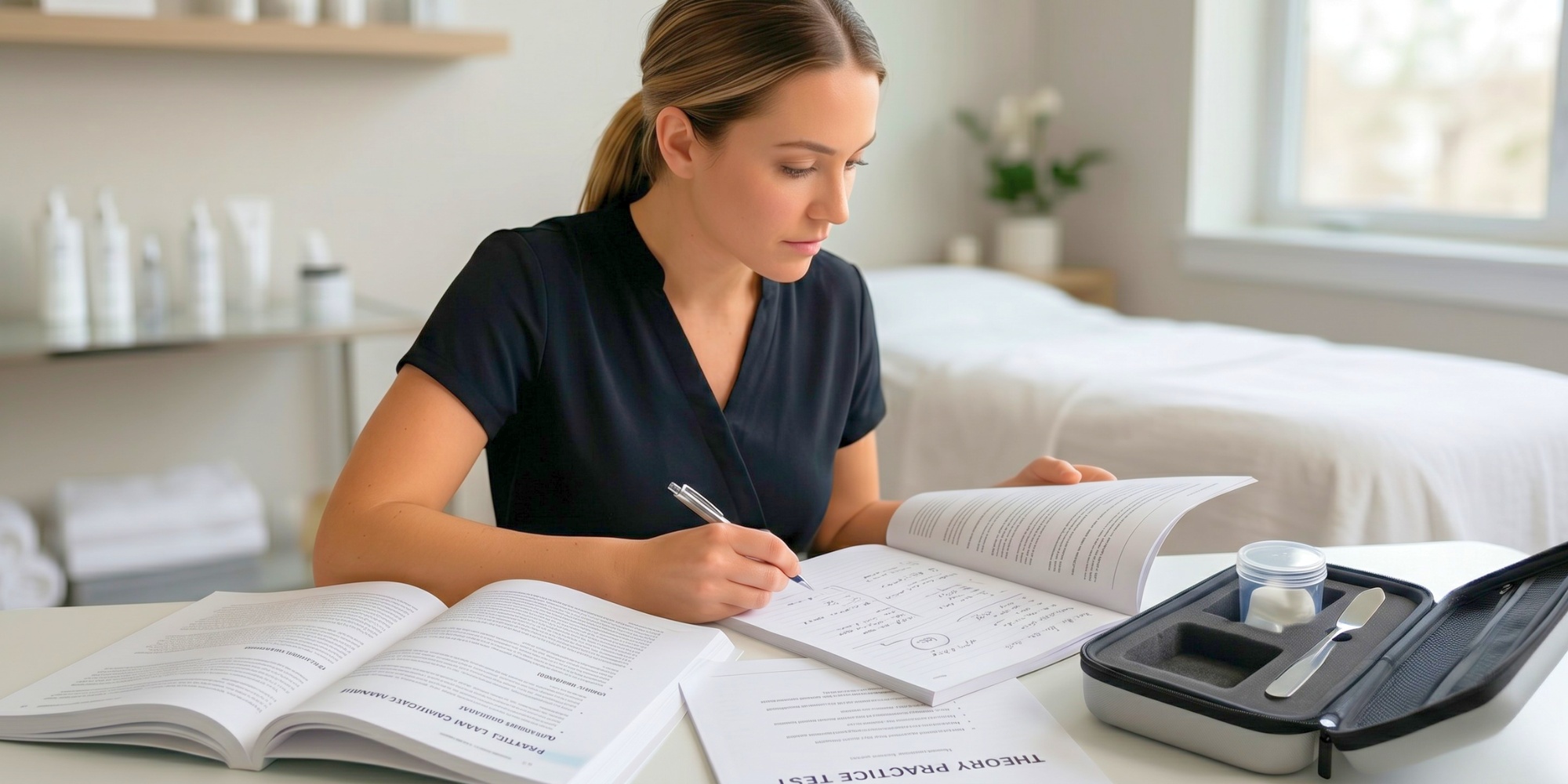
Your esthetician written exam will test you heavily on infection control, science, and sanitation. You will tackle subjects like microbiology, product chemistry, and state laws. If you are wondering how many questions are on the esthetician state board exam, the NIC theory format currently features 110 items, with 100 counting toward your score. Using a solid esthetician written exam practice test is the smartest way to prepare for these specific questions.

The Hands-On Practical Exam

The practical exam for esthetics causes the most anxiety for students. Examiners are not judging how relaxing your service is. They score you on strict sanitation, organization, and how you handle contamination risks. Reading up on what esthetician school is like day-to-day helps you understand the muscle memory needed to pass this section.

Also, keep in mind the upcoming NIC exam updates. Blood exposure procedures will be revised starting in March 2026. Infection control is going to remain the central focus of your practical exam.

Handling Applications and Background Checks

How to Apply After Passing Your Exams

Getting a passing score for the esthetics exam does not automatically give you your credentials. You still need to submit your application and fees. For instance, New York requires you to apply through its online licensing system, while Florida handles registrations through the DBPR portal.

Navigating Criminal History Evaluation

I also hear from readers worried about their past, asking if you can get an esthetician license with a felony. Many boards review criminal records on an individual basis. Texas looks at convictions individually and even offers a criminal history evaluation process so you know where you stand before applying. Honesty is always the best policy when dealing with your local board.

Moving States and Building Your Career

Transferring Your License to Another State

If you plan to relocate, you have to understand how to transfer an esthetician license from state to state. Most areas offer licensure by endorsement, which means they review your existing training and work history. New York allows endorsement for out-of-state professionals. Similarly, Virginia and its licensing requirement summary show pathways for endorsement based on your experience.

I see a lot of misinformation about the Cosmetology Licensure Compact. It has reached the legislative threshold, but it is not active yet. It is also built for cosmetologists, so estheticians cannot use it as a shortcut right now.

Renewing Credentials and Going Solo

Keeping your status active requires paying attention to renewal cycles. Florida mandates renewal every other year. If you get married, states have specific update protocols, like California’s formal name change process.

Earning this legal status gives you the freedom to shape your career. The Bureau of Labor Statistics highlights that many skincare specialists go on to become self-employed.

A cozy independent skincare studio with a white treatment bed, a black rolling tool cart, and a wooden desk with client paperwork in a room with warm neutral decor and natural window light.

Ready to Master Your Craft?

You now know how to navigate the local regulations and testing processes. The next important decision is finding a reliable educational partner.

At Perimeter Beauty & Barber Institute, we focus heavily on preparing you for a thriving, independent career. I highly encourage you to find out more details about our admissions process over at Enrollment. We want to ensure you have all the information you need to make the best choice for your future.

Please fill out the contact form below to connect with us. We are happy to discuss your goals, explain the required hours, and help you get started on this amazing career path.

Frequently Asked Questions

Do you need a license to be an esthetician?
In the United States, you generally need the appropriate state credential to legally perform professional skincare services. The exact credential title varies by location. For example, Florida uses a Facial Specialist registration rather than a standard esthetician title.

How many questions are on the esthetician state board exam?
If your state uses the NIC theory format, the current exam contains 110 items, with 100 scored. State-specific testing formats can vary, so I always recommend confirming your current candidate bulletin.

How do I look up where to get my esthetician license testing done?
Your state board or testing vendor will provide the scheduling path. New York handles application and exam scheduling through its online licensing system, while Georgia directs examination candidates to PSI.

How do I find specific esthetician license requirements by state?
Go straight to the official regulator. Earning an esthetics license in NY means checking the New York Department of State, while transferring credentials into Virginia means reviewing the Virginia Board for Barbers and Cosmetology.

What Is Esthetician School Like? A Full Guide to Classes, Hours, and Preparation

Many people spend years as dedicated skincare consumers, decoding ingredient labels and building their own multi-step routines. However, the shift from your own bathroom mirror to a professional treatment room represents a major career milestone. This change turns a personal interest into a licensed profession, and many prospective students feel both excitement and a little academic self-doubt as they wonder whether they can master the clinical theory, strict sanitation rules, and hands-on skills required to succeed.

This guide moves past the usual surface-level talk to show you the structured, skills-driven reality of what you will experience during your training.

Key Takeaways

  • Industry Growth: Employment for skincare specialists is projected to grow 7% from 2024 to 2034, which is faster than the average for all occupations.
  • Science-Driven Training: Modern programs focus heavily on skin barrier function, ingredient literacy, sanitation, and client safety alongside traditional facial techniques.
  • Compliance Matters: The Modernization of Cosmetics Regulation Act (MoCRA) has increased the importance of cosmetic safety and labeling awareness for everyone in the beauty industry.
  • Flexible Pathways: Training requirements vary significantly by state, ranging from a 220-hour facial specialty in Florida to 1,000 hours for esthetician training in Georgia.
  • Earning Potential: Income depends on location and specialty; the BLS reports a median wage of $19.98 per hour for skincare specialists, though advanced or highly specialized roles may earn more.

What Is Esthetician School Like?

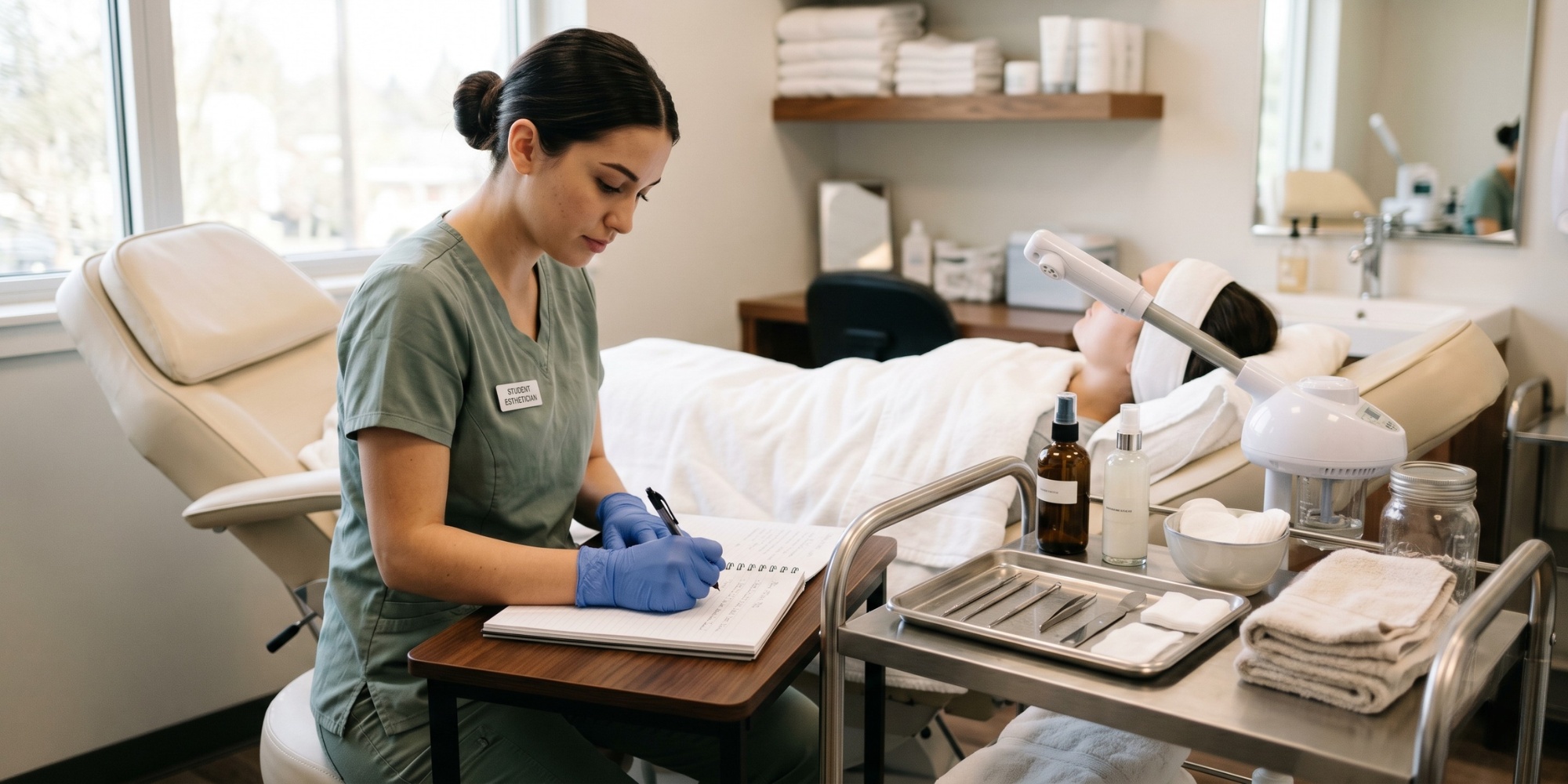
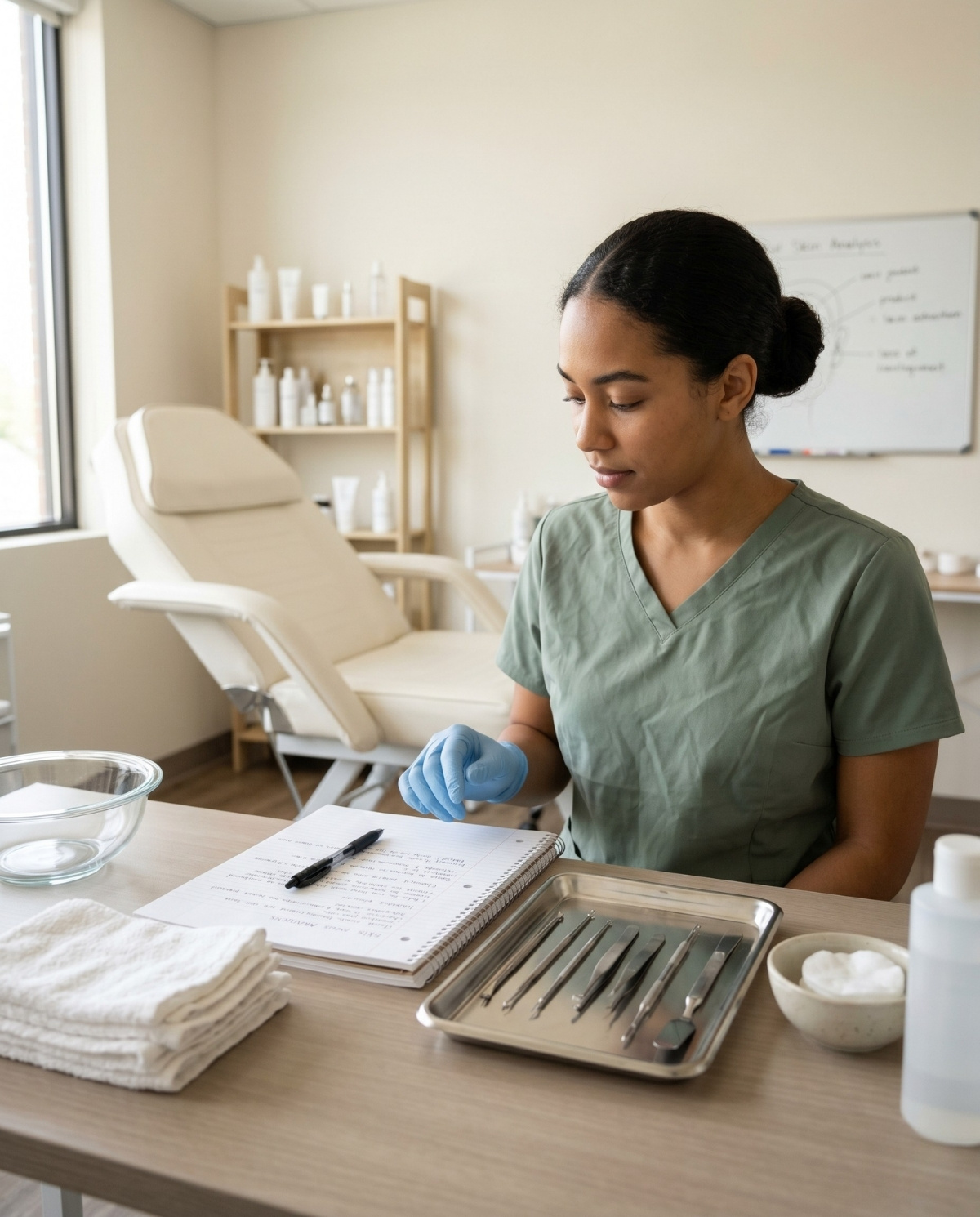
A woman in green medical scrubs and blue gloves seated at a desk, looking down at handwritten notes in a notebook next to a tray of professional extraction tools, with a white treatment chair and product shelves in the background.

Modern esthetics training typically feels less like a traditional lecture-based classroom and more like a professional clinic. A strong esthetician program blends theory with repetition. Students study skin structure, infection control, and product chemistry before applying that knowledge in supervised practice. Most days are built around a split between classroom instruction and hands-on clinic work.

During esthetician training, students learn how to perform professional consultations, identify visible skin concerns within their scope, and maintain high sanitation standards. Most programs cover the fundamentals, including facials, hair removal, and lash services. Just as important, students learn the pace and discipline of a professional environment, from tool disinfection to treatment documentation. If a school offers services to the public, students may also gain experience working with real clients to build confidence.

Expert Insight: Demand for Faster, Lower-Cost Services

According to the U.S. Bureau of Labor Statistics, employment for skincare specialists is projected to grow 7% from 2024 to 2034. The BLS also notes that demand is supported by services like mini-sessions and mobile facials, which appeal to clients looking for convenience and more affordable price points.

The Science of the Barrier: What You Actually Learn

Many new students worry most about the hard science side of esthetics. In reality, that scientific foundation is exactly what gives the profession its credibility. A quality program teaches not only how to perform services but why certain products, ingredients, and treatment steps matter for skin health and safety.

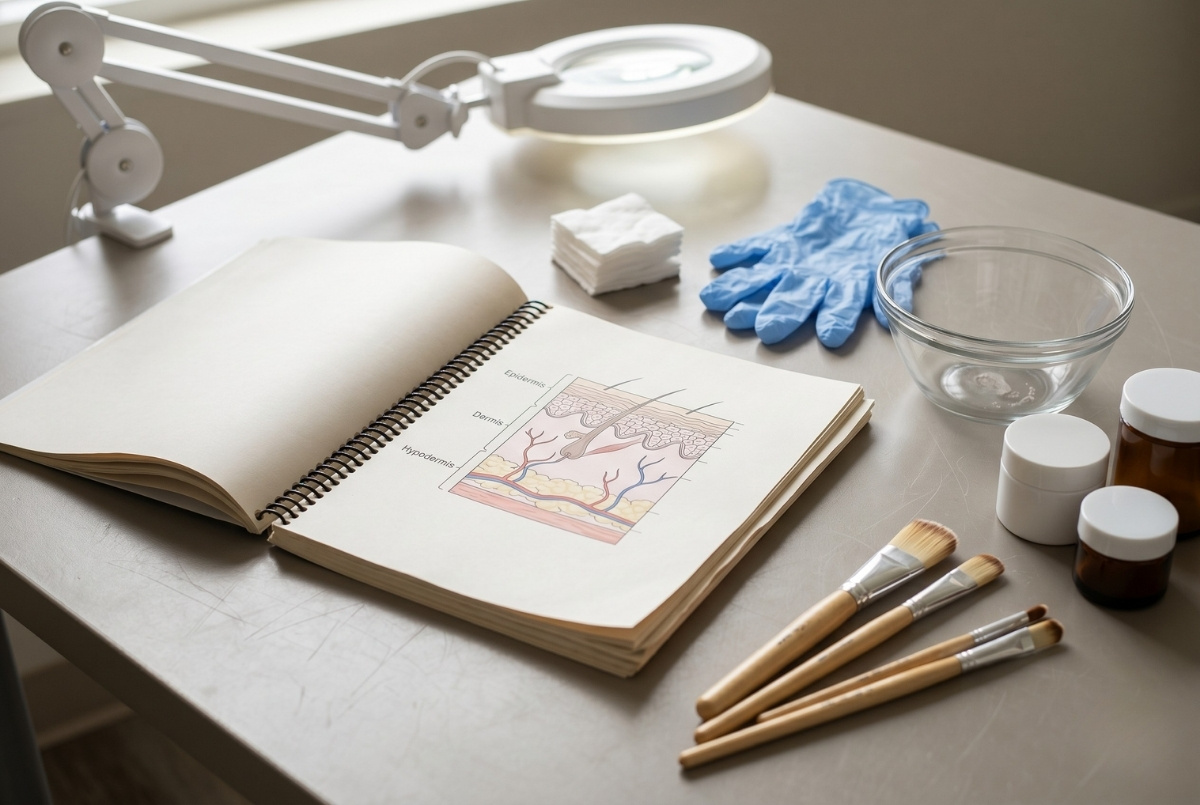
An open notebook showing a skin layer diagram sits on a desk alongside facial brushes, a glass bowl, blue gloves, and a white magnifying lamp.

Biology, Chemistry, and Safety

Students typically spend significant time learning about skin anatomy, barrier function, and pH. They also learn why recognizing contraindications and visible conditions matters for client safety, including when a client should be referred to a medical professional.

Advanced Skill Development

Hands-on esthetician training usually covers cleansing methods, massage movements, extractions, hair removal, and makeup fundamentals. Students learn treatment techniques that protect skin integrity and avoid unnecessary trauma. Even if they plan to focus solely on skin care, a thorough understanding of makeup and product interactions can still be useful in treatment settings.

The Logistical Roadmap: Hours, Costs, and States

The biggest logistical reality is that training requirements vary by state, which shapes how long it takes to complete esthetician school.

  • Georgia: 1,000 esthetician hours for Georgia licensure.
  • Texas: 750 esthetician hours for Texas.
  • California: Esthetics remains a separate licensed category, while California schools commonly operate under the state’s post-SB 803 framework for revised beauty-program hour structures.
  • Arizona: 600 esthetician hours for Arizona.
  • Florida: 220 hours for a facial specialty or 400 hours for a full specialty.

If speed is your priority, the quickest way to become an esthetician depends on your state and your schedule. Some full-time programs can be finished in a matter of months, while others take closer to a year. You can often find an esthetician school with weekend or night classes to make the schedule more manageable. While some theory may be offered in hybrid form, state-approved practical training must still be completed in person.

Expert Insight: Compliance and Safety in 2026

The FDA’s Modernization of Cosmetics Regulation Act (MoCRA) has increased the focus on cosmetic safety and recordkeeping in the beauty industry. As a professional, estheticians focus on safe work practices and documenting incidents appropriately. Following state board rules ensures professional responsibility without necessarily requiring direct federal FDA reporting for every product used in a treatment room.

Financial Strategy: Funding Your Education

Tuition varies significantly by school and location. Many programs fall into the several-thousand-dollar range, and students should always ask if their esthetician kit for school and textbooks are included in the headline price.

For students watching their budget, it is smart to verify financial aid options directly with the school. Not every institution qualifies for federal aid, so students should confirm that with the school’s financial aid office before assuming eligibility.

Professional Prep: Your First Day and Beyond

Before your first day, confirm the specific requirements to get into esthetician school in your state. In many places, students can attend esthetician school with a GED or a high school diploma, though minimum age requirements vary.

Once enrolled, students will likely receive a professional kit containing supplies and practical tools used during training. Early practice usually begins on mannequins or classmates before students advance into supervised clinic work. This transition is where confidence really starts to build as theory connects with touch.

The State Board: Your Final Hurdle

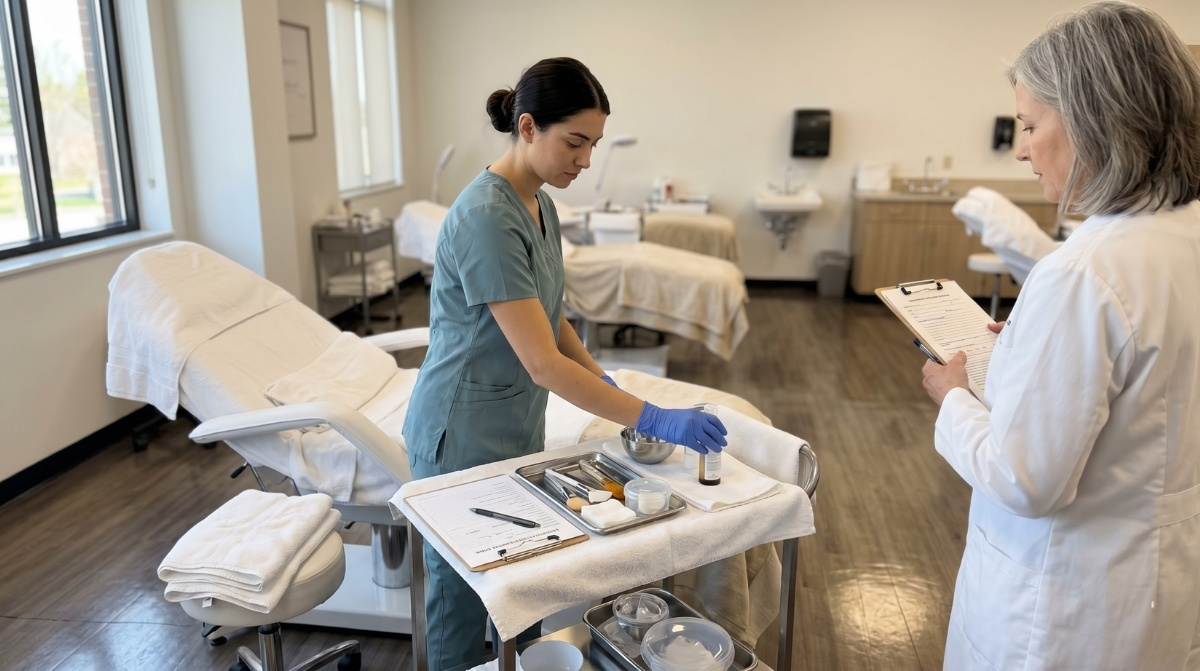
A student in green scrubs prepares a tray of tools next to a treatment chair while an instructor watches with a clipboard.

The last step to the career is the licensure process. This usually involves a written exam, a practical exam, or both. Reviewing sanitation rules, service procedures, and state laws helps students prepare for the exam process and the legal requirements of practice.

Income after licensure can vary quite a bit. According to the U.S. Bureau of Labor Statistics, skincare specialists had a median wage of $19.98 per hour in May 2024. Beauty Insurance Plus also points out that specialized or luxury roles can reach much higher earnings through commissions, retail sales, and business ownership.

Ready to Master Your Craft?

Choosing a beauty school involves more than just meeting a state hour requirement. You are selecting an environment where you will build the technique and professional confidence needed for a long-term career. At Perimeter Beauty & Barber Institute, we focus on a “Salon Ready” approach designed to prepare students for the daily rhythm of real-world beauty industry work.

Whether your goal is to work in a spa or eventually build your own business, having the right training environment matters. Perimeter brings more than 20 years of experience and a combined instructor experience of more than 80 years to its training programs.

Proper education is the difference between simply learning procedures and building a lasting career. If you are ready to take the first step, the next move is to find a program that fits your goals and state standards. You can find out more in Enrollment.

Please fill out the contact form at the bottom of this article to schedule a tour of our campus or to speak with an admissions coordinator about our upcoming start dates. Your path toward licensure can start here.

FAQ: Professional Path Clarity

Can I attend school while working a full-time job? Many programs offer evening, weekend, or part-time schedules to make training more manageable for working adults.

Is it difficult to get accepted into esthetician school? Admission is usually based on meeting age and education requirements rather than on a competitive GPA.

Can a registered nurse attend esthetician school? Yes. Nurses sometimes pursue esthetics training to expand into skincare-focused or medically adjacent beauty settings, though the exact services they can perform depend on state law.

What distinguishes a basic esthetician from a master esthetician? This depends on the state. Some states use advanced designations with additional training, while others do not use that license category at all.

Is a license required to perform services from a home-based studio? In most states, yes. Paid skincare services generally require proper licensure, and home-based operations must also meet local zoning and sanitation requirements.

How to Become an Esthetician: A Full Guide to School, License, and Cost

Choosing a career in skin health is a significant commitment. I believe that finding a path that matches your interest in skincare with a sustainable job market is essential. Moving from being someone who loves beauty products to becoming a professional skin expert requires a firm grasp of biology and chemistry.

The industry is growing, and there are many opportunities for those who know what they are doing. This guide walks you through the education for an esthetician, the standard requirements for an esthetician license, and the typical esthetician school cost.

Key Takeaways

  • Career Speed: You can often complete your training in 4 to 12 months, making it much faster than a standard four-year degree.
  • Market Growth: The Bureau of Labor Statistics expects the field to grow by 7% through 2034.
  • Earnings: The average yearly pay is roughly $45,374, though specialized Master Estheticians can earn more than $66,900.
  • Modern Rules: By 2026, the Modernization of Cosmetics Regulation Act (MoCRA) has raised expectations for safety and accountability across the beauty industry.

The Role of a Modern Esthetician

In 2026, the beauty world is moving toward “Metabolic Beauty,” a concept highlighted by Mintel analysts. This approach focuses on how internal wellness impacts the skin. As a licensed professional, your work revolves around protecting the lipid barrier, which is the skin’s natural defense against moisture loss and bacteria.

Your training involves using professional-grade peels and high-tech equipment to help with skin repair. Understanding these chemical processes is what makes you a professional. Clients are looking for “Bio-intelligent actives,” which are ingredients that adapt to the skin’s needs. Learning about skin biotechnology will give you a significant advantage in the job market.

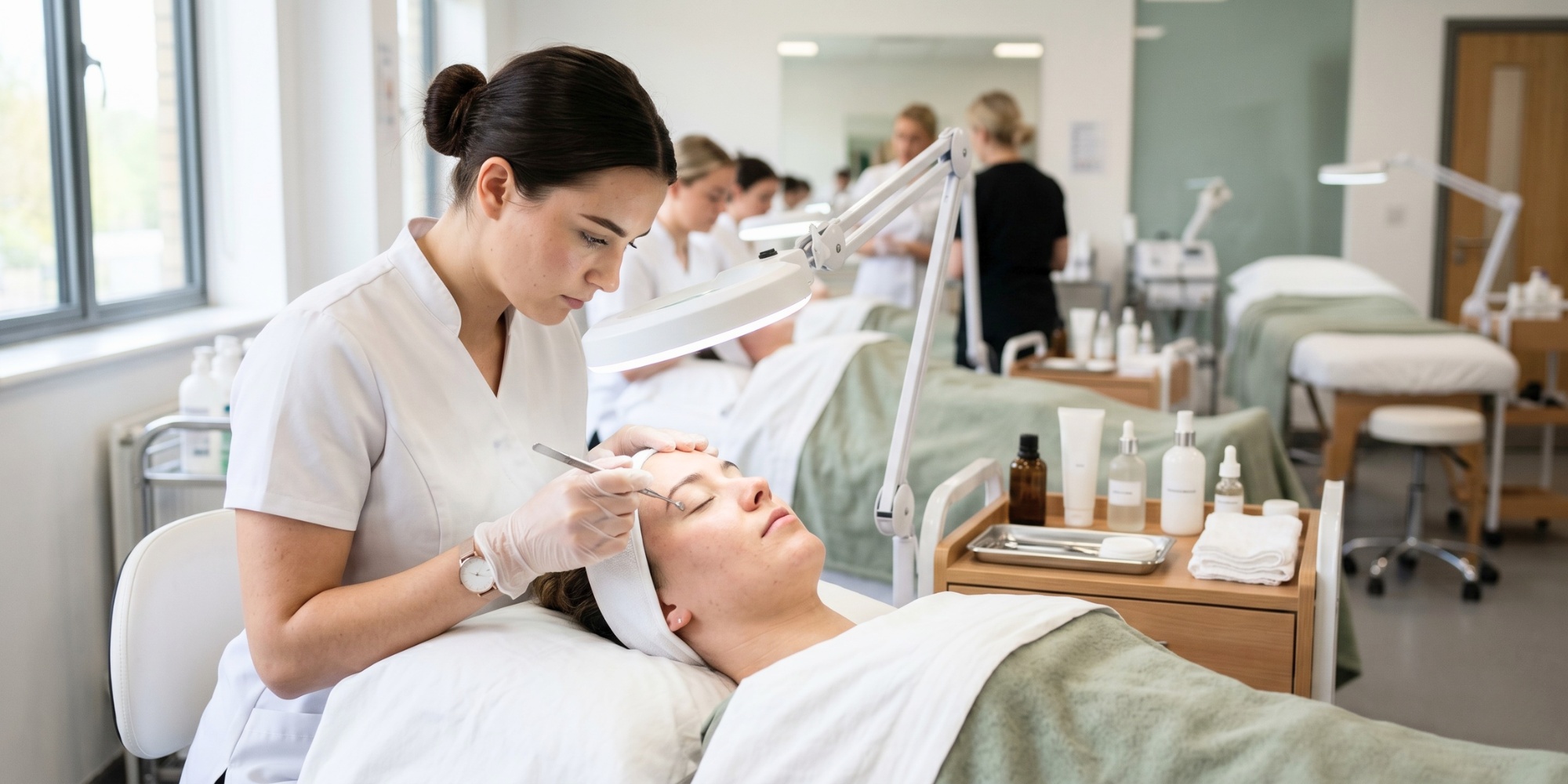
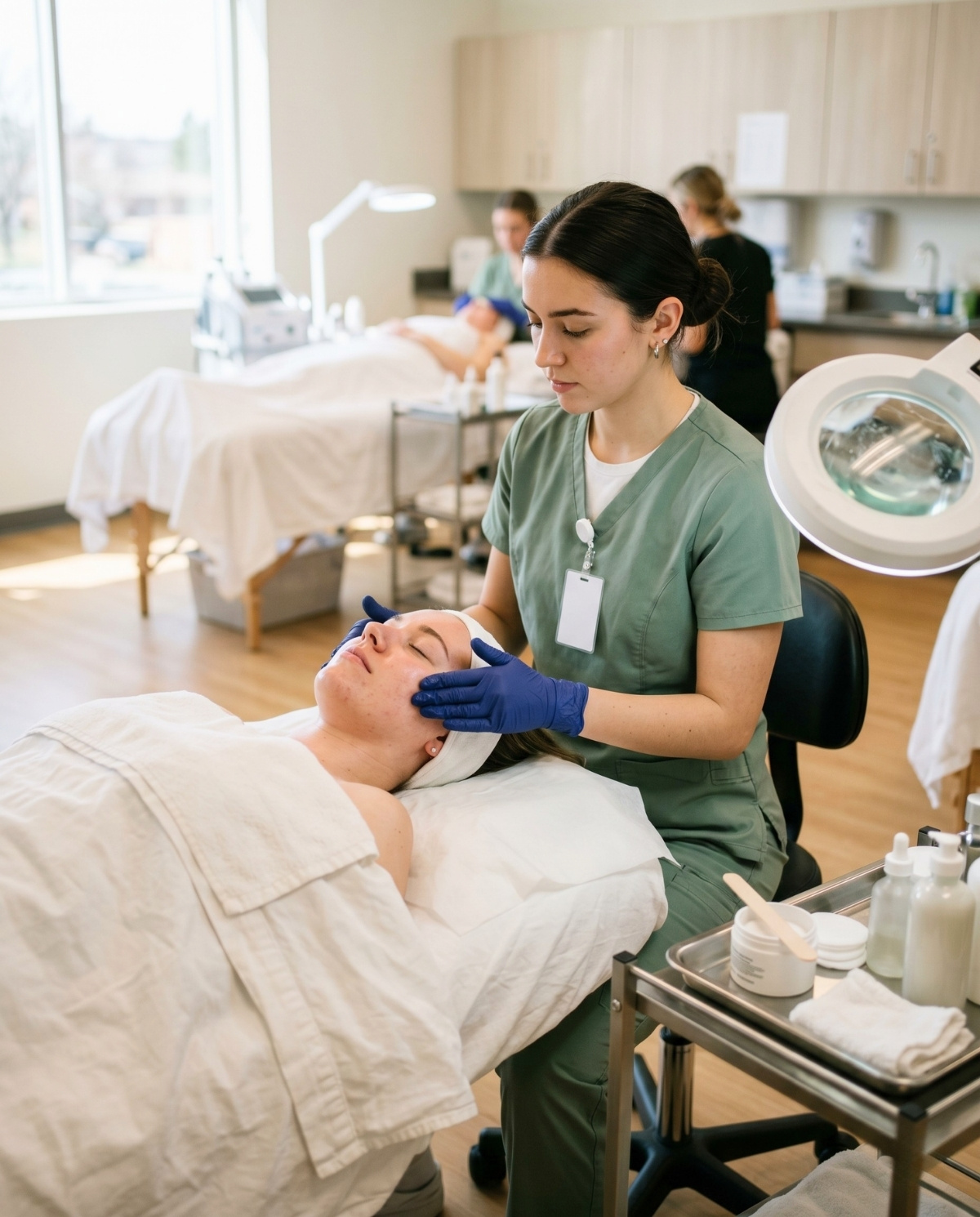
An esthetician student in sage green scrubs performs a facial treatment on a client lying on a white treatment table in a bright clinic setting.

The Academic Path to Success

You need to meet a few basic criteria before you can start. Most states require you to be at least 16 or 17 years old. A high school diploma is also standard. Many people ask, “can you be an esthetician with a ged?” and the answer is yes, as state boards almost always accept it.

The steps for how to become an esthetician after high school are quite clear:

  1. Look for reputable schools with esthetician programs.
  2. Finish your required training for an esthetician.
  3. Successfully pass the state licensing exams.
  4. Submit your application for a license.

Learning In-Person vs. Online

When you look for the quickest way to become an esthetician, you might find options for an online esthetician course. I want to be realistic about this. While you can study things like anatomy or product chemistry through online classes for an esthetician, you cannot learn how to perform a safe chemical peel through a computer screen.

Most states require you to complete several hundred hours of hands-on work in a student clinic. If a program says you can finish esthetician school online without any in-person training, they are likely not accredited. Choosing a non-accredited school will stop you from getting a license for an esthetician, which makes the faster route a waste of time.

How Long Does Esthetician School Take?

If you want to know how many years of school for an esthetician are necessary, the time is usually measured in months. While the Bureau of Labor Statistics explains that you must finish a state-approved program, each state board sets its own hour requirements.

Most states require between 600 and 1,000 hours of training. This is how that usually breaks down:

  • Full-time: Many students finish in 4 to 6 months.
  • Part-time: These schedules often take 9 to 12 months.
  • State Differences: Florida requires about 260 hours for a facial specialty, while Georgia and Alabama require 1,000 hours for a full license.

This timeline allows you to start your career quickly. You spend less time in a classroom and more time in a clinic, which builds the confidence you need to be ready for a salon job after graduation.

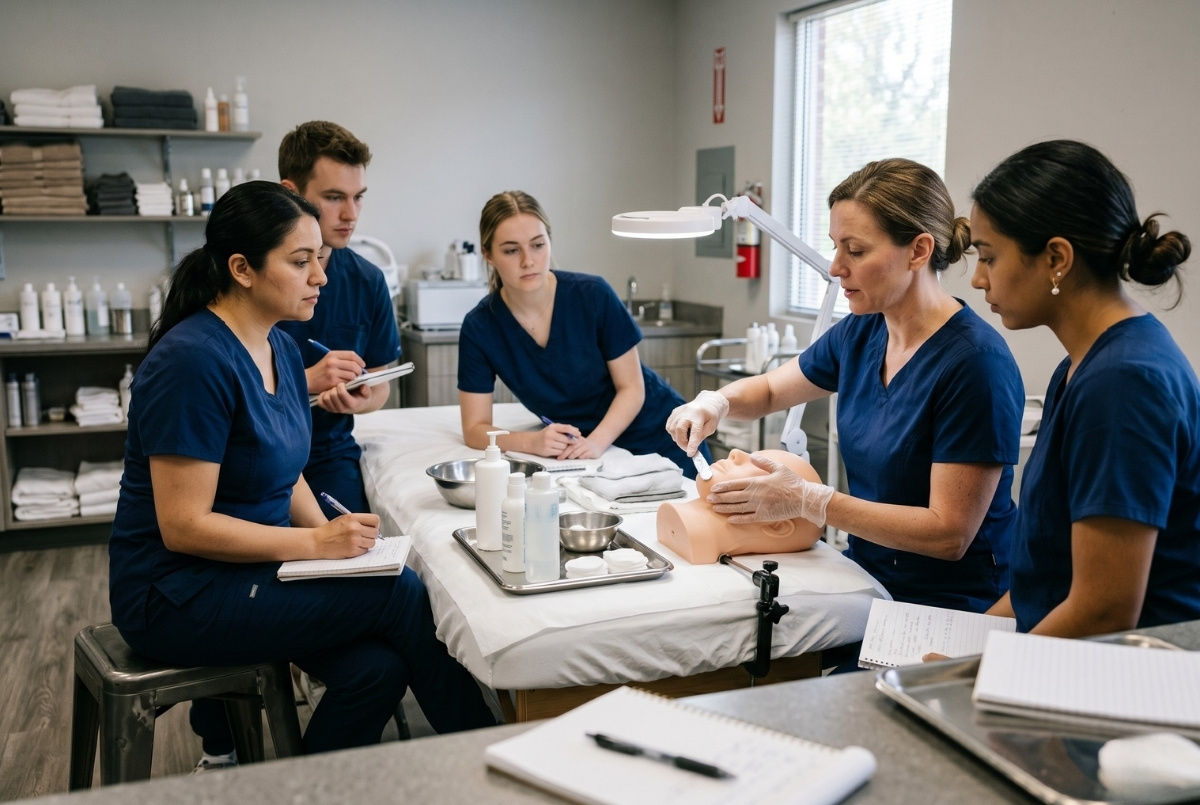
An instructor shows skincare techniques on a mannequin head while adult students take notes in a classroom.

Investing in Your Future: Costs and Aid

The esthetician school cost is an investment in your career. Tuition can range from $3,000 at a community college with an esthetician program to over $15,000 at private beauty institutes. Some schools provide financial aid that can cover your fees.

Managing the cost is possible through several options:

  • FAFSA for esthetician school: You can apply for federal aid if your school is part of the Title IV program.
  • Grants: Certain schools offer grants for esthetician school that you do not have to pay back.
  • Military Benefits: The VA pays for esthetician school at many qualifying locations for veterans or their families.

When you calculate the cost to become an esthetician, remember to include the “kit fees.” These kits contain the professional tools and products you will use during your training and your first job.

Securing Your Esthetician License

Finishing your esthetician program is the first major step. After that, you must gain official recognition from the state board. Most states require a written test, and many still require a practical exam.

The two-part system generally looks like this:

  • Theory Exam: This written test covers skin biology, safety protocols, and state laws.
  • Practical Exam: This is a hands-on demonstration where you show your skills on a model or mannequin to prove your techniques are safe.

States like California have simplified their process recently, but Georgia still uses rigorous testing to ensure every licensed esthetician is ready for the field. The cost to get an esthetician license usually ranges from $100 to $250 for application and testing fees.

Opportunities After Graduation

The question of what you can do with an esthetician license has many exciting answers. You could work in:

  • Medical Spas: Collaborating with doctors on advanced skin treatments.
  • Resorts: Working in luxury settings around the world.
  • Self-Employment: Building your own business and specializing in niche services.

Data from ZipRecruiter in early 2026 shows that the average salary for an esthetician is around $45,374. Specializing in advanced treatments can increase your income. For example, a Master Esthetician often earns over $66,900 annually. Your esthetician yearly salary will likely grow as you gain experience and build a client list.

A smiling esthetician in a gray uniform stands with a clipboard beside a prepared facial bed and treatment lamp in a sunlit room.

Starting Your Professional Journey

Choosing the right place to learn is vital for your success. At Perimeter Beauty and Barber Institute, I believe in providing a path that leads to a real professional legacy. Our school has been in business for over 20 years, and our team has a combined 80 years of experience helping students enter the Georgia beauty industry.

We focus on creating graduates who are “Salon Ready” from the moment they finish. This means you build practical skills in skin treatments, product knowledge, client care, and professional techniques that prepare you for the workplace. Students also train with professional product lines like CHI as part of their education. Our goal is to make sure you feel completely prepared when you start your first job.

Our history is built on the success of students who turned their interests into a career. Your future in skin health is waiting, and we are here to help you through every step. You can find out more about how to get started in Enrollment. We also have a contact form at the end of this article if you have more questions about our community.

FAQ: Common Questions

Is it hard to get a job as an esthetician?
The demand for skin health experts remains high. Employers look for graduates who understand safety rules and have strong hands-on skills. Choosing a reputable school makes your job search much easier.

Can you be an esthetician without going to school?
No. Every state requires you to complete a specific number of educational hours at an approved school before you can take the licensing exam.

Do you need a degree to be an esthetician?
You do not need a four-year college degree. You need a high school diploma or a GED and the completion of a state-approved esthetician course.