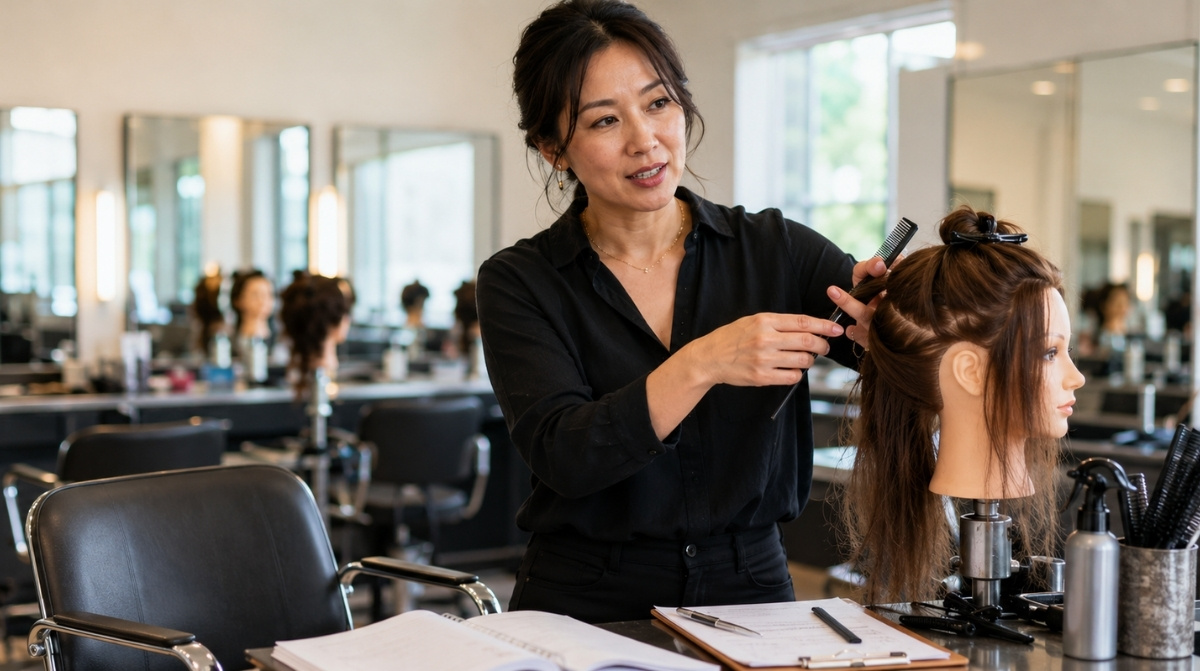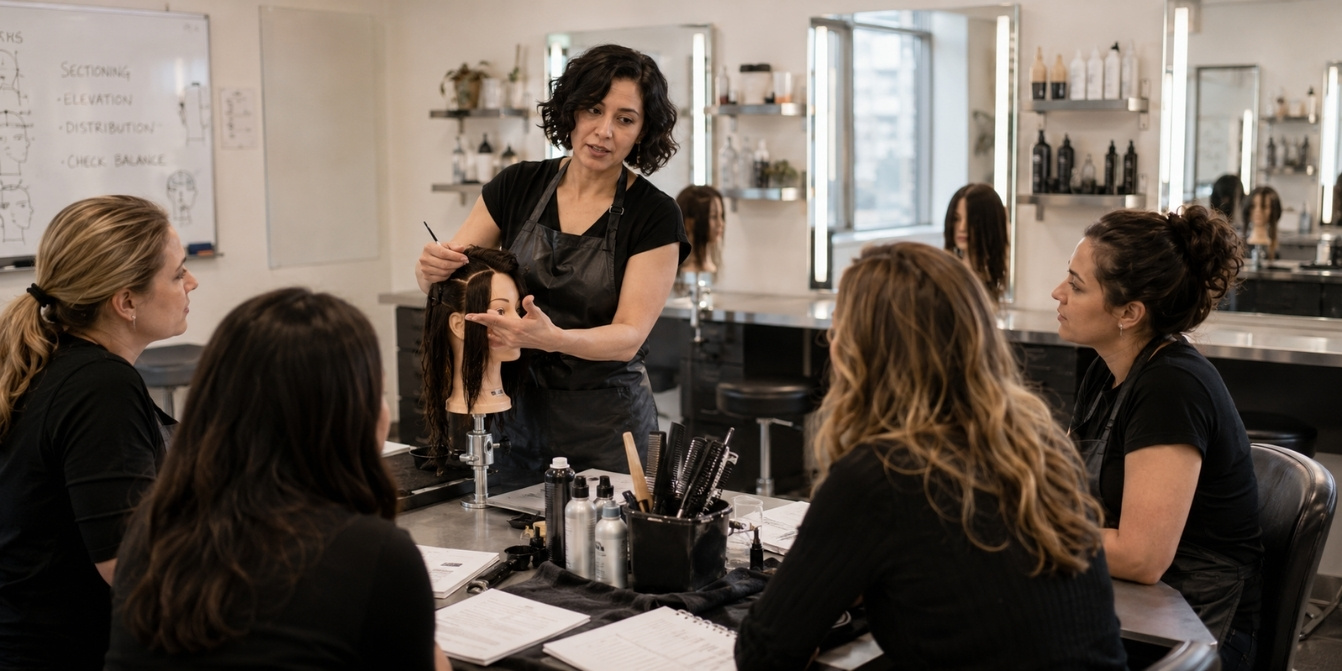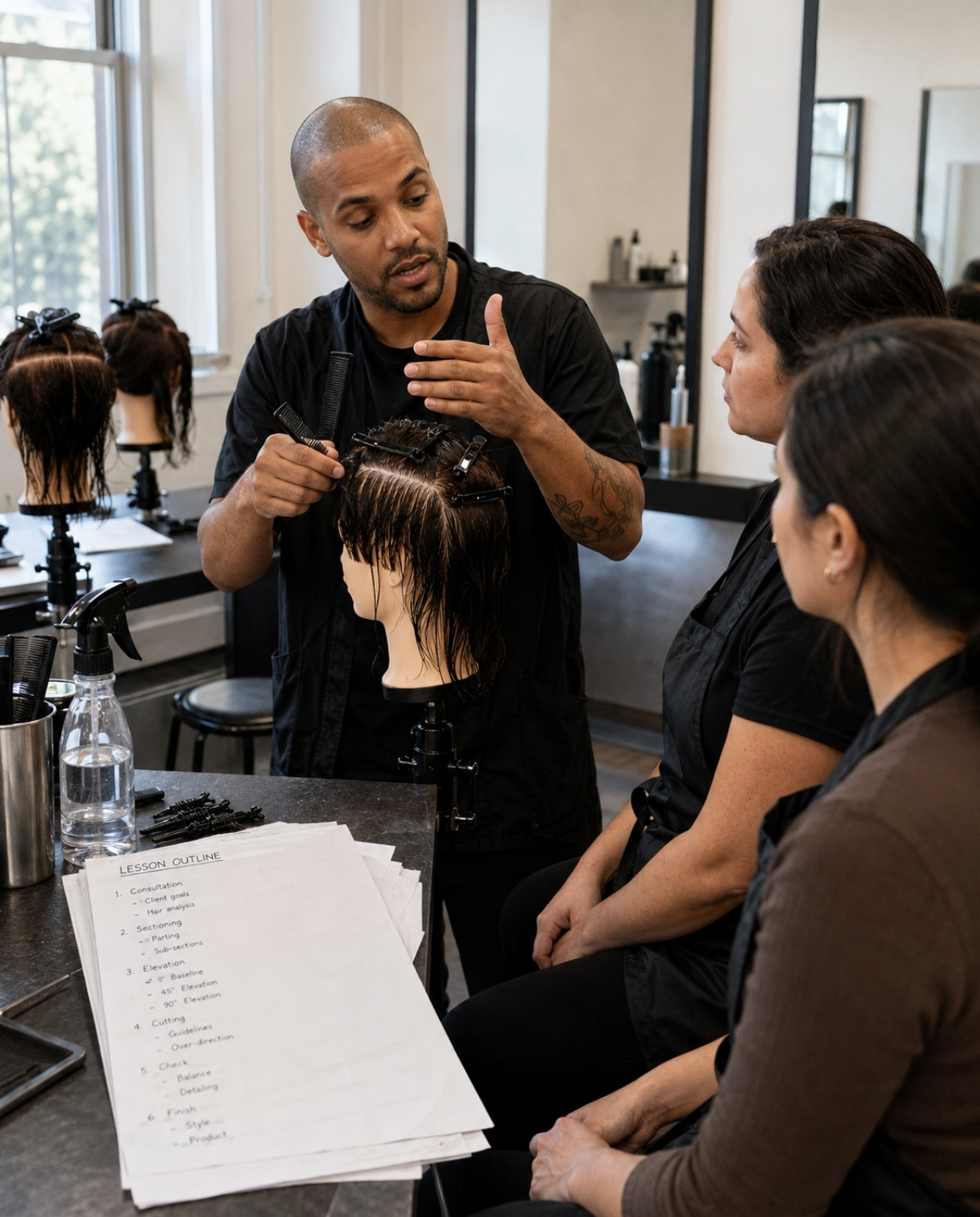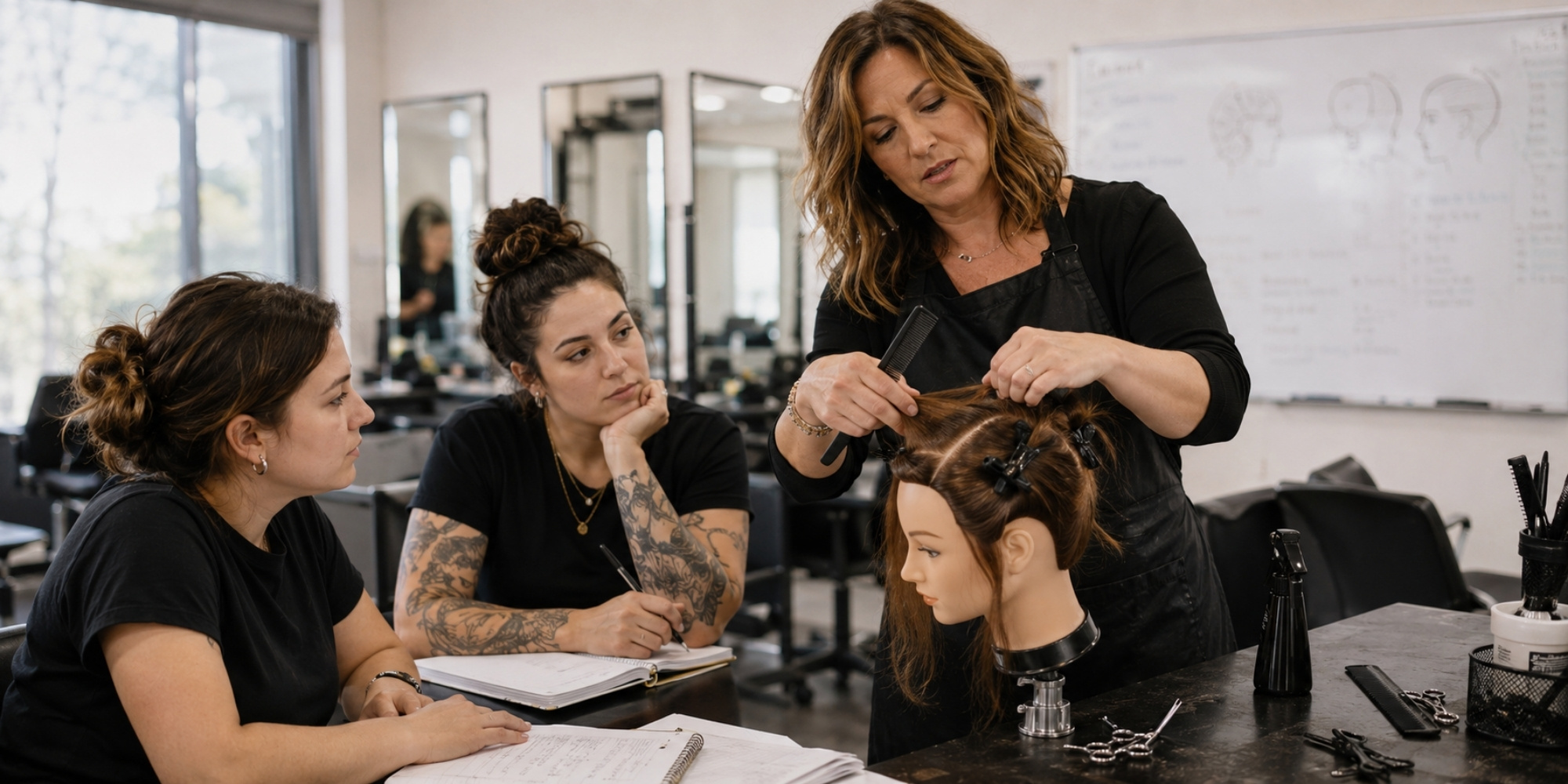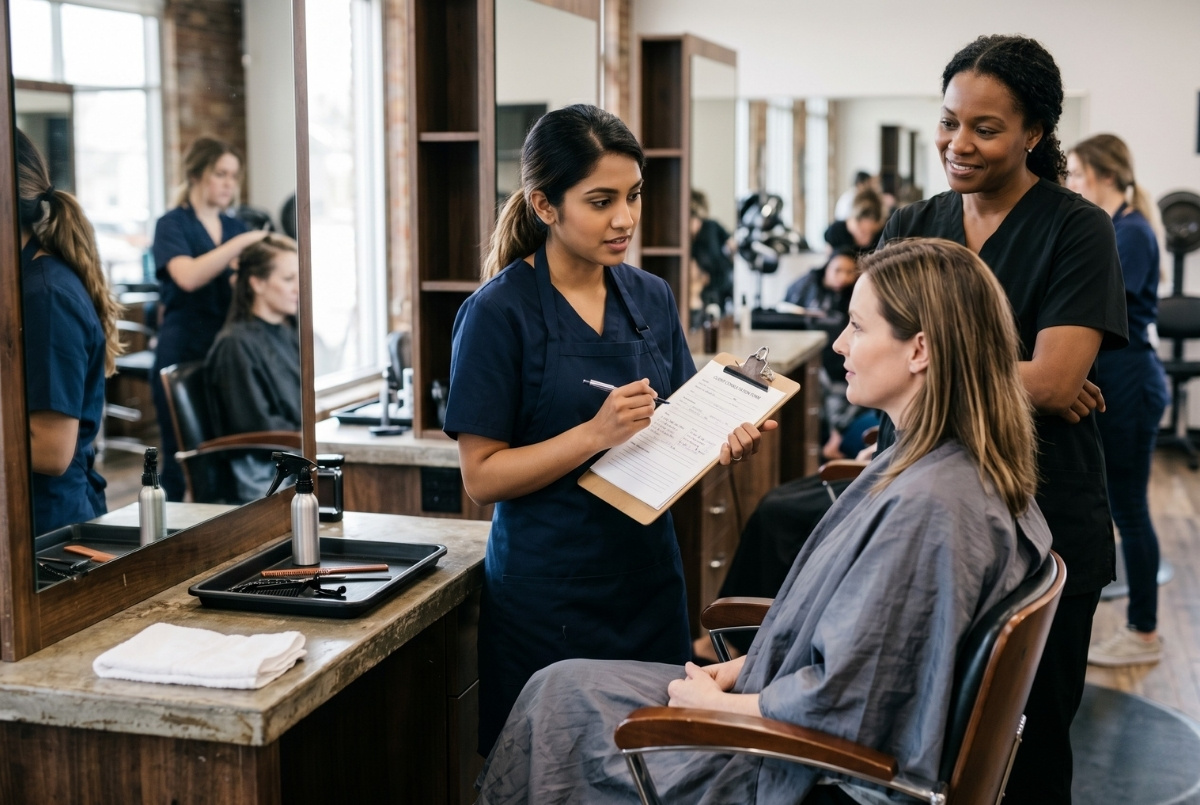

 If you work as a licensed beauty professional, you know how demanding the salon floor can be on your body. Spending long hours on your feet, dealing with repetitive motion strain, and breathing in chemical fumes can drain the energy out of even the most dedicated stylists. Government safety agencies often point out these physical risks. For instance, the NIOSH warns that nail specialists can face chemical exposure, repetitive motions, awkward positions, and strain on muscles, joints, and ligaments. At the same time, OSHA warns that some hair-smoothing products may contain or release formaldehyde during salon use.
Aside from physical exhaustion, there is also the anxiety of a fluctuating income. When you rely completely on commission splits or booth rentals, a slow season or unexpected client cancellations can deeply impact your paycheck. The constant pressure to market yourself and build a clientele base from scratch never really stops.
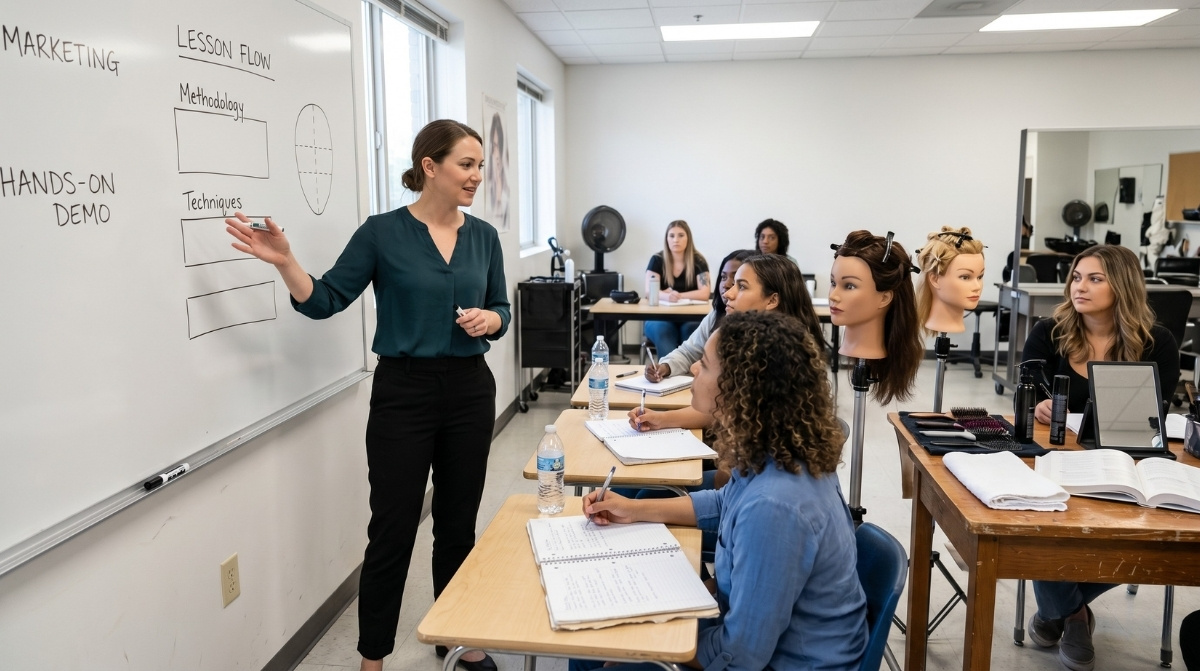
Moving from the styling chair into a teaching position allows you to use your hard-earned experience in a setting that offers more reliable earnings, a clearer professional structure, and genuine authority. Shifting into a classroom is one of the smartest ways to protect your long-term career longevity. If you want to see what a regular day looks like in this position, you can check out our overview explaining the meaning, duties, and career paths of a beauty instructor to map out your upcoming journey.
Taking this path lets you give your body a break while building a more stable professional foundation. Let’s look closely at the real income statistics, hiring trends, and payment models currently shaping the training sector.
Key Takeaways
- Financial Stability: Moving into education can trade volatile commission structures for regular hourly pay or fixed salaries, especially in full-time school roles.
- Competitive Compensation: Federal labor data from the U.S. Bureau of Labor Statistics shows that career and technical education teachers earned a median annual wage of $62,910 in May 2024, with postsecondary teachers at $61,490 and secondary teachers at $63,910.
- Specialized Market Drivers: The growth of advanced aesthetic services and state-by-state scope-of-practice rules can increase the value of instructors who understand safety, compliance, and service boundaries.
- Reduced Physical Toll: Digital platforms, online theory portals, and administrative software can help reduce paperwork and support hybrid theory instruction, although hands-on clinic supervision usually remains in person.
How Much Do Beauty School Instructors Make?

When you look into what a training specialist earns, the data highlights a level of baseline financial safety that regular salons do not always guarantee. A standard beauty school payroll can provide a more stable instructor wage that is not directly tied to how many people walk through the door or book an appointment that day.
Your exact paycheck will depend on the type of facility, your local area, your specific background, and whether you teach full-time, part-time, or as a temporary adjunct teacher. A private beauty academy, a local community college, a regional trade school, or a corporate product brand will all manage their budgets differently. Even so, trading client-by-client pay for a set teaching schedule can bring a much smoother financial rhythm to your life.
Calculating an annual beauty school instructor salary means looking at the bigger picture beyond a basic hourly rate. Unlike independent salon workers, many school educators are hired as employees. Full-time positions may include paid time off, health coverage, retirement contributions, or other benefits, though these depend on the employer and employment status.
Understanding Your Total Compensation Package
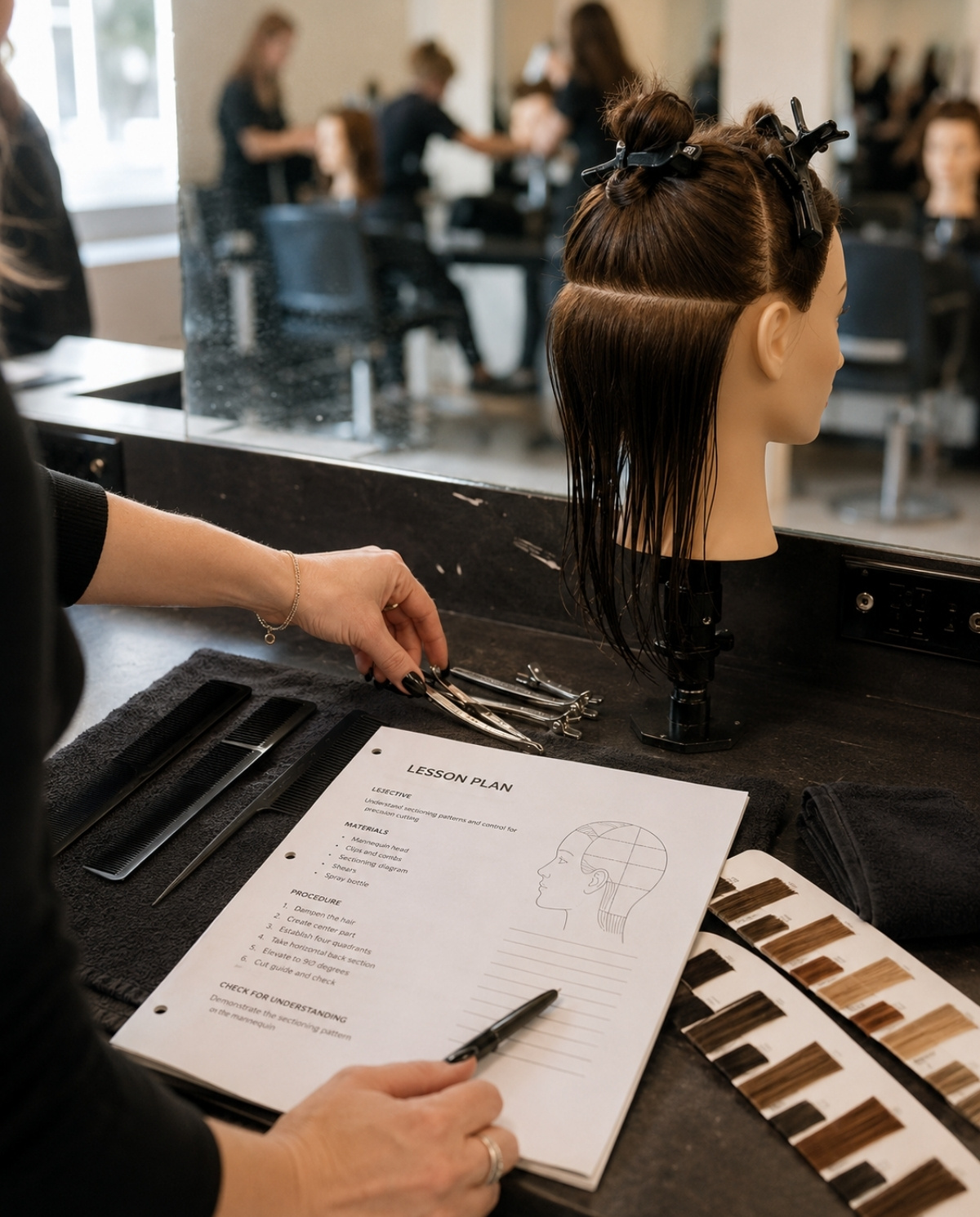
In a traditional salon, an empty chair often means you are not earning anything. In an academy environment, instructors are usually paid for scheduled teaching, student clinic supervision, lesson planning, grading, and administrative work. This regular structure can reduce the daily stress of unpaid gaps between clients. Completing your beauty instructor training through an approved academy prepares you with the classroom management, curriculum mapping, and mentorship skills that top campuses value.
According to the U.S. Bureau of Labor Statistics Occupational Outlook Handbook, beauty educators are commonly discussed under the general classification of career and technical education teachers. In May 2024, the median annual wage for these vocational educators was $62,910. Instructors working in postsecondary settings saw a median income of $61,490, while those teaching secondary students earned a median of $63,910. The top 10% of high earners in this vocational field brought home more than $101,510 per year.
You should view these broad numbers as a helpful baseline. Federal reports do not separate every single niche beauty title into its own distinct slot, and BLS projects overall employment of career and technical education teachers to decline 1% from 2024 to 2034. This does not mean beauty schools stop hiring; BLS still expects about 15,900 openings each year across the broader CTE teacher category, mostly from workers transferring occupations or leaving the labor force. Strong opportunities may also appear as veteran teachers retire, private academies expand, and schools look for specialists who possess strong compliance and technical backgrounds.
To maximize your starting pay grade within these structures, you must first navigate the certification process required by your state or local board. To help you map out this transition step-by-step, we have put together a comprehensive guide detailing how to become a beauty instructor, which covers the essential training milestones and foundational prerequisites.
Breaking Down Cosmetology Instructor Income and Pay Structures
Your starting cosmetology instructor salary can change quite a bit based on your local area, the size of the school, and state licensing laws. However, national occupational benchmarks show that vocational education can offer a dependable income path if you want to leave tips, slow seasons, and marketing pressure behind.
If you are researching the average salary for cosmetology instructor roles nearby, or wondering how much do cosmetology instructors make per hour, you have to look at the institutional style. Multi-campus private academies may have structured pay scales, annual reviews, and clear paths for internal promotions. Smaller family-owned schools might offer simpler cosmetology instructor pay, while public technical colleges generally tie your cosmetology instructor income to educational step systems.
The underlying numbers show that the type of industry affects your wallet too. In May 2024, career and technical education teachers working in private technical and trade schools had a median annual wage of $58,860, while those in state, local, and private junior colleges, colleges, universities, and professional schools had a median annual wage of $63,920. These stats are useful for setting realistic goals, but your actual job offer will reflect your personal license history, teaching background, technical specialty, and whether the role includes benefits.
Esthetics and Nail Educator Salaries
The rapid growth of targeted niches across the beauty industry has created specialized training tracks that can shape compensation differently from general hair programs. Finding your perfect fit depends on where you want to focus. General cosmetology classes offer a wide variety of open job listings, while specialized skin and nail programs can create strong opportunities for focused experts.
Advanced Skin Care Instruction
The massive public interest in non-invasive skincare and advanced treatments has made deep skin science knowledge highly valuable to modern academies. While it does not mean every single skin care teacher automatically out-earns a hair instructor, having deep experience in advanced treatments can strengthen your resume when a campus needs someone to teach device safety, sanitation rules, contraindications, and treatment boundaries.
When you look at the typical esthetician instructor salary or general esthetics instructor salary, the strongest compensation packages often go to professionals who can connect practical skin care techniques with strict safety compliance. Teachers in this lane guide students through microdermabrasion methods, detailed skin analysis, product chemistry, sanitation, contraindications, and protecting the skin’s delicate lipid barrier, which is the vital moisture layer that keeps irritants out.
This specific demand matches global business trends. Financial studies from Fortune Business Insights show that the global medical aesthetics market was valued at $28.49 billion in 2025 and is projected to climb from $31.96 billion in 2026 to $89.59 billion by 2034. Because services such as lasers, injectables, deeper chemical peels, and other medical-aesthetic treatments are regulated differently by state, schools may place more value on educators who understand safety boundaries, documentation, and when medical supervision may be required. The American Med Spa Association emphasizes that state regulations help determine who can operate a laser, who can inject fillers, and who can own or operate a med spa, making safety-first instruction especially important.
Precision Nail Care Education
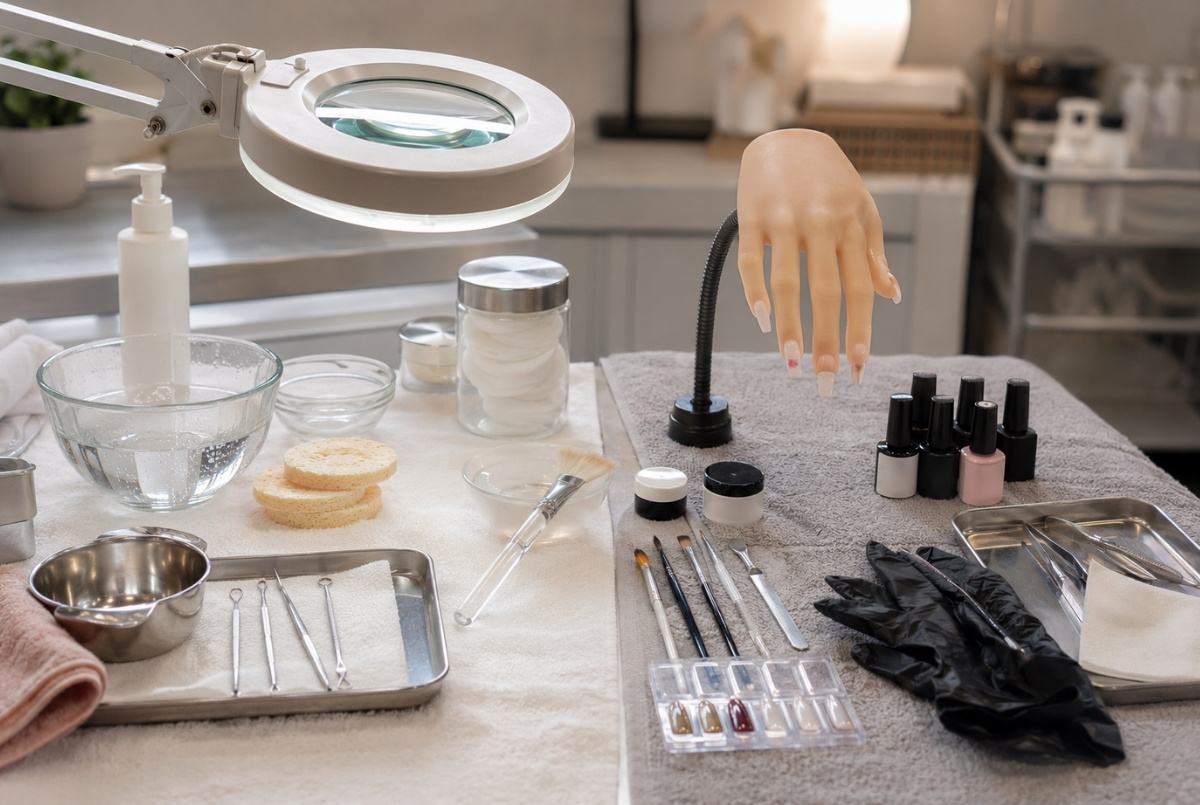
Focusing on hand and foot care offers a strong option for nail artists who want to avoid the physical toll of back-to-back appointments. Whether you review a specialized nail instructor salary, an accurate nail tech instructor salary, or a general nail teacher salary, leading a classroom offers a completely different physical pace than sitting hunched over a manicure desk for long shifts.
Corporate or regional nail educator jobs with product manufacturers may bring unique payment structures compared to standard school settings, sometimes including travel, product training, bonuses, commissions, or brand education responsibilities. Instructors in this field spend their time breaking down anatomy, product chemistry, infection control, technique refinement, and vital safety habits like proper salon ventilation and chemical handling. NIOSH notes that nail technicians can be exposed to dozens of chemicals at work, and that repetitive motions and awkward positions can strain the body, which is why safety-focused instruction is so valuable to modern schools.
Because these hands-on skills are incredibly precise, joining a high-quality preparation program is essential. You can look through our breakdown of beauty instructor training to see exactly how future educators learn to manage student dynamics and build lesson plans before teaching a live class.
Navigating the Job Market: Positions, Hiring, and Remote Roles
When searching through local cosmetology instructor jobs, you will see openings across private academies, corporate school networks, vocational high schools, continuing education providers, and brand education teams. Securing steady cosmetology instructor employment starts with matching your active license and salon background to what the school needs. A new cosmetology instructor vacancy can appear because of program growth, staff turnover, retirement, schedule changes, or the need for a professional who specializes in modern hair textures and trends.
The employment market is just as diverse across other beauty specialties:
- Openings for esthetics instructor jobs favor skin specialists who excel at teaching sanitation, electrical modalities, client safety, and facial analysis within local legal limits.
- Regional esthetician instructor jobs often focus on managing the spa floor, guiding client consultations, maintaining records, and supporting compliance awareness.
- Available nail instructor jobs range from traditional campus schedules to weekend workshops and specialized nail educator jobs for product manufacturers or distributors.
- Traditional hair instructor jobs are shifting as modern schools place stronger emphasis on textured hair, inclusive consultation, and updated technical training. Major learning tools, like the Milady Standard Cosmetology framework, now focus heavily on diverse hair types while providing targeted test-prep systems aligned with national licensing exams.
Can You Teach Beauty Culture From Home?
Finding true online cosmetology instructor jobs where you stay entirely at home is still limited. This is because checking hand positions, watching live sanitation habits, supervising the clinic floor, and assessing physical skill milestones usually requires an in-person eye. However, hybrid learning models are becoming more realistic for the book-heavy parts of the curriculum.
You may be able to lead digital lectures covering anatomy, salon chemistry, infection control, business marketing, state board test prep, and professional development. These hybrid or remote responsibilities may also involve checking online assignments, reviewing student portfolios, updating digital lesson modules, and tracking class attendance from a home office.
According to the AACS / Pivot Point Technology and Beauty Schools white paper, beauty campuses are exploring digital tools such as AI-supported tutoring, automated administrative systems, digital learning platforms, and compliance-focused technology. These tools can reduce administrative workload and help instructors spend more time on mentorship and coaching. Still, they are meant to support your teaching, not replace the real-world coaching and clinic floor supervision that students need.
Even with these digital upgrades, keeping your credentials current is a strict legal requirement. To keep your career moving forward, take a look at our complete beauty instructor license and state board guide for clear directions on tracking local rules and staying on top of your deadlines.
Summary: Designing Your Career Move
Stepping into education does not mean walking away from your passion—it means growing it. It is a smart, intentional move to leave salon burnout behind for a more reliable professional track. By entering the classroom, you protect your physical health, gain predictable earnings, and help shape the next wave of industry talent.
Your long-term success depends on where you build your teaching foundation. Finding a campus that emphasizes modern teaching setups, regulatory compliance, and excellent instructor programs ensures your transition is smooth, rewarding, and built to last.
Ready to Step Into Your Legacy?
Making the move from a hectic salon environment to a stable, respected teaching role requires the right educational partner. At Perimeter Beauty and Barber Institute, we focus on helping beauty professionals protect their physical longevity, enjoy real income structure, and become respected industry mentors. We believe in building true leaders who are ready to guide the future of beauty culture.
Our approach is built around setting you up for real classroom success. We combine practical beauty expertise with modern school workflows, helping you gain the curriculum design and student leadership traits that strong academies look for. Whether you want to focus on esthetician training, precision nail techniques, general cosmetology pathways, or barbering education, our team provides the tools, community, and support to elevate your career.
You have spent years perfecting your skills behind the chair—now you can share that incredible knowledge without wearing down your body. We would love to show you what our experienced educational community can do for your future.
Take the first step toward a rewarding, sustainable career in beauty education. Find out more about how to get started on our Enrollment page, and feel free to fill out the quick contact form we leave right below this article to chat directly with our friendly admissions team.
Frequently Asked Questions
Do I need to give up my salon clients if I take an instructor job?
Not at all. A lot of educators build a hybrid schedule by teaching at an academy during the week while keeping their favorite clients on weekends or evenings. This balance can give you the stability of scheduled teaching income while preserving your creative outlet and supplementary salon work. The right setup depends on your school schedule, employer policies, state rules, and personal workload.
What is the difference between a school instructor and a brand educator?
School instructors teach a set curriculum designed to prepare students for official licensing exams and state board requirements. Brand educators work directly for product manufacturers, distributors, or beauty corporations, traveling to different salons, schools, or trade events to teach licensed pros how to use specific lines, tools, techniques, and advanced styling trends.
How long does it take to get certified to teach beauty courses?
The timeframe depends completely on your local state board. Some areas let you qualify for teacher credentials based partly on your active years of salon work, while other states require you to finish a specific instructor program focused on lesson planning, educational psychology, test design, student supervision, and classroom management. Always check your local state board rules before signing up for classes.