How to Apply for an Esthetician License: Passing Your State Boards and Transferring States

Starting a career in skincare is an exciting journey. I know firsthand that finding clear information about local regulations can be quite overwhelming. Every area has its own set of rules regarding how much training you need, the specific tests you must pass, and what tasks you are legally allowed to perform. I want to help you understand the entire process so you can focus on building your skills instead of stressing over paperwork. Here is my complete breakdown to help you navigate schooling, prepare for the state board exams, and earn the right to practice professionally.

Key Takeaways

A close-up photograph of an esthetician training desk featuring an open workbook, a practice mannequin head, and labeled skin care tools in a bright, modern beauty school classroom.

What Does It Take to Become a Licensed Professional?

Required Training Hours and Local Differences

I always tell my readers that you cannot legally perform professional skin care without official schooling. When you compare the esthetician requirements by state, the training time is the biggest variable. The required hours reflect how each local board views training standards and the scope of practice. Some areas require fewer hours for basic services, while others demand long programs.

Here is a quick look at current esthetician hours by state:

Online Schooling and the Cost of Education

Many students balancing a job ask me if they can get an esthetician license online. A fully remote path simply does not exist. According to some distance learning standards, a few programs might offer theory classes digitally. Hands-on practical training is still mandatory to graduate and qualify for your exams.

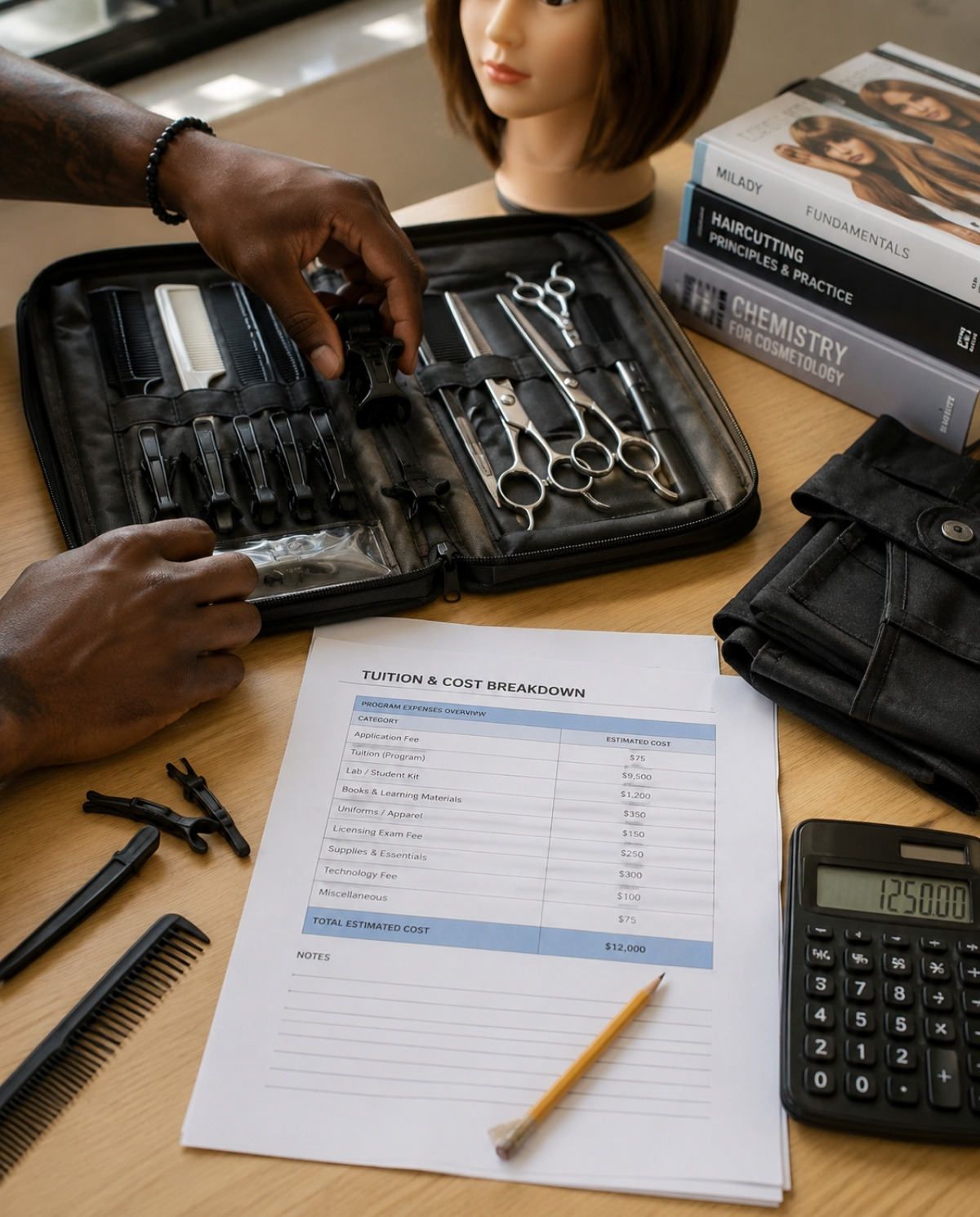
As for the financial side, people often wonder how much it costs to get an esthetician license. Tuition generally falls between $4,000 and $12,000. I suggest looking at our comprehensive guide on how to become an esthetician and handle the costs to understand this better. I view tuition as the core foundation of my career because your investment dictates your clinical experience before graduation.

Preparing for the State Board Exams

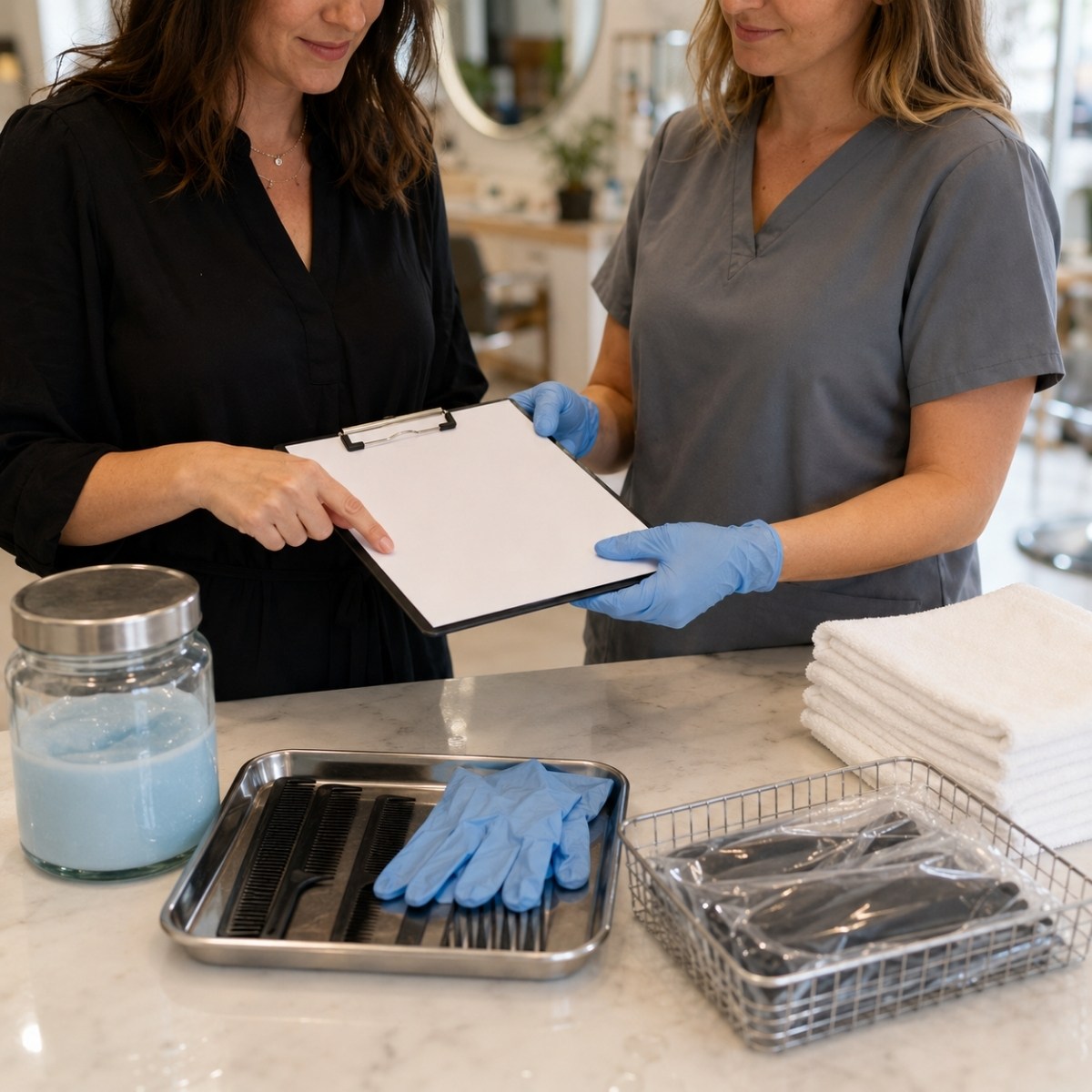
A detailed interior photograph of a clean, well-organized skincare treatment room featuring a stainless steel medical rolling cart in the foreground. The cart's tray holds hand sanitizer, blue nitrile gloves, cotton rounds, mixing bowls, and various facial extraction tools (tweezers, extractors) on a sterile wipe. In the background is a white treatment bed with a folded towel, a sink area with cabinets, a wicker basket, and a potted plant, all illuminated by soft natural light.

Surviving the Written Theory Exam

Your esthetician written exam will test you heavily on infection control, science, and sanitation. You will tackle subjects like microbiology, product chemistry, and state laws. If you are wondering how many questions are on the esthetician state board exam, the NIC theory format currently features 110 items, with 100 counting toward your score. Using a solid esthetician written exam practice test is the smartest way to prepare for these specific questions.

The Hands-On Practical Exam

The practical exam for esthetics causes the most anxiety for students. Examiners are not judging how relaxing your service is. They score you on strict sanitation, organization, and how you handle contamination risks. Reading up on what esthetician school is like day-to-day helps you understand the muscle memory needed to pass this section.

Also, keep in mind the upcoming NIC exam updates. Blood exposure procedures will be revised starting in March 2026. Infection control is going to remain the central focus of your practical exam.

Handling Applications and Background Checks

How to Apply After Passing Your Exams

Getting a passing score for the esthetics exam does not automatically give you your credentials. You still need to submit your application and fees. For instance, New York requires you to apply through its online licensing system, while Florida handles registrations through the DBPR portal.

Navigating Criminal History Evaluation

I also hear from readers worried about their past, asking if you can get an esthetician license with a felony. Many boards review criminal records on an individual basis. Texas looks at convictions individually and even offers a criminal history evaluation process so you know where you stand before applying. Honesty is always the best policy when dealing with your local board.

Moving States and Building Your Career

Transferring Your License to Another State

If you plan to relocate, you have to understand how to transfer an esthetician license from state to state. Most areas offer licensure by endorsement, which means they review your existing training and work history. New York allows endorsement for out-of-state professionals. Similarly, Virginia and its licensing requirement summary show pathways for endorsement based on your experience.

I see a lot of misinformation about the Cosmetology Licensure Compact. It has reached the legislative threshold, but it is not active yet. It is also built for cosmetologists, so estheticians cannot use it as a shortcut right now.

Renewing Credentials and Going Solo

Keeping your status active requires paying attention to renewal cycles. Florida mandates renewal every other year. If you get married, states have specific update protocols, like California’s formal name change process.

Earning this legal status gives you the freedom to shape your career. The Bureau of Labor Statistics highlights that many skincare specialists go on to become self-employed.

A cozy independent skincare studio with a white treatment bed, a black rolling tool cart, and a wooden desk with client paperwork in a room with warm neutral decor and natural window light.

Ready to Master Your Craft?

You now know how to navigate the local regulations and testing processes. The next important decision is finding a reliable educational partner.

At Perimeter Beauty & Barber Institute, we focus heavily on preparing you for a thriving, independent career. I highly encourage you to find out more details about our admissions process over at Enrollment. We want to ensure you have all the information you need to make the best choice for your future.

Please fill out the contact form below to connect with us. We are happy to discuss your goals, explain the required hours, and help you get started on this amazing career path.

Frequently Asked Questions

Do you need a license to be an esthetician?
In the United States, you generally need the appropriate state credential to legally perform professional skincare services. The exact credential title varies by location. For example, Florida uses a Facial Specialist registration rather than a standard esthetician title.

How many questions are on the esthetician state board exam?
If your state uses the NIC theory format, the current exam contains 110 items, with 100 scored. State-specific testing formats can vary, so I always recommend confirming your current candidate bulletin.

How do I look up where to get my esthetician license testing done?
Your state board or testing vendor will provide the scheduling path. New York handles application and exam scheduling through its online licensing system, while Georgia directs examination candidates to PSI.

How do I find specific esthetician license requirements by state?
Go straight to the official regulator. Earning an esthetics license in NY means checking the New York Department of State, while transferring credentials into Virginia means reviewing the Virginia Board for Barbers and Cosmetology.

What Is Esthetician School Like? A Full Guide to Classes, Hours, and Preparation

Many people spend years as dedicated skincare consumers, decoding ingredient labels and building their own multi-step routines. However, the shift from your own bathroom mirror to a professional treatment room represents a major career milestone. This change turns a personal interest into a licensed profession, and many prospective students feel both excitement and a little academic self-doubt as they wonder whether they can master the clinical theory, strict sanitation rules, and hands-on skills required to succeed.

This guide moves past the usual surface-level talk to show you the structured, skills-driven reality of what you will experience during your training.

Key Takeaways

  • Industry Growth: Employment for skincare specialists is projected to grow 7% from 2024 to 2034, which is faster than the average for all occupations.
  • Science-Driven Training: Modern programs focus heavily on skin barrier function, ingredient literacy, sanitation, and client safety alongside traditional facial techniques.
  • Compliance Matters: The Modernization of Cosmetics Regulation Act (MoCRA) has increased the importance of cosmetic safety and labeling awareness for everyone in the beauty industry.
  • Flexible Pathways: Training requirements vary significantly by state, ranging from a 220-hour facial specialty in Florida to 1,000 hours for esthetician training in Georgia.
  • Earning Potential: Income depends on location and specialty; the BLS reports a median wage of $19.98 per hour for skincare specialists, though advanced or highly specialized roles may earn more.

What Is Esthetician School Like?

A woman in green medical scrubs and blue gloves seated at a desk, looking down at handwritten notes in a notebook next to a tray of professional extraction tools, with a white treatment chair and product shelves in the background.

Modern esthetics training typically feels less like a traditional lecture-based classroom and more like a professional clinic. A strong esthetician program blends theory with repetition. Students study skin structure, infection control, and product chemistry before applying that knowledge in supervised practice. Most days are built around a split between classroom instruction and hands-on clinic work.

During esthetician training, students learn how to perform professional consultations, identify visible skin concerns within their scope, and maintain high sanitation standards. Most programs cover the fundamentals, including facials, hair removal, and lash services. Just as important, students learn the pace and discipline of a professional environment, from tool disinfection to treatment documentation. If a school offers services to the public, students may also gain experience working with real clients to build confidence.

Expert Insight: Demand for Faster, Lower-Cost Services

According to the U.S. Bureau of Labor Statistics, employment for skincare specialists is projected to grow 7% from 2024 to 2034. The BLS also notes that demand is supported by services like mini-sessions and mobile facials, which appeal to clients looking for convenience and more affordable price points.

The Science of the Barrier: What You Actually Learn

Many new students worry most about the hard science side of esthetics. In reality, that scientific foundation is exactly what gives the profession its credibility. A quality program teaches not only how to perform services but why certain products, ingredients, and treatment steps matter for skin health and safety.

An open notebook showing a skin layer diagram sits on a desk alongside facial brushes, a glass bowl, blue gloves, and a white magnifying lamp.

Biology, Chemistry, and Safety

Students typically spend significant time learning about skin anatomy, barrier function, and pH. They also learn why recognizing contraindications and visible conditions matters for client safety, including when a client should be referred to a medical professional.

Advanced Skill Development

Hands-on esthetician training usually covers cleansing methods, massage movements, extractions, hair removal, and makeup fundamentals. Students learn treatment techniques that protect skin integrity and avoid unnecessary trauma. Even if they plan to focus solely on skin care, a thorough understanding of makeup and product interactions can still be useful in treatment settings.

The Logistical Roadmap: Hours, Costs, and States

The biggest logistical reality is that training requirements vary by state, which shapes how long it takes to complete esthetician school.

  • Georgia: 1,000 esthetician hours for Georgia licensure.
  • Texas: 750 esthetician hours for Texas.
  • California: Esthetics remains a separate licensed category, while California schools commonly operate under the state’s post-SB 803 framework for revised beauty-program hour structures.
  • Arizona: 600 esthetician hours for Arizona.
  • Florida: 220 hours for a facial specialty or 400 hours for a full specialty.

If speed is your priority, the quickest way to become an esthetician depends on your state and your schedule. Some full-time programs can be finished in a matter of months, while others take closer to a year. You can often find an esthetician school with weekend or night classes to make the schedule more manageable. While some theory may be offered in hybrid form, state-approved practical training must still be completed in person.

Expert Insight: Compliance and Safety in 2026

The FDA’s Modernization of Cosmetics Regulation Act (MoCRA) has increased the focus on cosmetic safety and recordkeeping in the beauty industry. As a professional, estheticians focus on safe work practices and documenting incidents appropriately. Following state board rules ensures professional responsibility without necessarily requiring direct federal FDA reporting for every product used in a treatment room.

Financial Strategy: Funding Your Education

Tuition varies significantly by school and location. Many programs fall into the several-thousand-dollar range, and students should always ask if their esthetician kit for school and textbooks are included in the headline price.

For students watching their budget, it is smart to verify financial aid options directly with the school. Not every institution qualifies for federal aid, so students should confirm that with the school’s financial aid office before assuming eligibility.

Professional Prep: Your First Day and Beyond

Before your first day, confirm the specific requirements to get into esthetician school in your state. In many places, students can attend esthetician school with a GED or a high school diploma, though minimum age requirements vary.

Once enrolled, students will likely receive a professional kit containing supplies and practical tools used during training. Early practice usually begins on mannequins or classmates before students advance into supervised clinic work. This transition is where confidence really starts to build as theory connects with touch.

The State Board: Your Final Hurdle

A student in green scrubs prepares a tray of tools next to a treatment chair while an instructor watches with a clipboard.

The last step to the career is the licensure process. This usually involves a written exam, a practical exam, or both. Reviewing sanitation rules, service procedures, and state laws helps students prepare for the exam process and the legal requirements of practice.

Income after licensure can vary quite a bit. According to the U.S. Bureau of Labor Statistics, skincare specialists had a median wage of $19.98 per hour in May 2024. Beauty Insurance Plus also points out that specialized or luxury roles can reach much higher earnings through commissions, retail sales, and business ownership.

Ready to Master Your Craft?

Choosing a beauty school involves more than just meeting a state hour requirement. You are selecting an environment where you will build the technique and professional confidence needed for a long-term career. At Perimeter Beauty & Barber Institute, we focus on a “Salon Ready” approach designed to prepare students for the daily rhythm of real-world beauty industry work.

Whether your goal is to work in a spa or eventually build your own business, having the right training environment matters. Perimeter brings more than 20 years of experience and a combined instructor experience of more than 80 years to its training programs.

Proper education is the difference between simply learning procedures and building a lasting career. If you are ready to take the first step, the next move is to find a program that fits your goals and state standards. You can find out more in Enrollment.

Please fill out the contact form at the bottom of this article to schedule a tour of our campus or to speak with an admissions coordinator about our upcoming start dates. Your path toward licensure can start here.

FAQ: Professional Path Clarity

Can I attend school while working a full-time job? Many programs offer evening, weekend, or part-time schedules to make training more manageable for working adults.

Is it difficult to get accepted into esthetician school? Admission is usually based on meeting age and education requirements rather than on a competitive GPA.

Can a registered nurse attend esthetician school? Yes. Nurses sometimes pursue esthetics training to expand into skincare-focused or medically adjacent beauty settings, though the exact services they can perform depend on state law.

What distinguishes a basic esthetician from a master esthetician? This depends on the state. Some states use advanced designations with additional training, while others do not use that license category at all.

Is a license required to perform services from a home-based studio? In most states, yes. Paid skincare services generally require proper licensure, and home-based operations must also meet local zoning and sanitation requirements.

How to Become an Esthetician: A Full Guide to School, License, and Cost

Choosing a career in skin health is a significant commitment. I believe that finding a path that matches your interest in skincare with a sustainable job market is essential. Moving from being someone who loves beauty products to becoming a professional skin expert requires a firm grasp of biology and chemistry.

The industry is growing, and there are many opportunities for those who know what they are doing. This guide walks you through the education for an esthetician, the standard requirements for an esthetician license, and the typical esthetician school cost.

Key Takeaways

  • Career Speed: You can often complete your training in 4 to 12 months, making it much faster than a standard four-year degree.
  • Market Growth: The Bureau of Labor Statistics expects the field to grow by 7% through 2034.
  • Earnings: The average yearly pay is roughly $45,374, though specialized Master Estheticians can earn more than $66,900.
  • Modern Rules: By 2026, the Modernization of Cosmetics Regulation Act (MoCRA) has raised expectations for safety and accountability across the beauty industry.

The Role of a Modern Esthetician

In 2026, the beauty world is moving toward “Metabolic Beauty,” a concept highlighted by Mintel analysts. This approach focuses on how internal wellness impacts the skin. As a licensed professional, your work revolves around protecting the lipid barrier, which is the skin’s natural defense against moisture loss and bacteria.

Your training involves using professional-grade peels and high-tech equipment to help with skin repair. Understanding these chemical processes is what makes you a professional. Clients are looking for “Bio-intelligent actives,” which are ingredients that adapt to the skin’s needs. Learning about skin biotechnology will give you a significant advantage in the job market.

An esthetician student in sage green scrubs performs a facial treatment on a client lying on a white treatment table in a bright clinic setting.

The Academic Path to Success

You need to meet a few basic criteria before you can start. Most states require you to be at least 16 or 17 years old. A high school diploma is also standard. Many people ask, “can you be an esthetician with a ged?” and the answer is yes, as state boards almost always accept it.

The steps for how to become an esthetician after high school are quite clear:

  1. Look for reputable schools with esthetician programs.
  2. Finish your required training for an esthetician.
  3. Successfully pass the state licensing exams.
  4. Submit your application for a license.

Learning In-Person vs. Online

When you look for the quickest way to become an esthetician, you might find options for an online esthetician course. I want to be realistic about this. While you can study things like anatomy or product chemistry through online classes for an esthetician, you cannot learn how to perform a safe chemical peel through a computer screen.

Most states require you to complete several hundred hours of hands-on work in a student clinic. If a program says you can finish esthetician school online without any in-person training, they are likely not accredited. Choosing a non-accredited school will stop you from getting a license for an esthetician, which makes the faster route a waste of time.

How Long Does Esthetician School Take?

If you want to know how many years of school for an esthetician are necessary, the time is usually measured in months. While the Bureau of Labor Statistics explains that you must finish a state-approved program, each state board sets its own hour requirements.

Most states require between 600 and 1,000 hours of training. This is how that usually breaks down:

  • Full-time: Many students finish in 4 to 6 months.
  • Part-time: These schedules often take 9 to 12 months.
  • State Differences: Florida requires about 260 hours for a facial specialty, while Georgia and Alabama require 1,000 hours for a full license.

This timeline allows you to start your career quickly. You spend less time in a classroom and more time in a clinic, which builds the confidence you need to be ready for a salon job after graduation.

An instructor shows skincare techniques on a mannequin head while adult students take notes in a classroom.

Investing in Your Future: Costs and Aid

The esthetician school cost is an investment in your career. Tuition can range from $3,000 at a community college with an esthetician program to over $15,000 at private beauty institutes. Some schools provide financial aid that can cover your fees.

Managing the cost is possible through several options:

  • FAFSA for esthetician school: You can apply for federal aid if your school is part of the Title IV program.
  • Grants: Certain schools offer grants for esthetician school that you do not have to pay back.
  • Military Benefits: The VA pays for esthetician school at many qualifying locations for veterans or their families.

When you calculate the cost to become an esthetician, remember to include the “kit fees.” These kits contain the professional tools and products you will use during your training and your first job.

Securing Your Esthetician License

Finishing your esthetician program is the first major step. After that, you must gain official recognition from the state board. Most states require a written test, and many still require a practical exam.

The two-part system generally looks like this:

  • Theory Exam: This written test covers skin biology, safety protocols, and state laws.
  • Practical Exam: This is a hands-on demonstration where you show your skills on a model or mannequin to prove your techniques are safe.

States like California have simplified their process recently, but Georgia still uses rigorous testing to ensure every licensed esthetician is ready for the field. The cost to get an esthetician license usually ranges from $100 to $250 for application and testing fees.

Opportunities After Graduation

The question of what you can do with an esthetician license has many exciting answers. You could work in:

  • Medical Spas: Collaborating with doctors on advanced skin treatments.
  • Resorts: Working in luxury settings around the world.
  • Self-Employment: Building your own business and specializing in niche services.

Data from ZipRecruiter in early 2026 shows that the average salary for an esthetician is around $45,374. Specializing in advanced treatments can increase your income. For example, a Master Esthetician often earns over $66,900 annually. Your esthetician yearly salary will likely grow as you gain experience and build a client list.

A smiling esthetician in a gray uniform stands with a clipboard beside a prepared facial bed and treatment lamp in a sunlit room.

Starting Your Professional Journey

Choosing the right place to learn is vital for your success. At Perimeter Beauty and Barber Institute, I believe in providing a path that leads to a real professional legacy. Our school has been in business for over 20 years, and our team has a combined 80 years of experience helping students enter the Georgia beauty industry.

We focus on creating graduates who are “Salon Ready” from the moment they finish. This means you build practical skills in skin treatments, product knowledge, client care, and professional techniques that prepare you for the workplace. Students also train with professional product lines like CHI as part of their education. Our goal is to make sure you feel completely prepared when you start your first job.

Our history is built on the success of students who turned their interests into a career. Your future in skin health is waiting, and we are here to help you through every step. You can find out more about how to get started in Enrollment. We also have a contact form at the end of this article if you have more questions about our community.

FAQ: Common Questions

Is it hard to get a job as an esthetician?
The demand for skin health experts remains high. Employers look for graduates who understand safety rules and have strong hands-on skills. Choosing a reputable school makes your job search much easier.

Can you be an esthetician without going to school?
No. Every state requires you to complete a specific number of educational hours at an approved school before you can take the licensing exam.

Do you need a degree to be an esthetician?
You do not need a four-year college degree. You need a high school diploma or a GED and the completion of a state-approved esthetician course.

Barbering and Cosmetology: Decoding the License, Training, and Career Differences

If you are standing at a career crossroads that feels more like a legal maze, I totally get it. It’s a common source of stress: that nagging fear that choosing one path – either barbering or cosmetology – will lock you into a single lane forever. You aren’t just picking a school; you are deciding on your daily lifestyle and the legal limits of what you can actually do for your clients.

In 2026, those old-school walls between a traditional barbershop and a high-end salon are basically disappearing. Modern clients don’t choose a pro based on the sign hanging over the door; they choose based on expertise. Whether you want to master the science of hair chemistry or the sharp precision of a straight-razor shave, your first move is understanding which license gives you the most power for your five-year career plan.

Quick Takeaways for Future Pros

  • The Hybrid Edge: In 2026, the highest earners are “Hybrid Specialists” who know how to mix clinical skin health with precision barbering.
  • Freedom to Move: The new Cosmetology Compact now lets professionals in participating states work across state lines without having to retake their exams.
  • The Grooming Boom: Enrollment for male-focused grooming has jumped by 21%, turning traditional “barbering” into a high-end wellness service.
  • The Crossover Shortcut: If you already have one license, you can usually pick up the second one in just 200–400 hours through a bridge program.

The Legal Side of Things (Making the Safe Choice)

I often get asked: does barbering fall under cosmetology in a legal sense? While they are close relatives, they are actually handled by different regulations. In the U.S., your state board is the one that tells you exactly which tools you are allowed to touch. Because this license covers everything from hair and skin to nails, the range of careers you can pursue with a cosmetology license is surprisingly broad. You could end up in a luxury spa, on a film set, or even in a medical aesthetics office.

Planning for the long term also means having a strategy for barbering and cosmetology license renewal. In 2026, keeping your license “legal” is about more than just a fee; it involves staying up to date with specialized education. If you decide to go for a dual license, you’ll have a bit more paperwork, but you also triple your value. You become the pro who never has to say “no” to a client.

💡 Expert Insight: The 2026 Multi-State Compact

The days of being “stuck” in one state are over. According to the Alabama Board of Cosmetology & Multi-State Regulatory Update, the Cosmetology Compact is officially live. This deal allows pros in states like AZ, CO, TN, and KY to keep a multistate license. This gives you the freedom to move your career across the country without the nightmare of bureaucratic re-testing. Your education is now a mobile asset.

Training and Skills (Choosing Your Expertise)

When you walk into a barbering and cosmetology school, you’ll notice the paths split pretty quickly. I like to think of a cosmetology program as a “total package” degree in aesthetics. You’ll dive deep into skin barriers and the complex chemistry behind pH-balanced hair color. You aren’t just styling; you’re managing the actual health of the hair and performing clinical-grade facials.

On the other hand, the barbering vs haircut distinction is really about the tools and the tradition. Barbering is the art of the blade. It’s all about the architecture of the face and specific hair growth patterns.

I’ve seen a massive shift in who is actually in the classroom lately. Data from Global Growth Insights shows a 21% surge in male-focused enrollments recently. This isn’t just about simple buzz cuts anymore; it’s about a new generation realizing that “Male Grooming” is now a high-ticket luxury category. If that artistic precision is what you’re after, I recommend checking out this roadmap to starting a career in barbering to see how those skills translate into a real job.

The Crossover Strategy (The Power Move)

The most successful pros I see in 2026 are “Hybrid Specialists.” While a cosmetology license gives you a lot of range, people still ask: can you be a barber with a cosmetology license? For cutting hair, the answer is usually yes, but for using a straight razor, it’s almost always “no.” This legal gap is exactly why so many people look into getting barber license after cosmetology.

If you already have one license, don’t stress about “starting over.” Barber license after cosmetology (or the other way around) is usually much faster through “Crossover” programs. These let you apply your existing hours toward a second credential, often only requiring an extra 200–400 hours. It’s the fastest way to make sure you can legally offer everything from a balayage to a hot-towel shave. Before you jump in, though, you’ll want to look at the actual barber school costs and hours to make sure the schedule works for you.

💡 Expert Insight: The Shift to Scalp Health

The 2026 market has moved from simple “beauty” to “wellness.” Reports from America’s Beauty Show highlight that things like biotech scalp treatments and peptide serums are the fastest-growing revenue streams right now. Clients are willing to pay a premium for scalp health. Mastering this “clinical” side is what separates a standard stylist from a high-earning specialist.

Barbershop vs. Salon (The Lifestyle Choice)

Deciding between a barbershop and salon difference is mostly about your personal “vibe.” Barbershops usually have a high-energy, social atmosphere with a lot of walk-in traffic. Salons are usually more about appointments and long transformations that might take several hours.

The numbers really support taking a specialized approach. The BLS 2025/2026 update shows that while barbers often have a slightly higher median wage, the real growth is in specialized skin care. By combining the precision of barbering and hairdressing, you put yourself in the highest earning category in the industry.

Ready to Build Your Own Legacy?

Choosing a career in the beauty world is about so much more than just learning to cut hair – it’s about finding your place in a thriving, multi-billion dollar economy. At Perimeter Beauty & Barber Institute, we don’t just train you to pass a state exam. We want to make sure you’re ready for the day you walk into an elite salon or a modern grooming lounge.

Our “Salon Ready” philosophy is built on over 20 years of experience in the Georgia beauty community. I believe in balancing technical precision with the business smarts you need to actually make money and grow. Whether you’re looking for high-ticket salon transformations or the precision-driven culture of modern barbering, we’re here to help you get there.

If you’re ready to see how this all works in person, you can find out more about our next steps and how to join us on our Enrollment page. I’d love to help you map out your journey – just fill out the contact form below this article, and let’s get started on building your legacy together.

FAQ: Professional Deep-Dive

Q: Can you do barbering with a cosmetology license?
A: You can definitely cut and style hair, but most states strictly reserve “open-blade” facial shaving for licensed barbers. Cosmetologists are usually limited to using safety razors or shears.

Q: Does barbering fall under hospitality?
A: Not exactly. While it is a service industry, it is legally categorized under “Personal Care” and is governed by professional licensing boards rather than hospitality regulations.

Q: How long is a crossover program for barbering of cosmetology?
A: If you already have one license, a bridge program usually takes about 8 to 12 weeks (200-400 hours), depending on what your specific state requires.

Q: Is this industry actually recession-proof?
A: While nothing is 100% certain, “Personal Care” is one of the most resilient industries out there. I’ve noticed that people almost always prioritize their grooming, even when they’re cutting back on other expenses.

Q: What is the main benefit of the 2026 Multistate Compact?
A: It saves you a ton of time and money. It removes the need to pay for multiple state licenses or retake exams if you move between participating “Compact” states.

How to Get a Barber License in 2026: A Real-Talk Guide to Requirements and Exams

I’ve met a lot of guys who can deliver a perfect skin fade with their eyes closed but feel completely stuck the moment they have to look at a state board website. Transitioning from a hobbyist or an underground barber into a licensed professional shouldn’t feel like you’re trading your creativity for a pile of government paperwork.

In the 2026 hair industry, your skill is what gets people in the chair, but your license is what keeps the doors open. Moving toward legitimacy is probably the most significant business move you can make for your future. If you are looking for the full breakdown on hours, applications, and the testing process, you should definitely check out How to Become a Barber: Your Complete Roadmap to Starting a Career in Barbering before you take your next step.

The Barrier to Entry Protects Your Business

Many people look at barber license requirements as a frustrating obstacle. I prefer to think of them as a moat that protects your career from low-quality competition. According to the 2026 updates from the IDFPR, the requirements for a barbering license now include specific training on different hair types and textures and a required abnormal skin growth education course.

When you meet the standards set by the board of barbering and cosmetology, you are doing more than just getting a permit. You are gaining a legal shield. In a world of social media influencers, your status with the barbering and cosmetology board tells your clients and your insurance provider that you are a high-level professional trained to spot medical risks before they become a serious problem.

Common Licensing Steps That Most People Miss

Every state has its own specific set of rules, but the path to getting a barbering license usually follows a very similar checklist:

  • The Basics: You’ll need to meet a minimum age, provide a valid ID, and sometimes submit a basic health form.
  • Training Hours: You have to complete a specific amount of time at a board-approved barber school.
  • Safety Courses: Many states now require specific sanitation or health-related coursework that is separate from your actual hair-cutting practice.
  • The Application: This includes your proof of hours, various forms, and the required fees.
  • The Exams: You will almost always have a written theory test, and some states still require a practical exam.
  • License Maintenance: Once you’re official, you’ll need to stay on top of your barbering and cosmetology license renewal to keep your shop legal.

For example, the Florida DBPR checklist focuses heavily on school hours and competency, while New York’s licensing page mentions a health certification completed by a physician. Even California has recently moved to a written-only format for licensure, which shows how much things can change depending on where you live.

Overcoming Nerve on Exam Day

The most common worry I hear about is the state board exam for barbering. It’s natural to feel like a written test can’t possibly measure how well you handle a pair of shears. However, the barbering exam in 2026 isn’t there to judge your artistic style; it’s there to make sure you are a safe professional.

If you are wondering how many questions are on the barber exam, the structure is usually pretty manageable. According to the latest Board of Barbering and Cosmetology applicant guidelines, most written theory exams in California consist of about 85 scored questions and maybe 10 unscored pre-test questions. You usually have about two hours to finish, which is plenty of time if you have prepared.

The barbering state board places a lot of weight on chemical safety and sanitation. As the 2026 Sunset Review Report highlights, the board’s main mission is preventing consumer harm, such as chemical burns or the spread of infections. Passing this test proves you have the knowledge to avoid the kind of mistakes that lead to lawsuits.

The Return on Investment of Going Pro

It is easy to look at the barbering license cost and feel a bit of sticker shock. But I want you to think about the cost of the opportunities you miss by not having one.

While you might ask how long it takes to get a barber license, consider that a year-long program is often the only thing standing between you and the high-profit services. Data from BusinessDojo’s 2026 Industry Report shows that while basic cuts have decent margins, specialized services like hot shaves and beard sculpting – which require a license – have profit margins of over 80%.

Being licensed also opens up doors that are closed to underground barbers:

  • Access to professional liability insurance
  • The ability to sign a commercial lease for a suite or shop
  • Access to professional-grade payment processors
  • Wholesale pricing from top-tier hair care vendors
  • The ability to hire employees legally without fearing a surprise inspection

The Risks of Barbering Without a License

There will always be people who ask if they can just keep cutting hair in their garage or basement. While it might seem like an easy way to save money, it is a very risky way to build a career. In 2026, the legal and financial stakes for unlicensed work are higher than they have ever been.

1. Criminal Charges and Heavy Fines

In the eyes of the law, practicing barbering without an active license isn’t just a minor mistake; it is a legal offense. State boards use heavy fines to stop garage operations because they don’t follow the health and safety rules. In Florida, for example, the DBPR notes that unlicensed barbering is often treated as a second-degree misdemeanor. In New York, it can lead to fines of up to $500 or even jail time.

2. The Risk of Being Banned

This is the part that catches most people off guard. If you get caught working illegally now, the board has the right to delay or jeopardize licensure.. Agencies like the Texas Department of Licensing and Regulation can deny licenses based on a lack of good moral character, which often includes past illegal work.

3. Financial Liability

No insurance company will cover you if you are working without a license. This means if a client has a bad reaction to a product or gets a minor infection, you are personally responsible for their medical bills. A single lawsuit could lead to a court judgment that follows you for years.

4. Digital Limitations

The modern industry is digital. According to Boulevard’s 2025 Trend Benchmarks, nearly half of all professional bookings now happen through online platforms. If you aren’t licensed, you are locked out of these systems, making it much harder to grow your client list.

Why Training Hours Are the Foundation

Before you can actually get your license, you have to put in the hours. The board wants proof that you have learned the fundamentals that protect the public, like infection control and straight-razor safety.

The best move you can make is choosing a program that makes those hours feel like real-world training rather than just busywork. At Perimeter Beauty & Barber Institute, we focus on making sure you are Salon Ready. This means training in an environment that feels like a real shop, where you build the habits that employers actually look for: speed, consistency, and professional communication.

We have been helping people build these kinds of careers for years. It’s about more than just passing a test; it’s about starting a legacy that you can be proud of.

If you want to see what our training floor looks like and how we can help you turn your talent into a legitimate career, you can find more information on our Enrollment page. Feel free to use the contact form we’ve provided at the bottom of the article, and one of our team members will reach out to help you get started.

The Real Deal on Barber School: Costs, Hours, and What It Actually Takes to Start

I’ve spent enough time in the beauty and grooming world to know that the spark usually starts with something small – maybe a great video you saw online or a conversation in your local shop. You see the artistry, the community, and the freedom, and you think to yourself: “I want to do that.”

But then, the practical side of your brain starts to take over. You begin worrying about the tuition, the time it takes to finish, and whether you even meet the requirements to sign up. If you’re feeling a little overwhelmed by the logistics, take a breath. I’ve broken down everything you need to know about starting barber school in 2026 without all the confusing industry jargon.

Let’s strip away the confusion and dive into the specifics of starting your journey this year.

Understanding the Financial Investment

Let’s get the “money talk” out of the way first. When you’re looking at a barbering academy or a local barber college, the price tag can vary quite a bit. According to recent data, you’re looking at anywhere from $10,000 to $25,000 for a full program.

Why is there such a big gap? It usually comes down to the school’s location and reputation. A high-end academy in a major city might cost more, but they often provide busy clinic floors where you get much more “chair time” with real clients.

Beyond Tuition: The Hidden Costs

One thing I always tell my students to budget for is their professional gear. Most barbering courses require you to purchase a high-quality kit. Expect to spend between $1,000 and $3,000 on professional clippers, shears, and razors. It feels like a lot upfront, but these are the tools that will literally earn you your living for years to come.

Can You Get Financial Help?

I often hear people ask, “Do you get paid for barber school?” Unfortunately, no – you’re the one paying for the education. However, you don’t always have to pay for it entirely out of pocket.

  • Federal Aid: Most accredited schools allow you to apply for financial aid for barbering school through the FAFSA.
  • Grants: For the 2025-2026 academic year, the maximum Pell Grant is $7,395. Since these are grants, they generally don’t need to be repaid.

The Time Commitment: How Long Will You Be in School?

The most common question I get is: “How long does it take to learn barbering?” In this industry, we don’t measure time in months; we measure it in hours. Every state has its own “magic number” of hours you must complete before you can sit for your license exam.

  • The Sprints: In states like Oregon, you might only need around 750 hours.
  • The Standard: Most states, including California and Texas, land at the 1,000-hour mark.
  • The Marathon (Georgia): For those of us here in Georgia, the state requires 1,500 hours for a Master Barber license.

Fitting School Into Your Life

I know many of you are balancing jobs or families. At Perimeter Beauty & Barber Institute, we offer an intensive schedule to help you reach those hours efficiently:

  • Tuesdays & Wednesdays: 9:00 AM to 9:00 PM
  • Thursdays & Fridays: 9:00 AM to 4:30 PM

Entry Requirements: Is the Door Open for You?

I’ve met incredibly talented people who were afraid to apply because they didn’t finish high school. I want to clear that up right now: your past doesn’t have to dictate your future in this trade.

The Diploma Hurdle

Can you go to barber school without a high school diploma or GED? In many cases, yes. Many schools use what’s called an “Ability to Benefit” (ATB) test. If you can pass this basic exam, you’re in. Some programs even let you work on your GED and your barber course at the same time.

Starting Young

If you’re looking into barber school under 18, you’re actually ahead of the curve. States like Texas and Georgia allow you to start as early as 17. Starting early means you could be a fully licensed professional by the time your peers are just starting their second year of college.

Your Future at Perimeter Beauty & Barber Institute

We aren’t just a school; we’re a launchpad for your creative career. With over 20 years in the business and instructors who bring over 80 years of combined experience, we provide a learning environment that is rooted in real-world success.

We focus on making you “salon ready” from day one. This means going beyond just the haircut – we focus on client retention, business skills, and the confidence you need to succeed in a professional shop.

Are you ready to turn your passion into a career? You can find out more about how to get started on our Enrollment page. Also, feel free to fill out the contact form at the end of this article, and one of our advisors will reach out to help you find the best schedule and financial plan for your future.

How to Become a Barber: Your Complete Roadmap to Starting a Career in Barbering

There is something uniquely rewarding about the atmosphere of a busy barbershop. It is one of those rare professions where you can see the immediate impact of your work in the confidence of the person walking out the door. If you have been watching your own barber and thinking about making a career move, you are likely wondering where to start and if the effort is actually going to pay off in the long run.

I want to help you navigate the process of how to become a barber by looking at the practical requirements, the time investment, and the reality of the daily grind. Transitioning into this industry is a major decision, so having a clear roadmap is the best way to ensure you don’t feel overwhelmed as you start being a barber.

Everything You Need to Know About Barbering: What The Career Really Looks Like

Before you dive into the technical training, it is important to understand that this profession is a blend of artistry and high-level service. You aren’t just performing a task; you are managing an experience for every person who sits in your chair.

When I look at the daily life of a pro, the work usually involves several key areas:

  • The Technical Craft: Mastering the tools of the trade, including clippers, shears, and razors to create clean fades and sharp finishes.
  • Safety and Sanitation: This is a regulated industry. Maintaining a sterile environment and following health protocols is a huge part of your professional responsibility.
  • Communication: Understanding what a client wants even when they struggle to describe it is a skill that separates the beginners from the experts.
  • Physical Stamina: You will spend most of your shift on your feet, so building the endurance to stay focused throughout the day is part of the job.

The Bureau of Labor Statistics (BLS) provides a helpful national outlook for those in the beauty industry through their Occupational Outlook Handbook. While it gives a solid overview of the field, the real success depends on your local market and your personal commitment to the craft.

Should I Get Into Barbering? A Realistic Fit Check

If you are asking yourself if barbering is a trade that fits your personality, you should consider how you feel about hands-on, repetitive work. This is a career where your progress is visible; you can literally see your skills improving with every haircut you finish.

I usually suggest this path to people who enjoy the process of constant refinement. It is a great fit if you can handle being a beginner for a while and aren’t afraid of making mistakes as you learn. However, if you prefer a desk job or find customer-facing roles draining, you might find the social aspect of the shop challenging.

A simple example of professional growth involves the consultation process. A new barber might start cutting immediately after a brief instruction, whereas a seasoned professional will stop to clarify the desired height of a fade or how the hair should blend into the beard. These small moments of communication prevent errors and build a loyal client base much faster than technical skill alone.

Is Barbering Worth It? Understanding the Market and Pay

The financial side of the business is often the biggest concern for newcomers. According to data from the BLS, the median hourly wage for those in this field was $18.73 in May 2024.

While a basic calculation might lead you to a yearly estimate of around $38,958, that rarely tells the whole story. In this industry, your income is often a mix of base pay, commissions, and tips. The BLS also expects the employment of hair professionals to grow about 5% over the next decade, with nearly 84,200 job openings appearing annually across the sector. Your personal success will ultimately be driven by your speed, how many clients you can retain, and your local pricing structure.

The Steps to Becoming a Barber: A Standard Roadmap

Regardless of where you are located, the process of how to become a qualified barber follows a fairly consistent structure.

Step 1: Know Your State Regulations First

Every state has a board that oversees beauty and barbering services. Before you sign up for any training, you should verify the specific hours and exam requirements in your area. This step is vital because licensing is a legal requirement, not just a suggestion. If you ever plan to move, check how your state handles reciprocity. For instance, the board in Pennsylvania explains that you may need additional testing or certification letters if your original license comes from a state without a direct agreement.

Step 2: Choose Your Training Path (School Vs Apprenticeship)

You generally have two main ways to get into the field:

  • Barber School: This offers a structured environment with a set curriculum designed to help you pass your state exams.
  • Apprenticeships: Some states allow you to learn on the job. The California Board of Barbering and Cosmetology highlights programs where students can earn a wage while they train under a licensed professional.

Step 3: Master the Foundational Skill Stack

Becoming a qualified professional means focusing on the basics until they become second nature. I recommend spending extra time on sanitation, clipper control, and shear work. These are the building blocks that allow you to eventually take on more complex styles.

Step 4: Pass Your Required Exams

Most states require you to pass both a theory exam and a practical demonstration. Once you have cleared these hurdles and received your license, the real learning begins as you start working with a diverse range of clients.

Is Barbering Easy or Hard to Learn?

I think the best way to describe the learning curve is that it is easy to start but difficult to master. You can learn the basic mechanics of how to use a trimmer relatively quickly, but learning how to adjust those techniques for different hair textures and head shapes takes time.

The progression usually moves from feeling clumsy with your tools to delivering inconsistent results, and finally reaching a point where you are both reliable and fast. If you are worried that you don’t have enough natural talent, keep in mind that this trade rewards discipline and repetition more than anything else.

Can You Learn Barbering at Home or Online?

I often see people searching for the best way to learn barbering at home. While the internet is an incredible resource for watching tutorials and studying theory, it is rarely a complete substitute for hands-on training.

Online resources are excellent for:

  • Understanding tool maintenance and guard transitions
  • Learning about different hair products and scalp health
  • Studying the sanitation theory required for your state exam

However, since most states require a specific number of supervised hours, you should view home study as a way to supplement your formal education rather than replace it.

Your Next Step: Finding Your Path at Perimeter Beauty & Barber Institute

When you are ready to take this seriously, having an experienced team behind you makes all the difference. At Perimeter Beauty & Barber Institute, we have been helping students build their futures for more than 20 years. With a combined 80 years of industry experience, we understand exactly what it takes to get you salon-ready.

Our approach is built around the requirements for Georgia licensure, ensuring you get the hands-on practice and the theory you need to feel confident in a professional shop. We focus on everything from core cutting techniques to the business side of the industry, like salon management and client retention. Whether you want to work in a high-end shop or eventually move into instructor training, starting with a strong foundation is the smartest move you can make.

If you are ready to take the next step and see what our campus is all about, you can find out more in Enrollment. I also encourage you to reach out to us directly through the contact form below. We can talk about your availability, your long-term goals, and how we can help you get your career moving in the right direction.

How to Get a Cosmetology License: Everything You Need to Know

I know the feeling of being totally ready to dive into the beauty world, only to get hit with the realization that the legal side of things is a total maze. I’ve seen so many people get stuck before they even start because the instructions on how to get a cosmetology license are scattered all over the place. I want to clear that up for you. I’m going to lay out a straightforward path so you can stop worrying about the paperwork and start focusing on your future career.

The most important thing to keep in mind is that beauty licensing is handled state-by-state. While the general journey is similar, the specific details like how many hours you need or the exact fees will depend on your local board.

Verify Your State’s Specific Requirements First

Before you spend a dime or commit to a schedule, you need to know what your state board actually expects. When people look for cosmetology license requirements or general cosmetology requirements by state, they are usually trying to avoid a costly mistake.

I always recommend going straight to the source. Find the official website for your state board—it might be called the Board of Cosmetology or the Department of Professional Regulation. You’ll want to double-check the required training hours, the types of exams you’ll have to take, and the current application fees.

For instance, California requires 1,000 hours of instruction for their programs. Virginia also moved to a 1,000-hour requirement at the end of 2025. Because these rules can shift, verifying the info directly with the board is the only way to be 100% sure you’re on the right track.

Deciding on Your Training Path (School vs. Apprenticeship)

There are two main ways to get your education, and the right choice usually comes down to how you like to learn.

The Traditional School Route

Attending a cosmetology school is the most common path. You join a program that is already approved by the state, complete your hours, and the school helps prepare you for the testing process. When I talk to students about how to enroll in cosmetology school, I always remind them to check that the school is board-approved and accredited if they are hoping to use federal financial aid.

The Apprenticeship Route

I often see people searching for a way to get a cosmetology license without school. In the beauty world, this usually means finding a cosmetology apprenticeship. This path lets you learn through a mix of hands-on, paid work experience and classroom instruction. For example, a Registered Apprenticeship is a formal model that leads to a portable credential. States like California have used this as a great lower-cost alternative to traditional schooling. If you’re interested in an apprenticeship for cosmetology, check Apprenticeship.gov or your state board to see if it’s an option where you live.

Planning Your Timeline and Budget

One of the most frequent questions I get is how long does it take to get a cosmetology license. The real answer depends on your life. Your timeline is built on how many hours you need, whether you are full-time or part-time, and how quickly your state processes the paperwork. In some places, like California, a mailed application can take eight weeks, so I always suggest using online portals whenever possible.

Regarding costs, you have to budget for tuition, your kit, and the fees for your cosmetology state board exam. If you’re worried about the price, check if your school has a federal school code on the Federal Student Aid website. If you can’t find a code, Federal Student Aid explains it may mean the school doesn’t participate in those programs. Also, the IRS often allows you to claim certain education expenses on your taxes if you attend an eligible trade school.

Mastering the State Board Exam

The part that usually makes people the most nervous is the actual testing. If you want to know how to pass the cosmetology state board exam, my best advice is to treat the practical portion like a performance.

Most states use exams from the NIC, and they provide Candidate Information Bulletins that tell you exactly what is on the test. Other states might use vendors like Prometric for their practicals. I tell my students to practice their setup and sanitation steps until they are muscle memory. Most people lose points on procedural things like infection control rather than the actual beauty services.

Managing Your License Long-Term

Once you have that license in hand, you need to protect it. I recommend saving your license number somewhere safe because you’ll need it for everything from job applications to renting a booth.

You also need to stay on top of your cosmetology license renewal. Every state has different rules; for example, New York licenses are valid for four years, while Pennsylvania requires you to retake the exam if your license is expired for more than five years. Texas provides an online flow for renewals, and Florida is very strict with null and void licenses. I always suggest setting a calendar reminder as soon as you get licensed.

If you ever decide to move, you’ll need to look into a cosmetology license transfer from state to state, which is often called reciprocity. You’ll usually apply for a new license in your new home based on your previous training and experience. Some boards, like California, will send official verification letters directly to your new state. Some states, like Virginia, are even working on a licensure compact to make this transition easier for pros in the future.

Handling Unique Situations

I know that things like education history or legal backgrounds can feel like a barrier, but there is usually a path forward.

  • Education and Age: Most schools and boards require a high school diploma or GED, but you should always check the specific policy of the school you choose.
  • Identification: If you don’t have a Social Security Number, some states like California allow you to apply using an ITIN.
  • Legal History: If you have a felony or misdemeanor, states like Texas often require disclosure and evaluate applications case-by-case. I always suggest contacting the board early so you don’t have any surprises later.

How to Get Started Now

If you’ve been thinking about this career for a while, the best move you can make is to take that first step toward training. At Perimeter Beauty & Barber Institute, I focus on giving you a clear and structured path to meet Georgia’s state requirements. For those aiming to become a Master Cosmetologist, we follow the state-mandated 1,500 hours to ensure you are fully prepared for the board.

We also offer specialized tracks if you want to focus on a specific area. We have a 1,000-hour Esthetician program, a 600-hour Nail Technician program, and a 1,500-hour Master Barber program. For those looking to move into education, we also provide a 750-hour Instructor training program.

If you are ready to stop wondering and start doing, you can find more details on our Enrollment page. I’d love to help you figure out which path is right for your goals. You can also fill out the contact form right below this article, and someone from our team will reach out to help you map out your best path forward.

Can I or Anyone Get Into Cosmetology School? A Guide to Cosmetology Education Requirements

I see this question pop up in my inbox and on forums all the time: “Is it actually possible for me to get into beauty school?” Usually, the person asking is worried because they have a GED instead of a diploma, they didn’t finish high school yet, or they’re only 16 and ready to start their career early.

If that’s you, I want to give you the straight talk. You aren’t just looking for a pep talk; you need to know the logistics so you don’t waste your energy on a path that might be blocked. I’ve spent enough time in the beauty industry to know that the “requirements” can feel like a maze.

I’m going to break this down the way a real beauty professional would explain it: clearly, honestly, and without confusing you.

The Three Gatekeepers: Why Answers Always Seem to Conflict

The reason you get different answers when searching for “how to enroll in cosmetology school” is that there isn’t just one set of rules. You’re actually dealing with three different organizations, and they don’t always agree with each other.

1) The School’s Own Rules

Every school has its own “vibe” and its own internal standards for who they let in. While many prefer a high school diploma or a GED, some are more flexible with conditional enrollment if you are currently working on your credentials.

2) The State Board Requirements

This is the most important one if you actually want to work. Even if a school lets you sit in a chair and learn, you can’t get a license unless you meet the state’s criteria. In Georgia, everything goes through the Georgia State Board of Cosmetology and Barbers. If they say you need a certain education level to take the exam, that is the final word.

3) Federal Financial Aid (FAFSA)

If you are planning to use federal grants or loans to pay for school, the government has very strict rules. Usually, this means you need a high school diploma or a GED. However, there are some “Ability-to-Benefit” (ATB) pathways. These are specific setups where you can prove you have the academic skills to succeed even without a traditional diploma, often through an Eligible Career Pathway Program.

Can You Go to Cosmetology School Without a High School Diploma?

This is the big one. I’ll break down the most common scenarios I see:

If You Have a GED

If you’ve been wondering, “Can I get into cosmetology school with a GED?” the answer is almost always a resounding yes. In the eyes of most admissions offices and the state of Georgia, a GED is equivalent to a high school diploma. It is a very standard and respected route into the industry.

If You Don’t Have a Diploma or a GED

This is where you have to be careful. You might find a cosmetology school without GED or diploma requirements for enrollment, but that doesn’t mean you can get your license later.

I always tell people to look for these options if they are in this boat:

  • Conditional Enrollment: You start your beauty training while simultaneously finishing your GED.
  • ATB Testing: Taking an approved test to show you’re ready for the coursework.
  • Career Pathways: Programs designed to help you get your adult education and your professional certificate at the same time.

Just remember: being allowed to start classes is not the same thing as being eligible for a license or financial aid. Always ask the school specifically about the “Ability-to-Benefit” rules before you sign anything.

Starting Young: Can You Go to Cosmetology School at 16?

I love seeing young people who know exactly what they want to do. If you’re searching for “cosmetology school for teens” or “cosmetology for high school students,” you’re in luck.

In many cases, you can start your training at 16 or 17. If you are under 18, you will just need a parent or guardian to sign the paperwork with you. Some high schools even have partnerships with local programs, or you might find “high schools with cosmetology” where you can earn hours toward your license while finishing your regular classes. Just keep in mind that the age you start training might be different from the age you are allowed to sit for the actual state exam.

Is It Hard to Get Into Cosmetology School?

A lot of people worry that they won’t get accepted because they aren’t “artistically talented” yet. Let me clear that up: beauty school is where you learn the talent. It isn’t like a traditional university where they are looking at your SAT scores or your GPA from three years ago.

When people ask me “how hard is it to get into cosmetology,” I tell them it’s usually not about your grades – it’s about the logistics. Most “rejections” or delays happen because:

  • Paperwork Errors: You’re missing a valid ID, your birth certificate, or your transcript.
  • Funding: Your financial aid hasn’t been processed yet.
  • Class Capacity: There are only so many stations on the floor and so many instructors. If a class is full, you just have to wait for the next start date.

So, while not everyone gets in the very second they want to, it’s usually a matter of getting your documents in order rather than beating out “competition.”

How to Make Sure You’re Choosing the Right Path

If you want to know how to get accepted into cosmetology school without the stress, I suggest following these three steps:

1) Check the State Rules First

Go to the Georgia State Board of Cosmetology and Barbers website. See what they require for the specific license you want (Cosmetology, Hair Design, etc.).

2) Ask the “Clarity Question”

When you talk to an admissions officer, don’t just ask if you can join. Ask: “Based on my current education status, will I be eligible for the state exam and federal financial aid once I finish this program?”

3) Tour the School

You need to see the clinic floor. You need to see if the instructors are actually interacting with students and if the environment feels like a place where you can grow.

Who Is Beauty School Actually For?

I believe beauty school is for the “doers.” It’s for people who are tired of sitting behind a desk and want to use their hands to create something.

In my experience, you will be a great fit if you understand that:

  • Attendance is everything. You are literally “clocking hours.” If you aren’t there, you aren’t progressing.
  • Repetition is the only way to get good. You will fail at a few haircuts and updos before you nail them. That’s the point.
  • It’s a people business. You aren’t just doing hair or skin; you’re managing emotions and building relationships.

If you’ve felt like a bit of an outsider in traditional school, you’ll likely find your tribe here. It’s a place where non-traditional backgrounds are the norm, not the exception.

Starting Your Journey at Perimeter Beauty & Barber Institute

If you are looking for a place that understands these requirements and can help you navigate them, you should look into what we’re doing at Perimeter Beauty & Barber Institute.

I’ve looked closely at how we run things here, and our focus is on making sure you are career-ready the moment you walk out the door. We offer several different paths depending on where you want your career to go:

  • Master Cosmetologist
  • Master Barber
  • Esthetician
  • Instructor Training

We are very transparent about our process. If you want to see the nitty-gritty details on what you need to bring to your orientation, you can check out our school’s specific admissions guidelines and student resources on our site.

Ready To Take The Next Step?

I always recommend seeing the space in person. You can fill out the contact form right below this article, and someone from our team will reach out to chat about your goals, help you figure out the education requirements, and get you scheduled for a tour. I’d love to see you on the clinic floor soon.

Cosmetology Without a License: How to Legally Build Your Career and Stay Safe

If you have been scouring the internet for ways to break into the beauty world without a license, you aren’t trying to be reckless. You are simply being realistic.

Maybe you need to start earning sooner, or perhaps the thought of a full-time program feels like a lot to take on right now. I have also seen how confusing it is when you get five different answers on Reddit or TikTok and you’re just wondering which path is actually legal.

I want to break this down for you in plain English. I’ll explain what “licensing” really implies in our industry, where the legal “danger zone” usually starts, and the actual cosmetology jobs without license requirements that you can start today while staying on the safe side.

License vs Certification vs Business License: The Simple Breakdown

This is where most of the confusion starts, so let’s clear it up.

A Professional License

Think of this as your legal permission from the state to perform specific services on the public. States require this because beauty work often involves chemicals, sharp tools, or hygiene risks that can cause real harm if handled incorrectly.

A Certification

A certification is basically a “badge of skill.” You can get certified in things like lash extensions or specialized facials through private companies. It helps your credibility and looks great to clients, but on its own, it does not give you legal permission to charge for a service if your state requires a license.

A Business License

This is just about operating as a legal business entity. It covers taxes, city permits, and your right to sell products. Even if you don’t need a personal cosmetology license for a specific role, you’ll almost certainly need a business license to charge money for products or services.

A simple way I like to remember it: license = permission to perform, certification = proof of skill, business license = permission to get paid.

How the Law Decides What Is Regulated

Most state boards don’t care about your talent level; they care about risk.

Usually, a service is regulated if it involves:

  • Cutting or chemically altering hair
  • Professional-grade chemicals (strong peels or relaxers)
  • Tools that require high-level sanitation
  • Anything that can break the skin or cause an infection
  • Procedures that could lead to burns or long-term damage

Services that stay on the “surface” are often where the gray areas live. This is why you will hear one person ask, “can you be a makeup artist without a license?” and get a “yes,” while someone in another state says “no.” Both might be right – it just depends on the local board.

Beauty Careers You Can Often Start Without a License

If your goal is to get your foot in the door and start building a brand, you have several options that don’t involve performing regulated services.

Non-Service Beauty Roles

These are great for building your network without any legal risk:

  • Beauty retail and product sales
  • Social media content creation (reviews, tutorials, or mannequin demos)
  • Salon front desk, booking coordinator, or concierge
  • Beauty writing for blogs or newsletters
  • Product consulting (helping people find a routine without doing the treatments)
  • Beauty photography or videography

Product-Based Side Hustles

If you want to be your own boss, focusing on products is a smart move:

  • Starting a press-on nail brand
  • Selling beauty tools or accessories
  • Creating digital products like hair care guides or makeup checklists

This path usually requires a solid business setup, but it’s a way to explore cosmetology without a license while staying legal.

Salon Ownership: You Can Often Own Without Being Licensed

This surprises many people, but in most places, you can actually own a salon without holding a personal license yourself.

If you have ever wondered, “can I open a salon without a cosmetology license?” or “how to open a hair salon without a cosmetology license?”, the answer is usually yes – as a business owner.

The key is how you structure it:

  • You hire licensed professionals to perform the regulated services.
  • The facility must have its own “establishment license.”
  • You stay compliant with local health, safety, and zoning permits.
  • You manage the business, while the pros handle the hair and skin.

So, can you own a salon without a cosmetology license? Definitely, as long as you aren’t the one picking up the shears.

The Big Questions: Lashes, Nails, Hair, and Makeup

Most people aren’t trying to break the law; they just want to know: “can you practice cosmetology without a license in these specific areas?”

Here is how the legal lines are usually drawn:

Where the Risk Usually Rises

  • Lashes: Because it is so close to the eyes and involves adhesives, most states say no if you ask “can I be a lash tech without a cosmetology license?” or even “can I do lashes without a cosmetology license?”
  • Nails: If you’re asking “can I be a nail tech without a cosmetology license?” or “can I do nails without a cosmetology license?”, be careful. Any service involving tools or cuticle work is usually regulated.
  • Hair: You generally cannot do hair without a cosmetology license if it involves cutting or chemicals. However, simple braiding without heat or chemicals is sometimes allowed.
  • Makeup: This is the most flexible. Many people ask “can you do makeup without a cosmetology license?” and the answer is often yes, as long as you aren’t prepping the skin with regulated treatments.
  • Specialties: If you are wondering “can you be an esthetician without a cosmetology license?” or “can you be a barber without a cosmetology license?”, the answer is usually that you need a specific, shorter license for those roles. Also, if you ask “can you do microblading without a cosmetology license?”, keep in mind that is often treated as permanent makeup or body art and has its own set of rules.

How to Check the Rules for Your Career Path

If you want to move forward with total peace of mind, I recommend this plan:

1) Be specific about your service “Makeup” is vague. “Applying makeup for weddings” is specific. The more specific you are, the easier it is to find the rule.

2) Check with the right Board Go straight to your state’s Board of Cosmetology or the Health Department. Avoid trusting random forum posts.

3) Confirm all three layers Check if you need a personal license, an establishment license for your workspace, and a local business permit.

4) Build a legal bridge Focus on content, products, or administrative roles while you are working toward your goals.

The beauty industry is full of opportunities, and there is plenty of room for you to grow. Whether you choose to work in the business side of things or eventually go for your full careers with a cosmetology license, starting the right way is what protects your future brand. Take it one step at a time, stay curious, and always keep the legal side of things in check so you can create with total confidence.